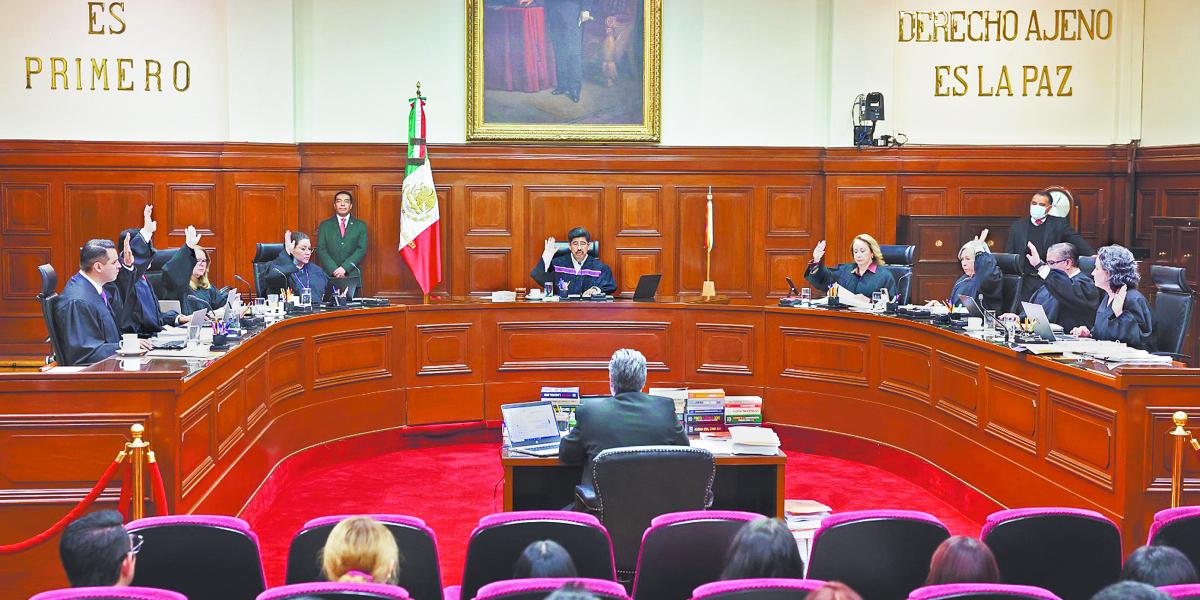
The plenary session of the Supreme Court of Justice of the Nation (SCJN) resolved that the blocking, suspension or limitation of funds in a bank account by a credit institution when carried out based on the clauses of the contract entered into with the user, does not constitute an act of authority for the purposes of the indirect protection trial.
By resolving the Contradiction of Criteria 201/2025, under the presentation of Yasmín Esquivel Mossa, the Court established jurisprudence.
According to the ruling, in such cases the banking institution does not exercise a public function or act with the power of the State, but rather it executes rights and obligations derived from a contractual relationship between individuals, so the appropriate way to challenge any action is commercial.
“This Plenary Court determines that the acts consisting of the blocking, suspension and/or limitation of funds in an account by a banking institution are not equivalent to those carried out by an individual with the characteristics of authority for the purposes of the amparo trial,” the ruling cites.
And based on the provisions of articles 215, 217 and 225 of the Amparo Law, he concluded that the following thesis must prevail, as jurisprudence:
“Blocking, suspension and/or limitation of funds in an account by a banking institution in terms of the respective contract. It is not an act of authority for the purposes of the indirect protection trial.”
The legal criterion established by the Court specifies that when a banking institution blocks, suspends and/or limits the funds in a bank account based on what is stipulated in the contract entered into with the user, it is not in the presence of an act of authority for the purposes of the admissibility of the amparo lawsuit, which is why the cause of inadmissibility established in article 61, section XIII, in relation to the various 5th, section II, second paragraph, both of the Amparo Law, is updated.