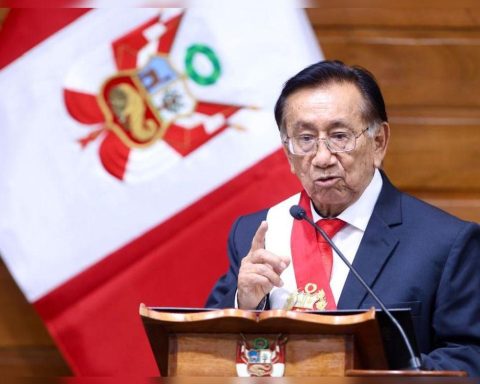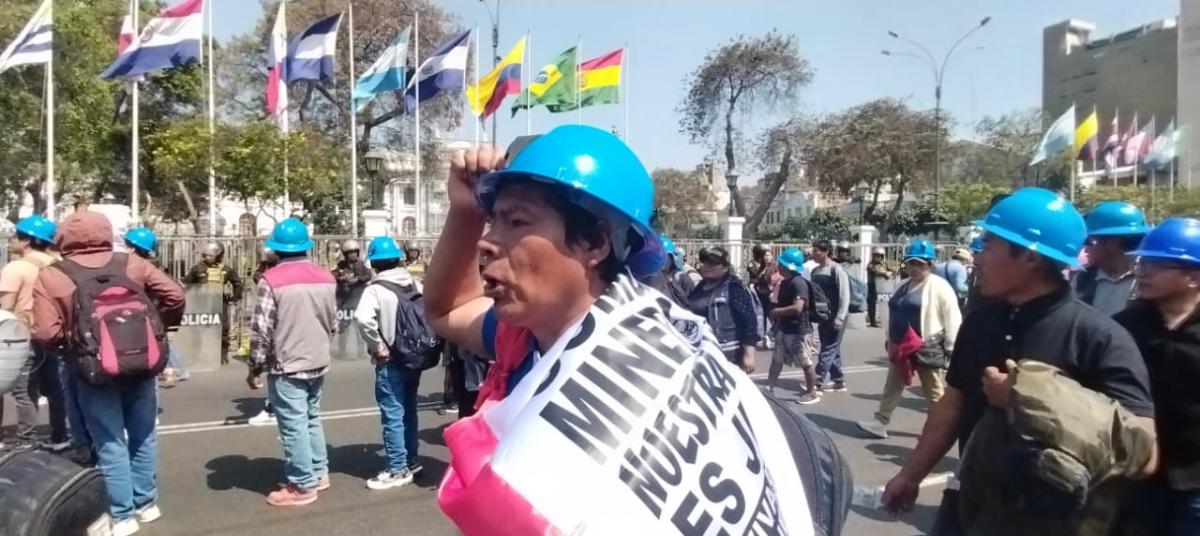
The Plenary of Congress will debate today whether to extend the validity of the Comprehensive Mining Formalization Registry (Reinfo) until 2027. The initiative has been promoted by the bench of We can Peruwhose leader, José Luna Gálvezhas assured that its objective is “to serve thousands of artisanal and ancestral miners so that they can continue with their formalization process.”
The congressman confirmed that the proposal of the Energy and Mines Commission has been prioritized in the Board of Spokespersons, arguing that the extension of the deadline is an emergency measure in the face of what he considers a fundamental “refusal of the authorities to face the mining problem”, and that the extension seeks to correct an “injustice” of Legislative Decree 1293, which would have left more than 50,000 workers in the sector off the register.
THE TRUTH BEHIND
However, what the parliamentarian forgot to mention is that the real beneficiaries are those who misuse small-scale mining for illicit purposes.
Luna seeks to capitalize on votes for his candidacy for the presidency in 2026. Another who has signed his signature in support of the project is the left-wing congressman Roberto Sánchez, who also wants to win the presidential seat with Together for Peru.
The proposal aims for the 50,000 informal miners excluded—because in four years they did not carry out procedures for their formalization—to be reincorporated along with the 30,000 who have their Reinfo in force.
But the worst thing is that they want to suspend the powers of the Ministry of Energy and Mines (Minem) to supervise and, if necessary, remove miners who do not comply with the requirements – such as failing to comply with environmental responsibilities and carrying out exploitation in non-permitted areas – until the ASM Law is promulgated.
In other words, they want to grant impunity to informal miners.
WHAT MOON SAYS
Luna Gálvez warned that the extension of Reinfo is only a temporary solution. “A new mining law is needed that respects ancestral possession and makes decisions about idle concessions, extensive concessioned territories that have not even been explored,” said the parliamentarian.
To reach a definitive and structured solution to the sector, the congressman raised two essential points in his roadmap. Firstly, an exhaustive diagnosis of mining activity at the national level is required through a large national mining census. This should be carried out with the coordination of the Geological, Mining and Metallurgical Institute (Ingemmet), the Vice Ministry of Mines and the INEI. The collection of information would make it possible to precisely identify the scope of large formal companies and, in the same way, locate small, medium and ancestral miners, in order to organize the sector and design differentiated policies.
Once the diagnosis is obtained, the second phase involves convening a multi-sector dialogue table that includes all the actors involved, seeking consensus to make a reform of mining legislation viable.
Despite this, the reality that is observed is different.
RECOMMENDED VIDEO