In the case of Pedro Castilloboth Congress and the Judiciary agree on the substance of their conclusions. Since the necessary votes were not reached to disqualify him, Parliament tacitly assumed that there was no coup d’état. For its part, the Special Criminal Chamber of the Supreme Court stated this explicitly in the reading of the final sentence made yesterday, after ratifying his conviction for the crime of conspiracy to rebel.
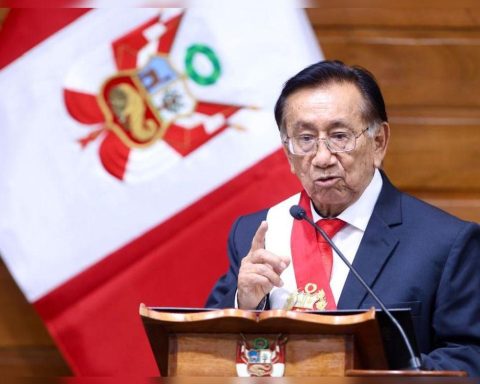
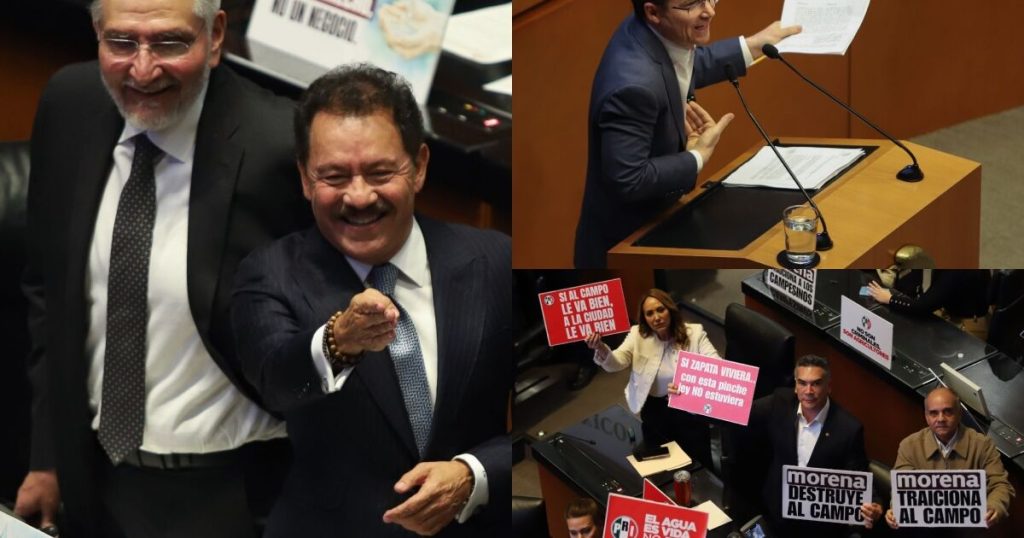
To understand this coincidence we must know that, last Wednesday, November 3, at night, the Congress of the Republic decided to reject the disqualification against Pedro Castillo and Betssy Chavez for the constitutional accusation linked to the attempted coup d’état of December 7, 2022. The motion did not reach the 68 votes necessary to apply the sanction and according to the voting record it only gathered 44 votes in favor, 31 against and 3 abstentions, which rendered the proposal for political sanction against the former president void.
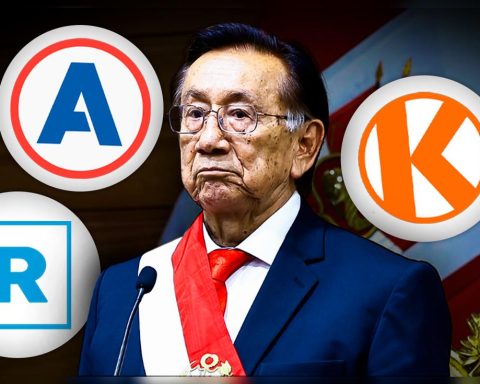
In Parliament itself, hours before, the majority groups such as Popular Force, Alliance for Progress, Advance Country and Popular Renewal They had reiterated that Castillo carried out a break in the constitutional order by announcing the dissolution of the Congress of the Republic, the reorganization of autonomous constitutional bodies and the establishment of an “exception government.” However, the votes were not sustained in the plenary session and the accusation ended up being filed.
“There was no coup d’état. That is the effect of the defeat in the vote. The consequence is that, if a sanction for a coup d’état is not imposed, it cannot be maintained that there was a coup d’état. And that is consistent with what the Judiciary itself has maintained in the conviction of Castillo: that there was no coup d’état, but a conspiracy,” mentions former attorney Julio Arbizu.
Yesterday, Thursday, the Permanent Criminal Chamber of the Supreme Court confirmed the sentence without raising the accusation to the crime of rebellion. According to what was resolved, the former president acted by coordinating an attempt to break order, but without actually executing it or achieving its consummation. The Court reiterated that the immediate reaction of the Armed Forces, The lack of territorial control and the absence of effective deployment prevented the conduct from fitting into the most serious criminal category.
YOU CAN SEE: The Republic joins the Transparency Electoral Observation Pact for the 2026 elections
This poses a scenario where, on the one hand Congress rejects disqualifying Castillo for constitutional infringement, and on the other hand the Judiciary ratifies that the coup d’état did not take place, but that there was a conspiracy for rebellion. That is to say, each one in their own area maintains that the former president did not commit a coup d’état in legal terms.
To understand the institutional consequences of this coincidence, La República consulted the constitutionalist Joel Cordova who pointed out that both Congress and the Judiciary agree that there was no completed coup d’état and that this could change the way in which this figure is evaluated at the level of execution. “The Judiciary has concluded that this coup was in a previous phase, but it was reaffirmed that it is the logic of the coup d’état that did not materialize. The reading has not changed in essence but has perhaps varied from time to time at its level of execution,” he declared.
On the other hand, the criminal lawyer Benji Espinozadetailed the specific benefits that come with the classification of conspiracy to rebel compared to the crime of consummated rebellion. “There are several benefits. First, the reduced sentence: when we talk about rebellion, the sentence is 20 years and, in conspiracy, it is half. The second difference is the evidentiary aspect, because rebellion is more difficult to prove than conspiracy, since it requires an armed uprising; on the other hand, conspiracy only requires proving the agreement to rebel. Castillo could access semi-freedom and could leave early,” he asserted.
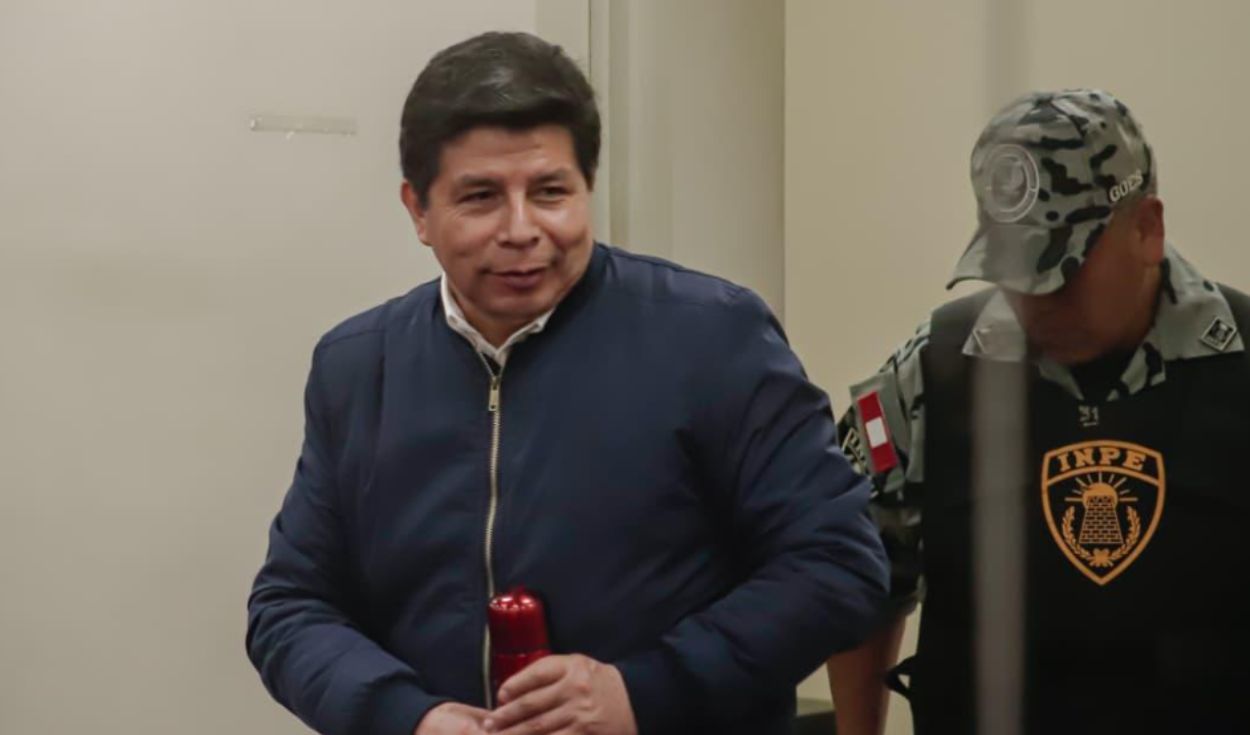
Meanwhile, Pedro Castillo did not waste the opportunity and yesterday in the reading of the sentence, he criticized the confirmation of his conviction and insisted that the process against him was marked by irregularities.
“Rebellion and abuse of authority have not been able to be confirmed. Their verdict responds to another case, even without reaching an agreement. Peru knows what is happening. It is a legal atrocity,” he noted.