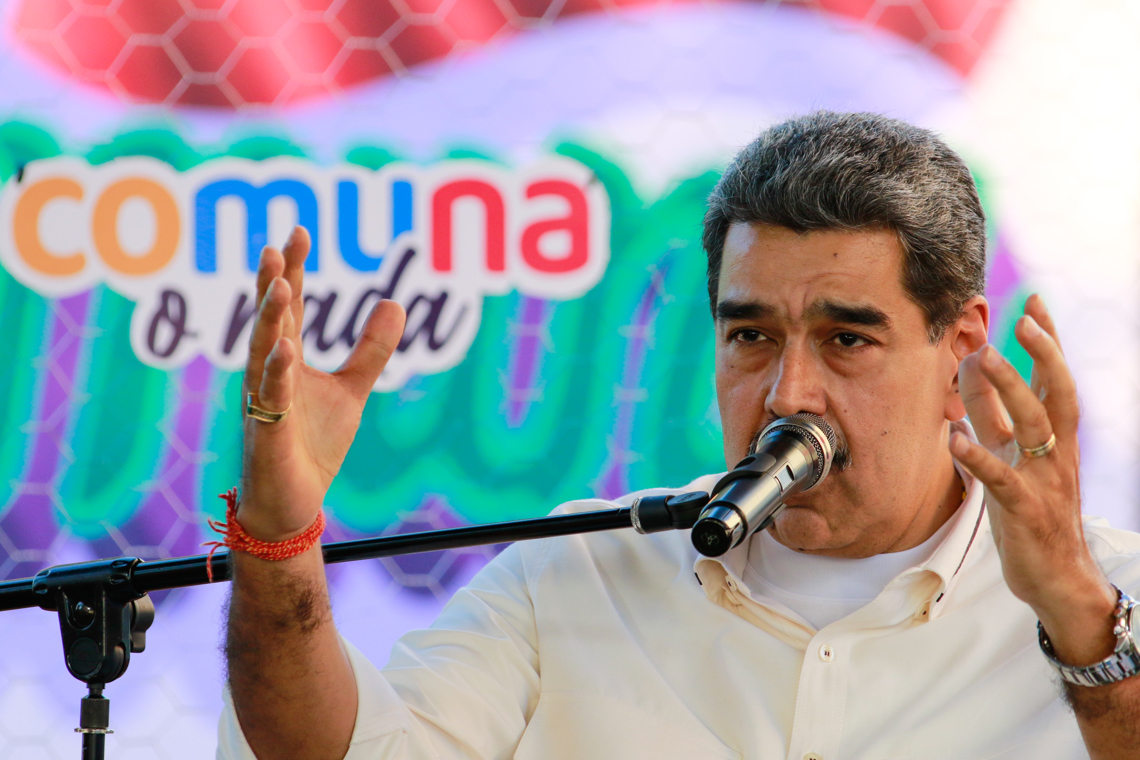
The president of VenezuelaNicolás Maduro confirmed this Wednesday that he had a telephone conversation with his American counterpart, Donald Trump, about ten days ago, in what he described as a “cordial” and “respectful” exchange.
The announcement comes when an escalation of tensions continues due to Washington’s military deployment in the Caribbean and the air connectivity crisis that affects the oil country, while both governments maintain migration agreements for the return of hundreds of Venezuelan repatriates every week.
Maduro reported that the call occurred from the White House to the Miraflores Palace, headquarters of the Venezuelan Executive, around November 23. “I can say that the conversation was in a tone of respect, I can even say that it was cordial,” he said during a televised event, according to press reports.
The Venezuelan president, who was chancellor between 2006 and 2012, stressed that he had remained silent out of “diplomatic prudence” and because “there are issues that must remain silent until they arise.” He added that he hopes that this contact represents a step towards a “respectful dialogue from State to State, from country to country.”
“I believe that the path of the people of the United States and the people of Venezuela has to be a path of respect, diplomacy and dialogue,” added Maduro, who is serving his third term in Miraflores, after winning general elections in July 2024 that Chavismo could not legitimize documentary evidence and that the opposition disqualifies as fraudulent.
Trump and Marco Rubio
Trump, for his part, confirmed days ago that he spoke with Maduro, although he avoided giving details: “I don’t want to comment on it, the answer is yes. I wouldn’t say it went well or badly. It was a phone call.”
In parallel, the Secretary of State, Marco Rubio, declared that the main problem in relations with Maduro is that “he has broken all the deals he has made” with Washington.
In interview with Fox Newsmaintained that the Venezuelan president has breached at least five agreements with different administrations in the last decade, including one with Joe Biden’s government on free elections in exchange for sanctions relief.
“Donald Trump is ready to meet with anyone, but at the end of the day you need someone willing to fulfill a deal,” said Rubio, who added that Washington considers the avenue for agreements exhausted as long as Maduro “continues using negotiations as a maneuver and not as a real commitment.”
The Secretary of State of the United States, Marco Rubio, affirms that the main problem in relations with the president of Venezuela, Nicolás Maduro, is that “he has broken all the deals he has made” with Washington.https://t.co/TSWL9vm3hq pic.twitter.com/59YAIS8RHo
— EFE News (@EFEnoticias) December 4, 2025
Military tensions in the Caribbean
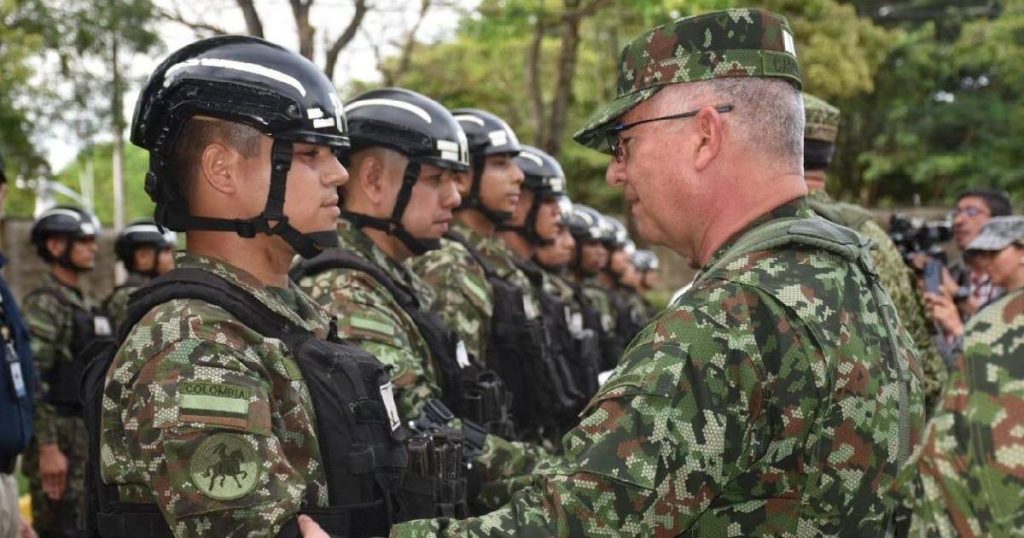
Maduro’s announcement coincided with new statements by Trump about US military operations around Venezuela.
The US president stated that these actions go “far beyond” a pressure campaign against Caracas and anticipated that “soon” ground operations similar to those carried out in international waters against vessels linked to drug trafficking could begin.
According to the Pentagon, the United States has carried out 21 bombing raids against ships in the southern Caribbean and eastern Pacific, leaving at least 82 dead. Washington accuses Maduro of leading a “terrorist organization” called the Cartel of the Suns, while Caracas denounces that it is an attempt at “regime change” to remove Chavismo from power.
The military deployment includes the installation of a radar in Trinidad and Tobago, confirmed by Prime Minister Kamla Persad-Bissessar, with the aim of detecting activities of “evasion of sanctions related to Venezuelan oil and drug trafficking.”
Caracas described these maneuvers as a “provocation” and part of the US strategy to overthrow the government.
Migration agreement in the middle of the dispute
Despite the tensions, both governments coordinated the arrival this Wednesday of a flight with 266 Venezuelan migrants deported from Phoenix, Arizona, operated by the US airline Eastern Airlines.
It was flight number 76 so far this year from the United States, within an immigration agreement signed in January.
According to official figures, since then 14,407 migrants have returned from United States territory, which represents 78% of the total number of repatriates in 2025. On Wednesday itself, another flight operated by Conviasa brought 304 migrants from Mexico, adding 570 repatriates in a single day.
Foreign Minister Yván Gil led the reception at the Simón Bolívar International Airport in Maiquetía and assured that Venezuela remains “at peace” and exercising “the sovereignty of its airspace.”
“The returnees continue to arrive, we continue doing our work, President Nicolás Maduro Moros is in Miraflores,” stated the Foreign Minister.
Air connectivity crisis
The arrival of the flights occurred in a context of air connectivity crisis. The United States had warned pilots and airlines to “exercise extreme caution” when flying over Venezuela and the southern Caribbean, considering the area “potentially dangerous.”
Faced with the wave of cancellations, Caracas revoked the operating concessions of eight international airlines. Trump even warned that Venezuelan airspace should be considered “completely closed.”
In contrast, Gil assured that “there is no force that takes away sovereignty” from Venezuela and that operations in Maiquetía continue normally, receiving flights from countries such as Colombia and Panama.