Havana/The dawn of this Wednesday surprised millions of Cubans from Mayabeque to Pinar del Río with a total blackout. The official explanation – broadcast at noon on state television – was that a failure in “one of the towers” of the 220 kilovolt transmission network would have fragmented the National Electric System (SEN), leaving the western half of the country without service. Despite the announcement of the reconnection, a good part of the Island will continue without electricity.
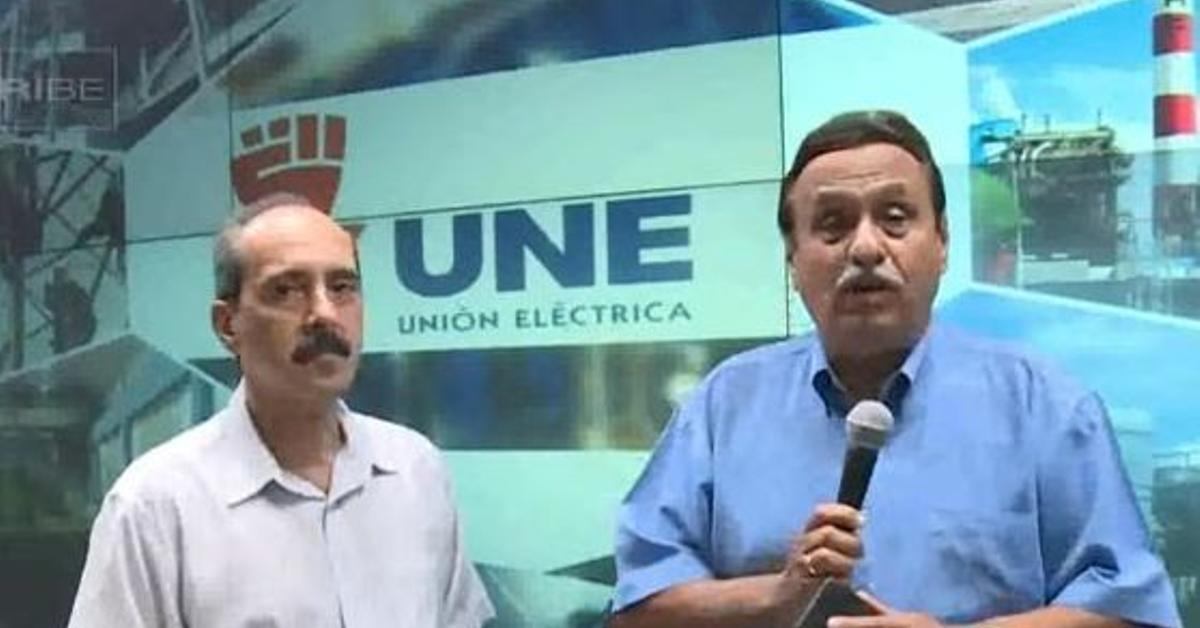
The television staging It was the usual. Overflowing with optimism, journalist Bernardo Espinosa interviewed engineer Félix Estrada Rodríguez, director of the National Cargo Dispatch. The official assured that “all the provinces” were now connected to the system again. According to what he said, the SEN was divided in two: from Matanzas to Guantánamo it functioned “in its entirety,” while the west was completely isolated.
This newspaper was able to verify that several eastern provinces are suffering longer than usual blackouts, despite the supposed “integrity” of the system in that territory. From Holguín, they report that they are without electricity, and a resident of Las Tunas reports that, in their area, they have suffered a blackout “since yesterday at 3:00 pm.”
Estrada explained that the reconnection progressed “little by little”, that Havana already had several 110 kilovolt substations in service and that Mayabeque and Artemisa were incorporated. Pinar del Río – the most distant and the one that suffers the most when the system collapses – would have been linked “a moment ago.” But the clarifications do not erase the extreme fragility of the country’s transmission network, incapable of supporting common events in more modern and diversified electrical systems.
Although interconnection is restored, the generation deficit remains intact
The television report also confirmed that, although the interconnection is restored, the generation deficit remains intact. Estrada was quick to point out that having service is not equivalent to covering demand. In other words: blackouts continue, as several key generating units remain out of service or cycle in and out without stability.
One of the most worrying examples is Felton, the largest thermoelectric plant in the country after Guiteras. The eastern plant managed to synchronize after the breakdown, but it went out again due to “a problem in the boiler”, specifically “faults in the condenser tubes” and an unstable “chemical regime” of the water. The technical explanation, rushed and confusing, ended up confirming that the unit will be out between 24 and 36 hours, that is, it will not be available today or tomorrow, a severe blow for those who live in that territory.
Added to this is the chronic instability of other thermal units, the aging of the infrastructure and the lack of maintenance accumulated for years. The Santa Cruz del Norte plant, for example, was barely in start-up condition. At Mariel, engines and main units were just beginning to be incorporated. La Patana de Regla – a symbol of energy improvisation in Cuba – provided only what its limited capacity allows.
The implicit message is that the SEN is operating at its limit, and each additional breakdown increases the risk of a total collapse. The US Embassy in Cuba warned about the blackout this Wednesday and reported on internet and telephone failures. He also recommended residents stay informed, ensure charge on their devices, store water and food, have flashlights, stay in communication with family members and provide alternatives for any medical needs that require electricity.
Decisions are made based on the magnitude of the day’s disaster, not based on a stable technical plan
The director of the National Load Dispatch also revealed that the maintenance scheduled by Energas SA – a mixed company that supplies gas for electricity generation – was postponed at the last minute. The stop was to be carried out between Monday and Wednesday, with a third stage on Thursday, but was canceled due to the emergency.
This means that there will be no immediate effects on the supply of manufactured gas in Havana or on the turbines in Boca de Jaruco. However, the official himself admitted that it will be necessary to choose “another day” in the coming weeks to carry out the pending maintenance. The postponement of complex operations in the gas network and in the plants linked to the electrical system confirms that the Government operates in a reactive, not preventive, mode. Decisions are made based on the magnitude of the day’s disaster, not based on a stable technical plan.
Beyond the numbers and technicalities, this Wednesday’s episode once again reveals what experts have warned for years: the Cuban electrical system is extremely vulnerable. State television promises a new update at 4:00 in the afternoon. But for the population, the most relevant information is that the blackouts continue, the deficit is not reduced and the country continues to depend on obsolete plants and improvised patches, waiting for the next massive blackout.