The discussion about fishing in protected natural areas has focused on proposals that seek to prohibit all extractive activities. Those who promote this position maintain, under the assumption of scientific studies, that the presence of fishing fleets puts the species that inhabit these areas at risk. However, this relationship is not necessarily true and, furthermore, the fishing activity currently carried out there is minimal.
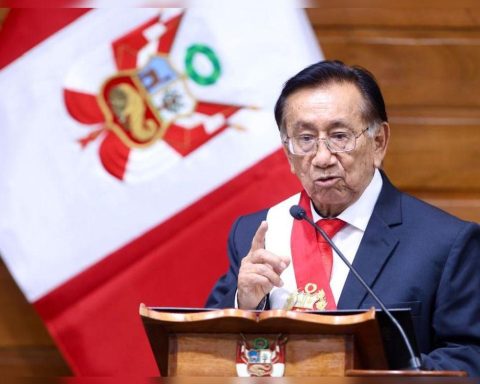
The scientific director of the Humboldt Institute for Marine and Aquaculture Research, Mariano Gutiérrez, explained to Perú21 that the discussion to prohibit all forms of fishing in the Nasca Dorsal National Reserve does not respond to ecological criteria, but to ideological positions that ignore the real dynamics of the deep marine ecosystem.
Gutiérrez pointed out that, for example, in the Dorsal de Nasca National Reserve, industrial fishing is allowed because there is no “ecological interaction” between fishing activities and the area they seek to protect.
He specified that the Peruvian sea is characterized by having a minimum oxygen zone that is below 50 meters deep. This strip is home to species that are exploited, such as giant squid, bonito, very few anchovies and, eventually, horse mackerel and mackerel.
In contrast, the resources that the reserve seeks to protect live between 2,000 and 4,000 meters deep. These are long-lived, low-fertility abyssal species that do not migrate to the surface. Therefore, there is not a vertical ecological interaction, but rather a horizontal one.
“There is no ecological interaction with the species that are in danger. So, the discussion is ideological. They do not want fishing in the area, simply that,” he said.
Minimal impact
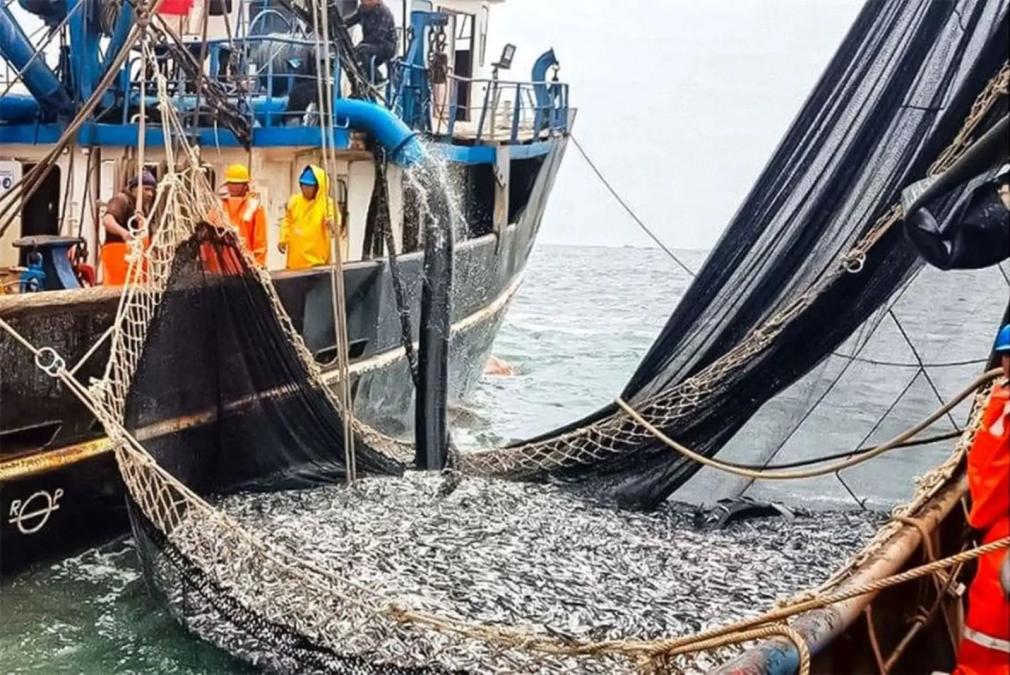
On the other hand, industrial fishing in the Nasca Dorsal Reserve is minimal. According to the Ministry of Production, between 2016 and 2023, the number of individual fishing operations (known as coves) in the industrial sector reached 25 in the case of anchovy capture and 1,456 in the extraction of species for direct human consumption.
These figures represent just 2% of everything that the sector caught in anchovy in 2023. This is consistent with reality, because industrial fishing is highly regulated. It’s not like you can capture whatever comes to mind when it occurs to you.
For Gutiérrez, ignoring these differences and promoting a total ban on fishing means ignoring the vertical zoning approved by the National Protected Areas Service (Sernanp) itself and supported by the Peruvian Sea Institute (Imarpe). Furthermore, remember that the legislation contemplates “direct exploitation” areas where fishing activity is compatible with conservation, as long as the established depth limits are respected.
Receive your Perú21 by email or WhatsApp. Subscribe to our enriched digital newspaper. Take advantage of the discounts here.
RECOMMENDED VIDEO