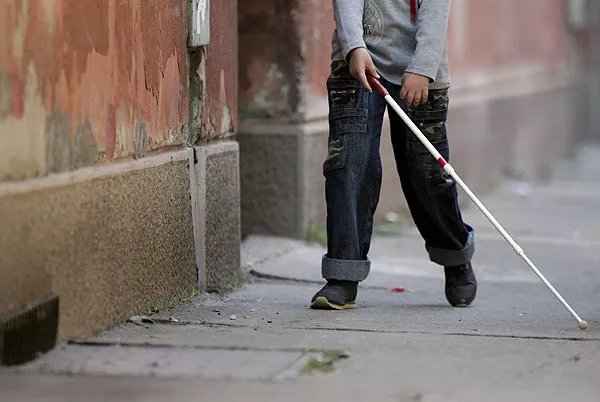
Santo Domingo.- 23% of children with disabilities in the Dominican Republic do not attend school, the United Nations Children’s Fund or Unicef stated this Wednesday when celebrating International Children’s Day. People with Disabilities.
The number of students with disabilities served by the education system fell from 26,581 in 2016 to 6,163 in 2019, a reduction of more than 75%, the UN agency reported in a statement.
Likewise, according to the National Survey of Multiple Purpose Households-Surveys of Multiple Indicators by Clusters (Enhogar-Mics 2019), 10.1% of boys and girls from 2 to 17 years old in the Dominican Republic have difficulty in at least one functional domain, a figure that reaches 11.3% between 5 and 17 years old.
Unicef denounced that the Dominican Republic does not have a national registry that identifies how many members of this population live with disabilities or the nature of their needs, “which makes it difficult to plan inclusive public policies.”
“The data shows that thousands of children continue to face barriers that limit their development. To transform this reality, it is essential to have reliable information that guides more effective public decisions,” said the interim representative of Unicef in the Dominican Republic, Anyoli Sanabria.
The report also highlights additional vulnerabilities in the country such as difficulties in accessing essential services, greater risk during emergencies, care overload, particularly in women, and greater exposure to situations of abuse or isolation. Unicef highlighted that the Enhogar-Mics 2025 survey is being developed, which will allow updating indicators, delving into current gaps and including key information to strengthen the inclusion agenda for children with disabilities in the country.
Last year more than 5.2 million children with disabilities in the world received support from Unicef, the organization indicated. “Although we have doubled our coverage in the last five years, we are only reaching a fraction of the children with disabilities who need support. Together — with governments, the private sector, organizations of people with disabilities, and with children, young people with disabilities and their caregivers — we can and must do more to ensure that no child is left behind,” Sanabria added.