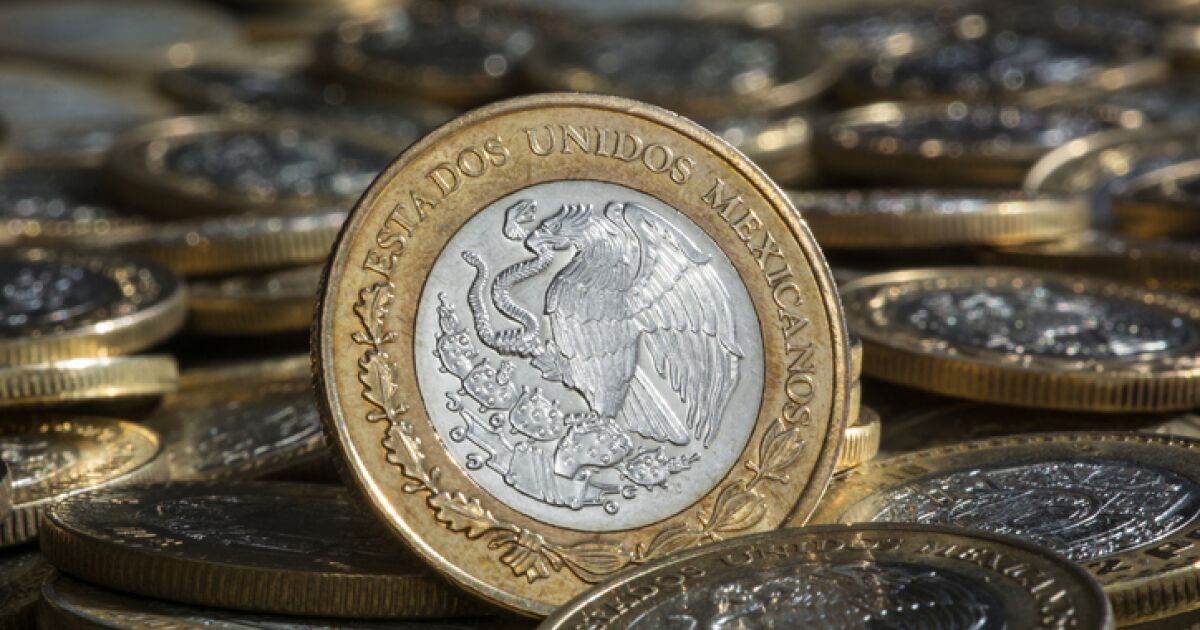
“The silver nickel alloy, used to produce the center of the 10 peso coins, is composed of 65% copper, 10% nickel and 25% zinc; copper, its main component, has increased its cost by 82% in the last 5 years,” the Executive noted in his proposal.
The document proposes that the 10 peso coin be made of nickel-coated steel; It does not specify how much money could be saved by this adjustment.
To identify how much this coin can deteriorate, a study was commissioned from the UNAM Materials Research Institute, which showed that nickel-coated steel has good physicochemical and mechanical properties to be used in the production of Mexican coins.
They have already made adjustments to the 1, 2 and 5 peso coins
It is not the first change that has been made to currencies with the aim of reducing costs. The governor of Bank of Mexico (Banxico), Victoria Rodríguez, said last week that starting in December the new one-peso coins made with bronze-coated steel will be in circulation.
In 2026, adjustments will be made to the materials of the 2 and 5 peso coins. It is estimated that this change will mean a saving of up to 400 million pesos, since the core of these coins will be made using a technique known as electroplating or electroplating, which helps save water and money.
Electroplating consists of covering a core of steel or other low-cost material with one or several layers of higher-cost metals.
This electroplating technique has been adopted by most mints around the world since the last decade, according to the document presented by the Executive.
“The above allows us to maintain the appearance with which the user public is familiar, and at the same time it becomes feasible to have significant savings in the production of coins,” he highlighted.