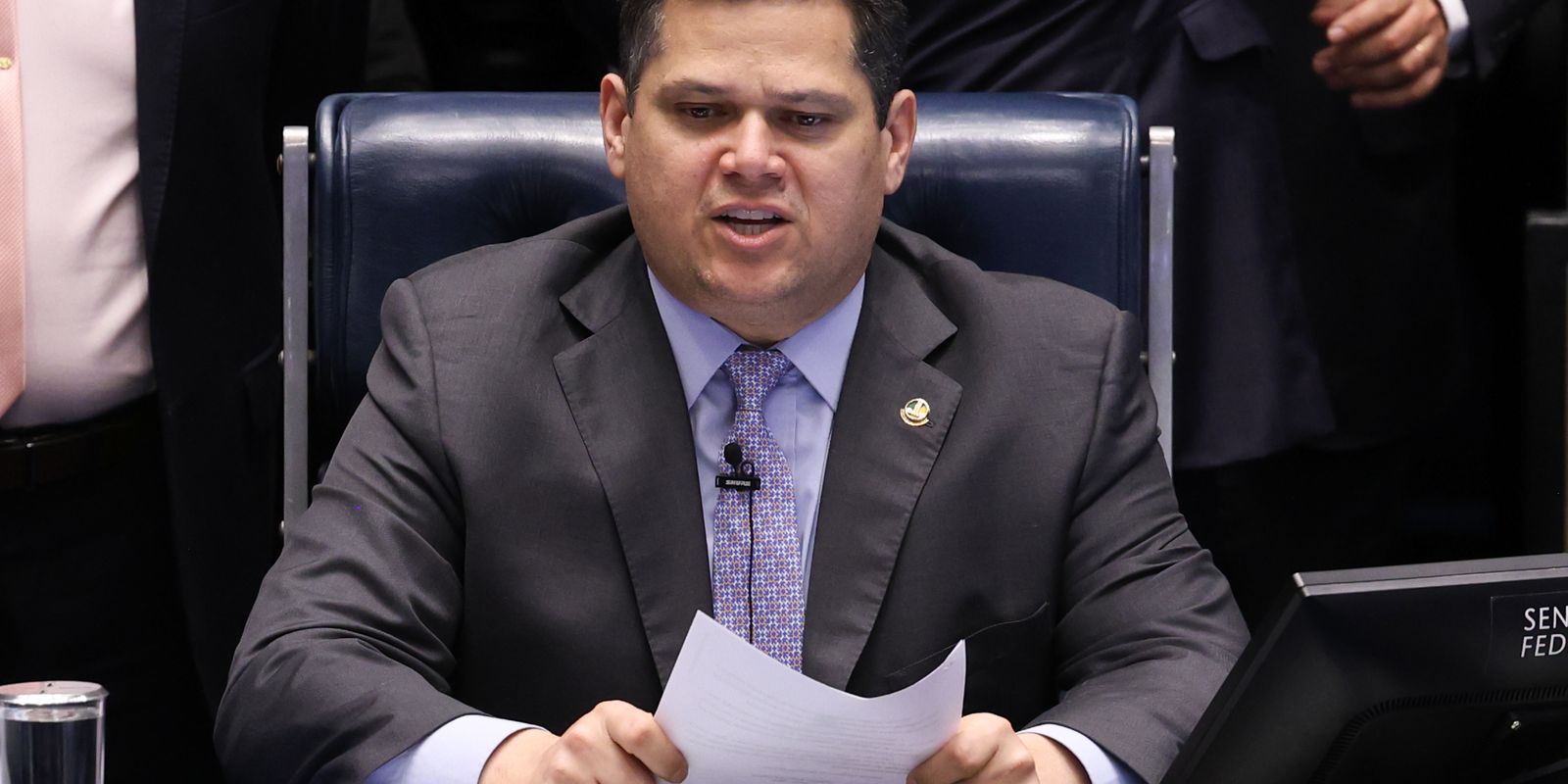
The president of the Senate, Davi Alcolumbre (União-AP), canceled the calendar for the hearing of the Minister of the Attorney General’s Office (AGU), Jorge Messias, nominated for the position of minister of the Federal Supreme Court (STF). 
In a note released this Tuesday afternoon (2), Alcolumbre said that it canceled the calendar fixed with the president of the Constitution and Justice Commission (CCJ), Otto Alencar (PSD-BA), which predicted the reading of the opinion on the 3rd and the hearing on the 10th of December.
There is still no new date for the analysis.
Alcolumbre justified the cancellation by stating that the federal government did not forward the written message regarding the nomination to the Senate. The act has already been published in the Official Gazette of the Union.
“However, after the dates were defined by the Legislature, the Senate was surprised by the absence of sending the written message regarding the nomination, already published in the Official Gazette of the Union and widely announced,” he said.
The president of the Senate also said that the definition of the calendar followed the pattern adopted in previous nominations and aimed to ensure compliance with this constitutional attribution of the Senate in the 2025 fiscal year, “avoiding its postponement until next year.”
“This omission, the exclusive responsibility of the Executive Branch, is serious and unprecedented. It is an interference in the hearing schedule, a prerogative of the Legislative Branch”, he stated.
“To avoid the possible allegation of a procedural defect in the nomination process — given the possibility of holding the hearing without formally receiving the message —, this Presidency and the Constitution and Justice Commission (CCJ) determine the cancellation of the calendar presented”, he continued.
President Luiz Inácio Lula da Silva appointed, on the 20th, Jorge Messias, to fill a ministerial position of the Federal Supreme Court (STF) left with the minister’s retirement Luís Roberto Barroso. Messias is 45 years old and will be able to remain in the Supreme Court for the next 30 years, when he will turn 75, which is the age for compulsory retirement.
To take office, Messias must go through a hearing at the Constitution and Justice Committee (CCJ) of the Senate and have his name approved in a vote in the collegiate body and in the plenary of the House, with the approval of 41 senators.