In labor matters, it is established that salary for work of equal value regardless of sex or gender; In social security, no woman will again be treated unequally when she goes to a hospital, a clinic or a State office.
“Both the IMSS and the ISSSTE must eliminate discriminatory practices rooted for decades, train all their staff with a gender perspective and generate statistics.”
In addition, housing programs must incorporate preferential criteria that guarantee women’s access to recognize their right to equal property and ensure security measures in urban design.
“The law now requires acting with a gender perspective and granting immediate protection measures to ensure that no migrant woman again faces the risks of trafficking, exploitation and sexual violence or abuse alone.”
Transformation without a weight
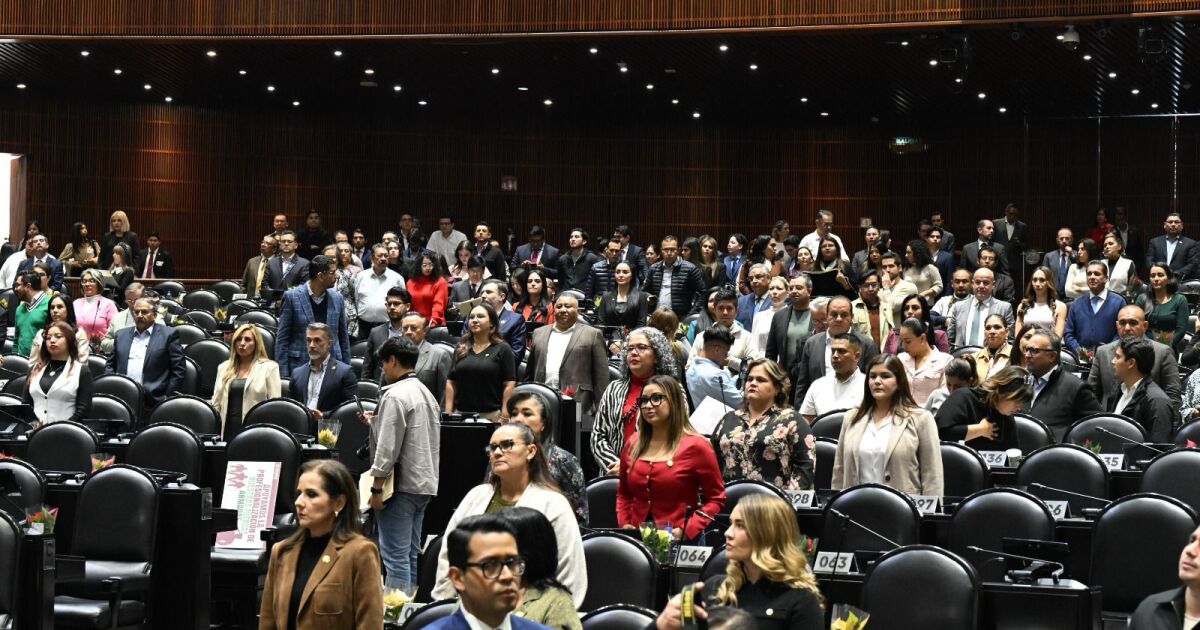
However, due to the centralization that will now be carried out by the Women’s Secretariat, PAN member Ana María Balderas Trejo warned that although “it practically rewrites the functioning of the equality policy throughout the country, it presents red flags that cannot be ignored.”
It is “a recentralization of power, in the face of a design that opens the door to political uses, which creates spending mandates without a financial ceiling and puts fundamental rights at risk, such as the presumption of innocence, due process and judicial impartiality.”
Although representative Blanca Leticia Gutiérrez Garza, also from National Action (PAN), recognized the president’s vision with her proposal, substantive equality requires a budget, professionalization, solid institutions and co-responsibility at the three levels of government.
“We strongly warn that without resources, without financial planning, without mandatory indicators and without addressing fundamental omissions such as the absence of reproductive rights, this reform runs the risk of being monumental on paper, but insufficient in practice,” he said.
“The laws that are being reformed today need muscle, not just a legal framework, we need shelters, prevention, real coordination, clean registers, indicators, not just speeches,” added Tania Palacios Kuri, also a PAN legislator.
“You cannot ask for transformation with a containment budget,” he said.
For the Institutional Revolutionary Party (PRI), Xitlalic Ceja García said that his party approved the changes, but “as long as the budget is guaranteed by law, by right, to be able to address all cases of violence in this country.”
The big issue is budgetary because “the question is how all these reforms are going to be financed,” highlighted deputy Anayeli Muñoz Moreno, from Movimiento Ciudadano.
The reforms recognize the different forms of gender violence in our country and seek to eliminate stereotypes; But she considered that there are many pending issues because, for example, the life of women in the countryside is different, because they suffer violence at home and at work.