Havana/The permanent energy crisis that the Island is experiencing marked a new milestone this Monday. The Electrical Union of Cuba (UNE), had predicted a maximum impact of 1,995 megawatts (MW) for the day, but it reached 2,105 MW, which is the worst record recorded so far.
Unlike what it usually does in its daily report, in this Tuesday’s report the UNE does not provide the numbers of MW available and demanded, but taking into account that the maximum demand is usually about 3,250 MW, yesterday’s shortage represents almost 65% of the energy needs.
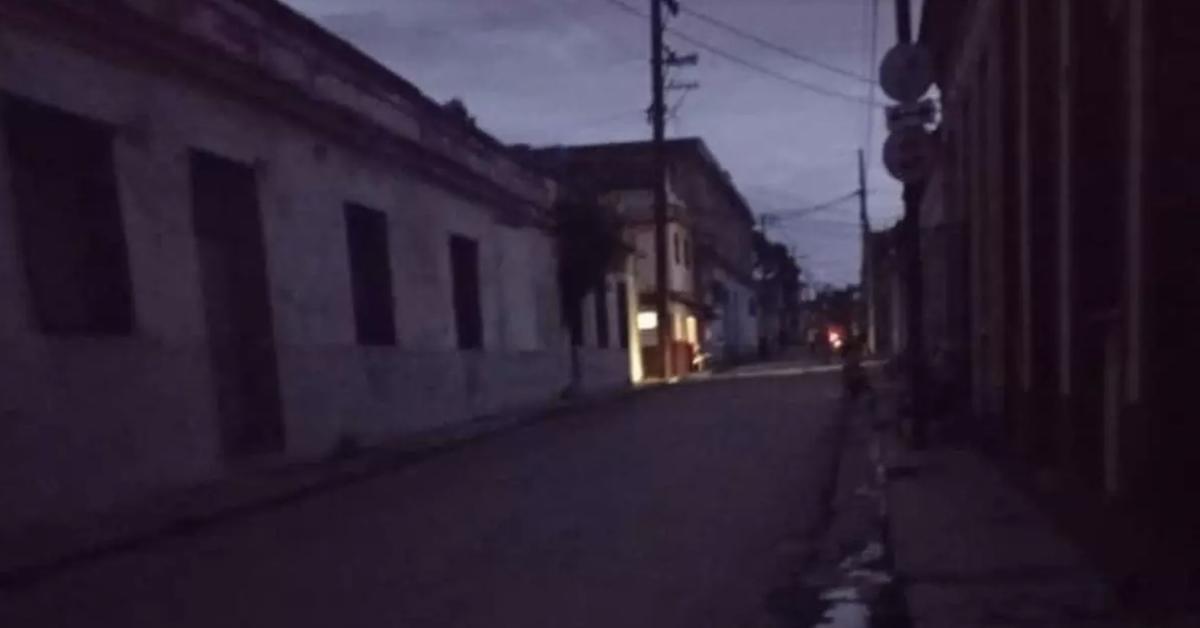
In the Nuevo Vedado neighborhood, where the Editorial Office of this newspaper is located, the hours with electricity this Monday could be counted on the fingers of one hand, as a resident of the area said. Composed of numerous buildings with more than 12 floors, the area is especially sensitive to the lack of energy due to the obligation to have elevators to go up to the upper floors and a large proportion of elderly residents.
The hours with electricity this Monday could be counted on the fingers of one hand
“When it was time to put on the water pump there was no light, so in the morning they couldn’t fill the tank,” he tells 14ymedio a resident in an 18-story building near Tulipán Street. “In the afternoon, when it seemed like we were finally going to be able to wash and bathe, there was no electricity either,” he summarizes with annoyance. Much of the early morning, unusually warm for November, was spent “without a fan or anything,” due to another blackout.
Outside the capital, the panorama is no different. In the city of Holguín, Carlos, 41, had to climb on the roof of his home to communicate, over the internet, with a medicine seller in the informal market. The lack of electricity significantly affects the internet connection at a time when many Holguín residents are infected with the arboviruses that circulate throughout the country. “Only on the roof did I get a little bit of coverage and with that I bought a blister of acetaminophen for my mother who is sick with fever,” he explains.
For this Tuesday, the energy outlook remains dark. The UNE foresees a peak hour demand of 3,300 MW and a deficit of 1,835 MW, which will lead to an impact of 1,905 MW in the evening.
This being the case, the miracle is that a new total blackout does not occur, like the five that have occurred on the Island since October 2024the most recent of which, last September, due to the unforeseen departure of the Antonio Guiteras thermoelectric plant, the largest in the country, from the national electrical system (SEN). In addition, a new failure this Thursday caused a partial disconnection of the SEN that affected to various areas of the country.