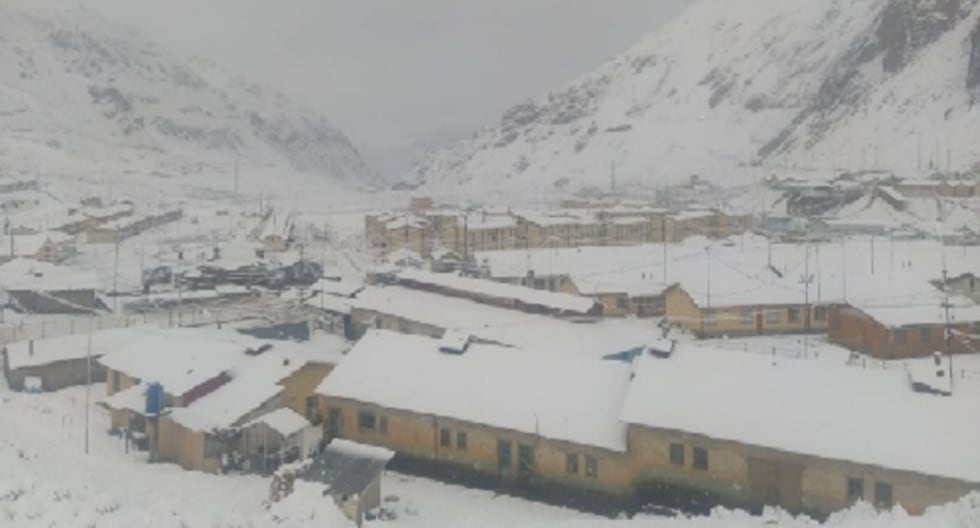
He National Meteorology and Hydrology Service (Senamhi) has issued up to two crucial alerts regarding the imminent arrival of the Isolated Depression at High Levels (DANA)named as ‘Qori’. This meteorological phenomenon is strongly impacting several regions of Peru, generating the need to take extreme precautions in the mountains and anticipate changes on the coast.
What is DANA Qori and where will it affect?
The DANA Qori It is a low pressure system that is causing precipitation intense (snow, sleet, hail and rain) and intense wind in the central and southern mountains of Peru.
- Validity: The Senamhi forecast indicates that DANA will affect these areas between December 2 and 5.
- Phenomena: They are expected rains with electric shocks, hail in areas over 2,800 meters above sea leveland snow in locations located above the 3,900 meters above sea level
- Peak Intensity: The greatest intensity is expected for early morning of December 4th to 5th.
Impact on the coast: winds and increased temperatures
Although the main impact is in the mountains, Senamhi does not rule out the occurrence of isolated rain in the central and southern coast of the country. Additionally, DANA ‘Qori’ will generate a significant change in coastal conditions:
- Strong Winds: It is expected a increase in wind speedwith gusts that could reach up to 40km/h between December 3 and 5.
- Heat on the Coast: In dialogue with RPP, the Senamhi meteorologist, José Mesía, explained that DANA will cause a change in the winds towards the north, which will result in a increase in temperatures on the coast. This increase will be felt in Lime, Ica, Tacna, Moquegua and Arequipa.
Lima and the climate of transition
Regarding the increase in temperatures in Limathe Senamhi specialist recalled that spring is a season of “transition” towards summer, which explains the sensation of daytime heat that is being reported in the capital.
- Maximum Temperatures: They are being higher during the day.
- Night Caution: However, the minimum temperatures They remain stable during the nights and early mornings. Senamhi urges the population not to be careless to avoid respiratory problems.
Key recommendation: The population that resides or transits through the central and southern mountains must take safety measures. prevention before the strong weather phenomena (snow, hail, heavy rain and winds) announced by the Senamhi.