Artificial intelligence is already part of everyday decisions, like an application that helps you study or a tool that organizes finances. The Conecta PretaLab event, opening this Tuesday (2), will offer practical workshops, conversation circles and debates on the use of artificial intelligence for black women. The objective is to show, in practice, how technology can make life easier and open doors.
At Sesc Pompeia, a group of black women from PretaLab, an Olabi initiative, will teach other women how to use AI on their cell phones, computers and at work. Many of the teachers and facilitators discovered the technology precisely because of the project, and now, they are back to share this knowledge. The event is free and open to the public.
The opening of Conecta, at 7pm today, will feature the panel “Artificial intelligence and social justice”, with the participation of Jurema Werneck, doctor and executive director of Amnesty International Brazil; Mayara Ferrão, visual artist and reference in art + AI; and Silvana Bahia, co-director of Olabi and one of the country’s main voices in the debate on technology and inclusion.
Silvana Bahia highlights that, although artificial intelligence is already part of our daily lives, real access to this type of technology is still quite unequal. This is because those who can explore these tools are, for the most part, people who are already familiar with digital, have a good connection, and have the time and material conditions to experiment.
“When we look at Brazil, we realize that black women, peripheral people and historically excluded groups arrive much later in this conversation. They often only enter as users, and not as creators. And this is the big challenge: it’s not enough to ‘use’ AI. You need to understand how it works, have autonomy and participate in decisions about what these technologies will be in the future”, he said.
In the workshops, on December 6th and 7th, the facilitators will present AI tools that help create resumes, organize spreadsheets, review texts, create artwork for small businesses, study for tests and plan finances. The project’s proposal is that everything is shared in a simple, accessible and immediate way. For many participants, it is their first direct contact with these tools. Registration can be done via the Sesc website.
Conecta PretaLab is based on the premise that black women need to be at the center of the conversation about artificial intelligence. This only occurs when they have access, training, security and space to learn and experiment. Silvana says that the project meets a demand that appears every day.
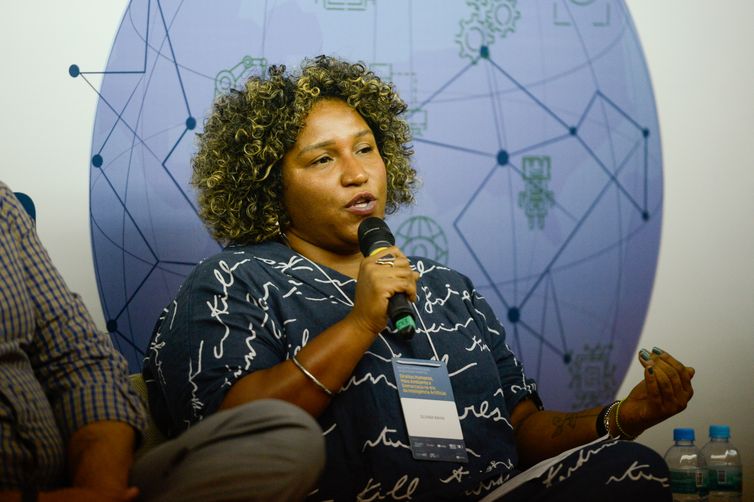
Rio de Janeiro (RJ), 05/23/2024 – Silvana Bahia highlighted that real access to AI is still quite unequal. Photo-file: Tomaz Silva/Agência Brasil – Tomaz Silva/Agência Brasil
“[São] women who want to use technology to make their lives easier, to boost their work, to study, to undertake, but who have never seen themselves as ‘technology people’”, he highlights.
Artificial intelligence, highlights Silvana, is not isolated from the country’s inequalities, it tends to reproduce exactly the same structures that already mark education, the job market and access to culture.
“If we live in a country where a significant part of the population has difficulty accessing basic rights, it is no surprise that access to the most advanced technology follows the same logic”, stated Silvana.
“AI is built from data, references and priorities defined by very restricted groups, and this leaves a large part of society left out from the beginning. And when black women, peripheral people, indigenous people or people with disabilities do not participate in the construction of technologies, the negative impacts return to them in an even more intense way”, explained Silvana.