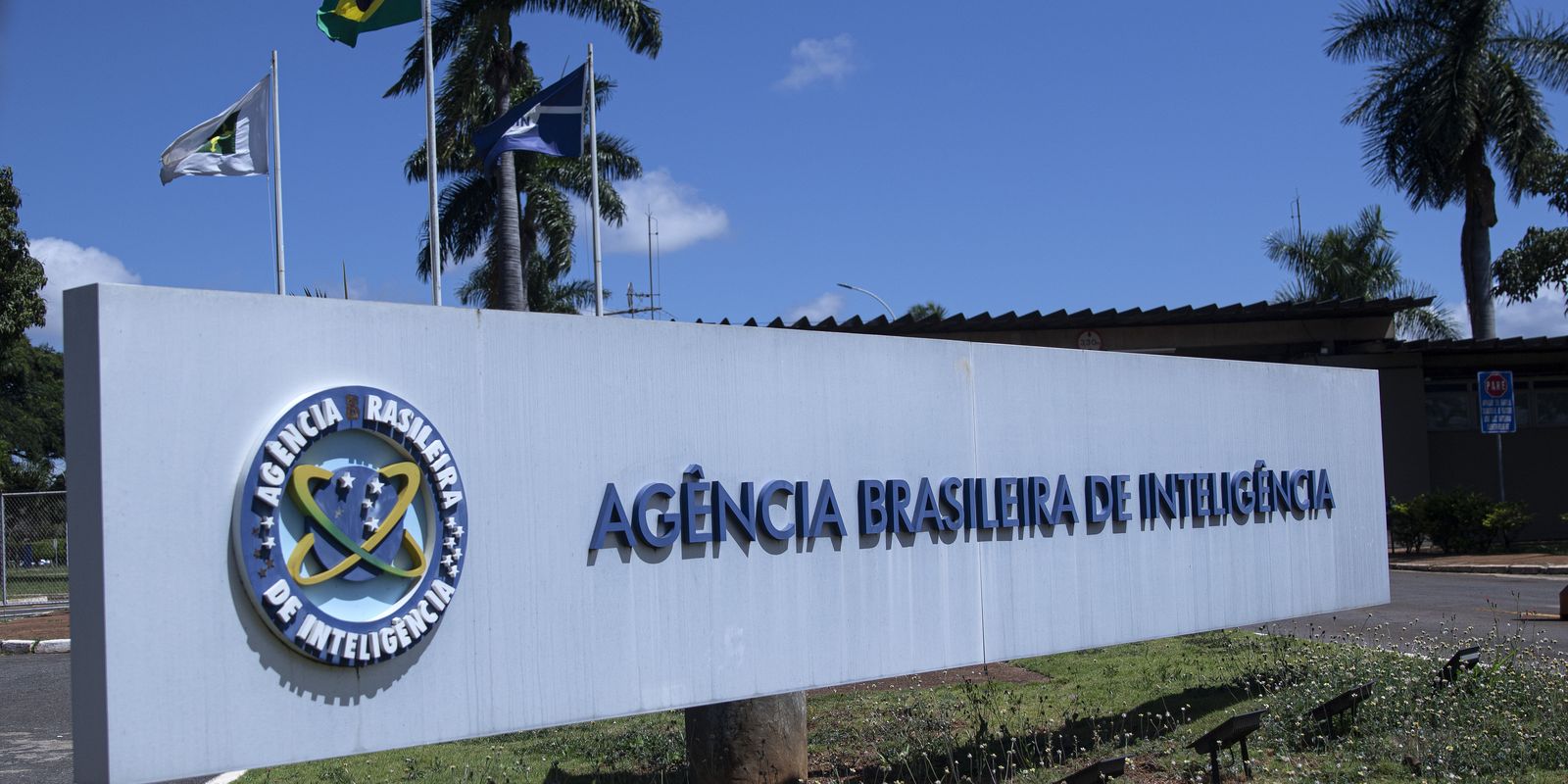
Not everything is secret when carrying out the activity that works with information considered secret to the Brazilian State. Based on the country’s democratic principles, The Brazilian Intelligence Agency (Abin) released, this Tuesday (2), a publication containing the main challenges for next year, with the aim of anticipating threats against the security of the State and society.
Security in the electoral process and cyber attacks with artificial intelligence (AI) are among these challenges. In 2026, Brazilians will go to the polls for general elections for President of the Republic, governors, senators and deputies (federal, state and district).
The publication Intelligence Challenges 2026 Edition will help Abin to fulfill, in a transparent manner, its institutional role of advising the Presidency of the Republic in decision-making – including formulating policies –, as well as safeguarding knowledge considered sensitive to the Brazilian State.
The survey had the help of experts from universities, research institutions and government agencies, in developing information relating to issues such as climate, technology, demography, health and migration, as well as analyzes of international and regional situations.
The material details five challenges to dealing with direct and indirect risks to the country’s security:
- Security in the electoral process;
- transition to post-quantum cryptography;
- autonomous cyber attacks with artificial intelligence agents;
- reconfiguration of global supply chains; and
- technological dependence, non-state actors and external interference.
The report that projected the risks for 2025 highlighted challenges related to the worsening of the climate crisis; changes in population patterns; the acceleration of the technological race; and the intensification of competition between world powers.
“Throughout the year, we saw these international dynamics gain more prominence”, reported the general director of Abin, Luiz Fernando Corrêa, during the presentation of the document.
Regarding the geopolitical context, Corrêa highlighted, in the 2026 edition, the use of economic instruments as factors of political pressure; and the escalation of military threats to Latin American countries – including those bordering Brazil.
It also highlighted the fierce competition for the lead in the development and use of artificial intelligence (AI).
Context
According to Abin, the current scenario is one of unbalanced and deinstitutionalized multipolarity, with strategic competition between the USA and China as a central factor.
The agency adds that the global situation is going through a “period of profound reconfiguration”, driven by confluences between climate, demography and technology, in a scenario of “disruption of the international order”.
All this amid intensifying competition between great powers.
General elections
In Abin’s assessment, there are “complex and multifaceted” threats regarding the 2026 electoral process.
These threats have, as their “main vector”, attempts to delegitimize democratic institutions, such as those that culminated in the invasion of the headquarters of the Three Powers, in Brasília, on January 8, 2023, in a scenario of mass manipulation and dissemination of disinformation on a large scale.
“Additionally, the integrity of the election is challenged by the growing influence of organized crime in territories under its influence and the risk of external interference aimed at destabilizing the electoral process and favoring foreign geopolitical interests”, says the document.
Digital age
The document proposes, from the perspective of intelligence activity, that the State also pays attention to transitions in the areas of climate, demography and technology, in a context marked by the high density of interactions and interdependencies – especially energy, information and transport.
It also suggests a focus on the “unprecedented impacts” of the Digital Era.
Regarding technological issues, the report highlights the guarantee of digital sovereignty as the country’s “neuralgic challenge”.
Among the expected difficulties in achieving this objective, it highlights the structural dependence on hardware foreigners and the concentration of power in big techs: “These companies monopolize data and challenge state structures, threatening national decision-making autonomy”, warns Abin.
The agency, however, highlights Brazil’s advances in the area of cybersecurity. The country, according to her, has been developing cutting-edge technologies, such as the government messaging application, which uses post-quantum cryptography.
The rapid evolution of AI could make this tool an “autonomous offensive agent, capable of planning, executing and adapting attacks”.
This may, at some point, increase the risk of escalation, causing cyber incidents to result in military conflicts, for example.
Abin has a team of experts in cryptography, a tool that is considered a pillar of digital sovereignty and government securityespecially with regard to confidential communications and digital transactions.
Given technological developments, the agency foresees risks that will arise from the advent of quantum computing – something that, within 5 to 15 years, will make current public key cryptography obsolete.
Dependence
In this sense, Abin considers a transition to post-quantum algorithms that do not depend on foreign technologies to be urgent.
Abin sees the digital domain as the “central arena” of geopolitical competition; and the big techs as “vectors of influence of their host states”.
“In this context, dependence on external providers in critical infrastructure (cloud, data, digital identity) is a severe strategic vulnerability for Brazil”, highlights the agency when stating that this technological dependence can lead to external interference.
As an example, Abin cites the so-called cognitive war, generally catalyzed by some algorithmic disinformation. It also cites the risk of espionage with the aim of accessing sensitive data.
Supply chains
Also among the challenges cited for 2026 is the reconfiguration of global supply chains.
According to the agency, this reconfiguration was driven by factors such as the rise of China; the economic war with the USA; and the vulnerabilities exposed during the covid-19 pandemic.
“The current situation is marked by deliberate deglobalization, which foresees aggressive tariffs and the devaluation of the dollar, accelerating the decline in its participation in global transactions.”
In the case of Brazil, the country finds itself in a position of double dependence. One of them is related to China, a country that guarantees Brazil a trade surplus through the commercialization of commodities.
The other dependence is on Western capital and technologies for investment, with emphasis on the United States.
Climate
In Abin’s assessment, changes in climate and population and technological structures generate risks as well as opportunities.
The agency recalls that global warming is at an accelerated pace, and that 2024 was the hottest year on record, exceeding the average temperature of the pre-industrial period by 1.5 degrees Celsius (ºC).
It also reminds us that catastrophes have increased in Brazil, with annual incidents occurring with increasing frequency.
Examples cited include the Amazon drought and the floods in Rio Grande do Sul, which occurred in 2024.
“The sectoral impacts are severe, with annual losses of R$13 billion”, warns Abin.
Energy and food security
With the deforestation of the Amazon and the reduction of the so-called “flying rivers”, which distribute water to other regions of the country, the energy situation is also vulnerable.
In this case, annual losses are in the range of R$1.1 billion – which corresponds to an estimated annual loss of almost 3.8 thousand gigawatt-hours (Gwh).
Still amid the contextualizations presented by the publication are the risks related to food security: there are estimates that 46% of agricultural pests will worsen by the year 2100.
Another challenge is rising sea levels, which will put both critical infrastructure and the country’s coastal population at risk.
Demographic transition
The survey carried out by Abin also mentions the increase in the longevity of the world population associated with the drop in the fertility rate which, according to the agency, will reconfigure the prospects for the future.
Another warning concerns the departure of professionally qualified Brazilians to live in other countries, in a context of competition for talent.
Regarding Brazil being a migration destination for foreign citizens, Abin assesses that this will pose challenges to the provision of essential services and also to border security, in addition to implying possible risks arising from transnational crime.
The South American strategic environment has become, according to Abin, a “space increasingly permeable to global geopolitical disputes”, with world powers vying for control of strategic resources such as lithium, rare earths and oil, in addition to the natural resources of the Amazon Basin.
“China has consolidated itself as the main trading partner, while the US has exerted increasing pressure for alignment, including military threats,” says the document.