The Minister of Health, Alexandre Padilha, stated this Monday (1st), on World AIDS Day, that access to new strategies and technologies for preventing the disease is a priority for the ministry and cited the demand for the incorporation of long-acting medicines into the Unified Health System (SUS), which is not yet expected to occur.
The initiative involves, more specifically, the use of lenacapavir, developed by the pharmaceutical company Gileadwhich is still pending health registration in Brazil.
The medication, applied every six months, is a long-acting injectable formulation for HIV Pre-Exposure Prophylaxis (PrEP).the virus that causes AIDS, and inaugurates a new paradigm in the prevention of infection, as pcould much more effectively replace the current preventive approach, which includes daily oral use of tablets and regular visits to the doctor for prescription renewal.
Furthermore, clinical studies showed very high levels of efficiency of lenacapavir in neutralizing viral infection.

Brasília (DF) 11/25/2025 – Minister of Health, Alexandre Padilha. Photo: Archive/Fabio Rodrigues-Pozzebom/ Agência Brasil
“We participated with patients, with researchers, with Brazilian institutions, with all the support of our program, the evaluation and clinical study on this medication. So, we have not only discussed in order to present a concrete proposal, [mas] We want to participate in the transfer of technology for this product to Brazil”, said Padilha, during the inauguration event to launch the campaign “Born without HIV, live without AIDS”, and an exhibition that celebrates 40 years of the Brazilian response to the AIDS epidemic.
Held at SESI Lab, an interactive museum of science, art and technology, in Brasília, the exhibition is part of the official Red December 2025 program, dedicated to promoting health policies on HIV/AIDS and combating prejudice and stigmatization.
“It is not only the need to expand access, but, above all, because it is a product that can be decisive in the prophylaxis of several more vulnerable populations, a younger population that has great difficulty using PrEP, due to the way they have to take it, daily use, sometimes they are unable to properly follow and adhere to this product”, added the minister.
Without mentioning the possibility of breaking the patent, since the product is not even registered in Brazil yet, the government must insist on building a partnership for technology transfer.
Latin American countries, including Brazil, were left out of a generic version of the new drug, announced this year, which will be made available to another 120 countries considered low-income and with a high incidence of HIV.
“What is being prohibitive is that the company wants a price that is absolutely impractical for public health programs. It offered the possibility of making this product for 40 dollars every six months for very low-income countries, but this excludes middle-income countries that have an enormous weight in the need to respond to the HIV pandemic in the world. And we absolutely do not agree that an innovation, which is the result of state subsidies, received subsidies, support, at some point, from the United States government to develop a medication like this, like others medications that it has already produced”, highlighted Padilha.
In the United States, the medicine was registered with a predicted cost of more than 28 thousand dollars per person per year.
The National Articulation for the Fight against AIDS representative, Carla Almeida, highlighted that if progress is not made in technological transfer and innovation agreements, the Brazilian government should consider breaking the patent.
“We need to invest in our national industrial park, invest in the development of new technologies in the field of prevention and consider compulsory licensing and the breaking of patents”, he claimed.
Prevention and treatment in Brazil
Previously focused mainly on the distribution of condoms, the HIV/AIDS prevention and treatment policy in Brazil has incorporated tools such as PrEP and PEP [profilaxia pós-exposição]which reduce the risk of infection before and after exposure to the virus.
To communicate with young people, who have been reducing their use of condoms, the Ministry of Health launched textured and sensitive condoms, with the acquisition of 190 million units of each model.
The country has also expanded access to PrEP. Since 2023, the number of users of this approach has grown by more than 150%, a result that, according to the ministry, has strengthened testing, increased case detection and contributed to the reduction of new infections.
Currently, 140,000 people use PrEP daily.
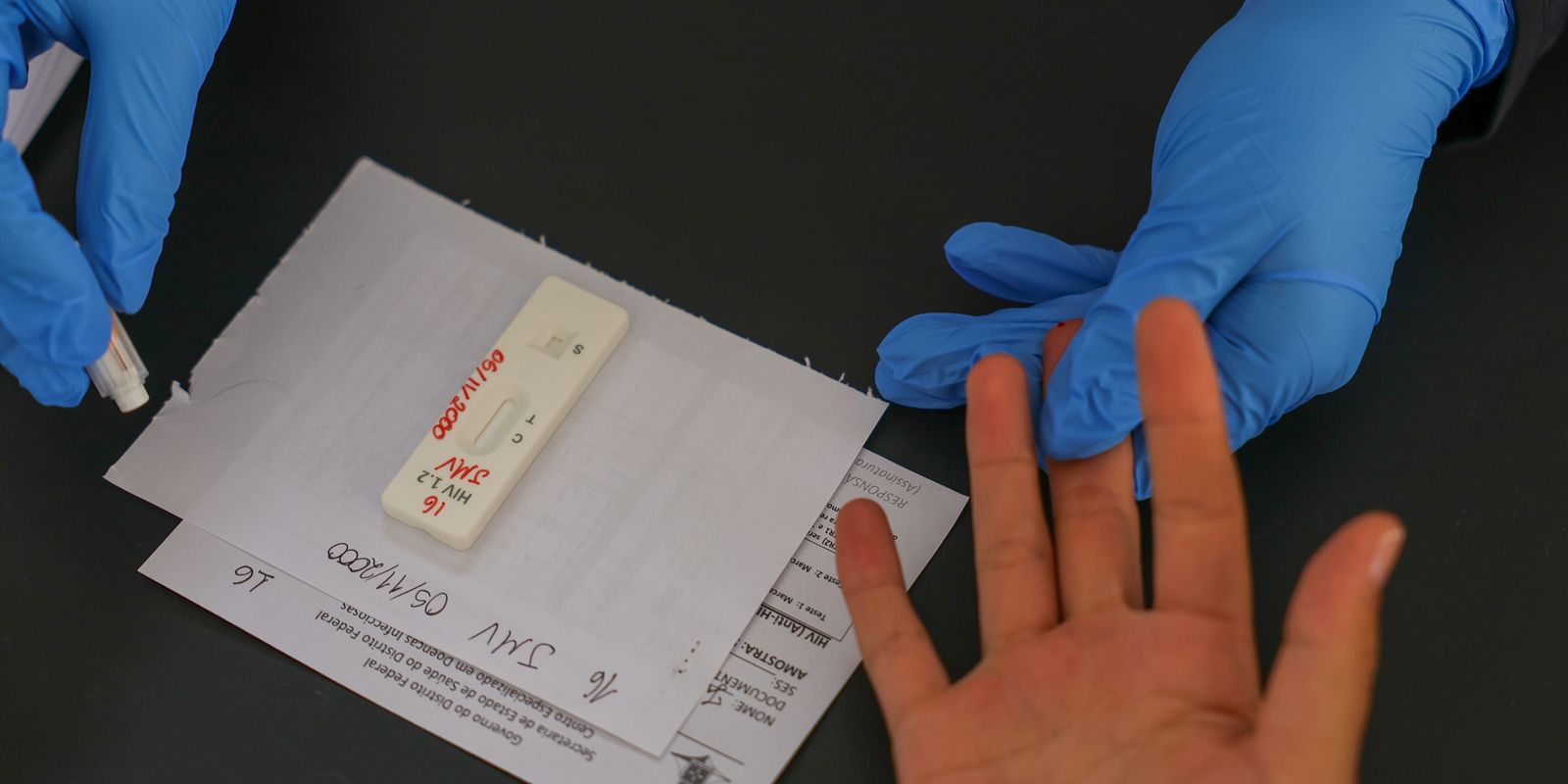
In terms of diagnosis, there was an expansion in the offer of tests with the acquisition of 6.5 million duo tests for HIV and syphilis, 65% more than in the previous year, in addition to the distribution of 780 thousand self-tests, which facilitate early detection and the timely start of treatment.
The SUS offers free antiretroviral therapy and monitoring to all people diagnosed with HIV. More than 225 thousand use the single tablet of lamivudine plus dolutegravir, a combination considered highly effective, better tolerability and lower risk of long-term adverse effects.
By concentrating treatment in a single daily dose, the scheme favors adherence and improves quality of life.
These advances bring Brazil closer to the global goals 95-95-95, which foresee that 95% of people living with HIV know their diagnosis, 95% of them are on treatment and 95% of those treated achieve viral suppression. Two of the three goals have already been achieved by the country.
Reduction of deaths
Brazil also recorded a 13% drop in the number of AIDS deaths between 2023 and 2024, according to a new epidemiological bulletin released by the Ministry of Health this Monday.
There were just over 10 thousand deaths in 2023 compared to 9.1 thousand in 2024. For the first time, the number of deaths fell below 10,000 in three decades. AIDS cases also showed a reduction in the period, with a drop of 1.5%, from 37.5 thousand in 2023 to 36.9 thousand in the last year.
The country has also made progress in eliminating, as a public health problem, the vertical transmission of the disease, when it occurs from mother to baby.
“Brazil presented this report in July to the World Health Organization, at the international event we had here, and the expectation has already been reaffirmed here by the PAHO representative [Organização Panamericana de Saúde] that, throughout the month of December, we must have confirmation, recognition from the WHO that Brazil has eliminated vertical transmission of HIV as a public health problem. And it is the largest country in the world to have eliminated this. Here on the American continent we have Chile, Cuba, Canada as countries that have already reached this level”, announced minister Alexandre Padilha.