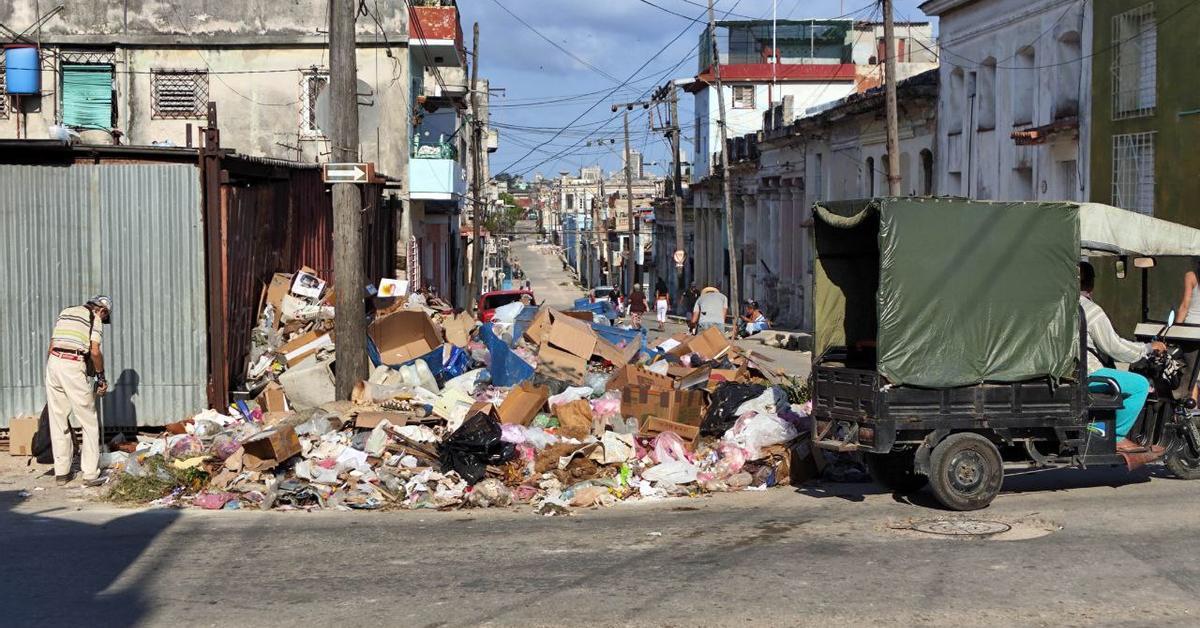
Havana/Given the severity of the health crisis, the Cuban Government has returned to bring up the issue of waste, promising this time that, finally, it will be possible to “exactly define how much garbage and other waste is produced daily in the capital,” thanks to an investigation led by the Ministry of Science, Technology and Environment, universities and Havana institutions.
The preliminary results of the evaluation were presented at the meeting held every week by the country’s leadership with Havana authorities to follow up on the problems accumulated in the territory with the objective of “projecting and managing the sanitation system” once that information is available.
But what they publish as news are known data for a long time and this has not prevented Havana from being buried in the garbage it generates.
In October 2024, in the current “offensive” against garbage, the Provincial Directorate of Communal Services recognized that the accumulation of waste in the capital was increasing at a rate of more than 30,000 cubic meters per day, which, “added to the low technical availability of the equipment, the lack of personnel for collection and social indiscipline, caused a tense situation in all the municipalities of Havana.” according to the newspaper Granma.
In October 2024, Comunales recognized that the accumulation of waste was increasing at a rate of more than 30,000 cubic meters per day
Besides, 14ymedio has been collecting for years complaints about the collapse in waste management, in reports located very far from the technocratic narrative that is now promoted.
In October of this year, due to fear of the expansion of the arbovirus epidemic, the Government began a “sanitation campaign” that has not gone beyond announcements and specific garbage collections.
Now, the official publication admits that the waste collection system is weakened due to lack of fuel, tires and batteries, which reduced the operating capacity of 294 pieces of equipment to 221 between November 21 and 27, the week in which 91,695 m³ of accumulated garbage in the capital were removed, which would leave another 119,000 m3 pending, according to 2024 figures.
The current report highlights the contribution of non-state forms of management, which “not only help improve the cleanliness of the city, but also provide money, including foreign currency, that can contribute to sustaining sanitation tasks.”
By the way, it is stated that during the week 4,111 MSMEs were visited and agreements were signed for the management of the waste they generate, which according to the publication, are based on “a principle implemented by Commander Ernesto Che Guevara when he was Minister of Industries, according to which whoever generates waste must protect, conserve and deliver it,” which is why he transfers a good part of that responsibility to non-state entities.
The official announcement highlights the “need to plan better,” but does not include implementation schedules, investments in infrastructure, guarantees of stable collection, or transparent targets for waste reduction or recycling.
In essence, the authorities celebrate having discovered warm water, in an attempt to clean up their image, but without cleaning up the streets.
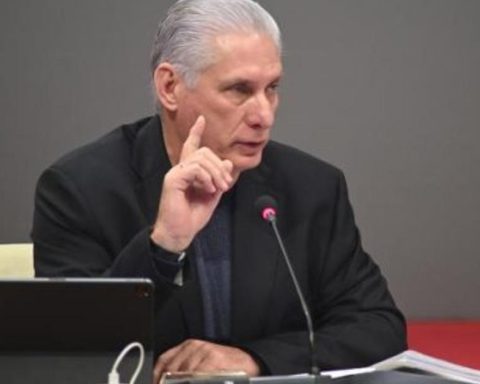
Miguel Díaz-Canel himself, present at the meeting, did not announce additional resources or an effective public health strategy
The epidemiological report follows the same logic, pointing out that febrile cases “have been decreasing” in the last five weeks, while the numbers of patients admitted – 148 adults and 162 minors – are presented as part of a “normal” management, with differentiated work towards pregnant women, the elderly alone and young children.
The official report recognizes that fumigation actions against Aedes aegypti They have been “limited by the availability of workers”, but the proposed solution once again addresses the same actor as always, the population.
Miguel Díaz-Canel himself, present at the meeting, did not announce additional resources, an effective public health strategy or a structural plan to confront growing unhealthiness, but instead demanded “mobilizing reserves” among students and workers.
The government narrative is based on blaming citizens, while the precariousness of public services remains out of focus. The authorities do not admit that the epidemic is expanding due to overwhelmed management and a collapsed sanitation system, but they do expect the population to make up for the State’s shortcomings, supporting, among other things, the management of bazookas for the fumigation of the neighborhoods
And meanwhile, the epidemic of the unspeakable “virus” spreads, garbage and mosquitoes impose their laws on the streets of Havana and the country.