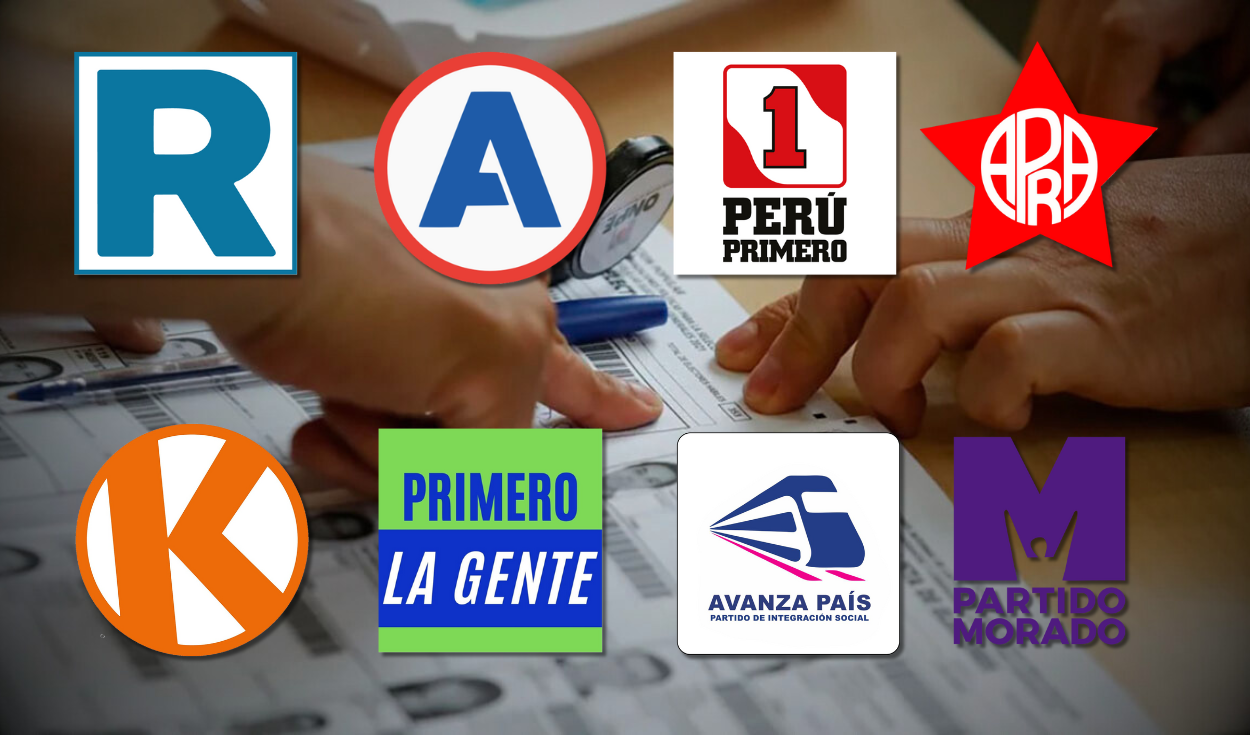
The primary elections On November 30, they called the 39 registered parties, in a day that marked the formal start of the calendar towards the Presidencyhe Congress and the Andean Parliament. He APRA and Popular Renewal They were the only groups that submitted to the direct vote of their members, mobilizing more than 82 thousand voters throughout the country.
According to the ONPE, both organizations used the closed voting modality to define their lists for 2026. The Peruvian Aprista Party registered 43,672 qualified militants at 309 polling stations, while Popular Renewal installed 269 tables for 39,147 members throughout the territory.
YOU CAN SEE: Congress: they propose prison for those who manipulate elections with bots and fake accounts
The day developed with contrasts between Lima and the regions. While in the capital a more active participation was reported, in areas such as Puno and Arequipa there was little attendance, despite the deployment of inspectors from the JNE, the Ombudsman’s Office and the Public Ministry.
The rest of the political organizations elected their delegates in internal processes that will continue this December 7. These representatives will be in charge of defining the final lists of the 37 groups that opted for this mechanism.
YOU CAN SEE: Congress: with votes from Fuerza Popular, Perú Libre and APP, a law that gives more power to the JNJ advances
APRA: internal competition, presence in Lima and low attendance in regions
He APRA developed a competitive day with 14 lists in contention. In Lima, participation was more visible, especially in points such as the Mercedes Indacochea school in Barranco, where the formula made up of Javier Velásquez Quesquén and Carla García Buscaglia voted. Both highlighted that the process demonstrates that the party maintains structure, active militancy and organizational capacity in its centenary.
Other APRA leaders, such as Jorge del Castillo, called for internal unity. He pointed out that, beyond the disputes, the objective is to support the winning formula to direct a competitive proposal for the elections 2026.
YOU CAN SEE: ONPE, Reniec and JNE need S/4,390 million for 2026 elections
In regions, the panorama was different. In Puno, for example, only a few of the 130 affiliates authorized to vote showed up. In Arequipa, attendance was equally low, although the participation of older adults predominated, who highlighted the normality of the process and the constant presence of the ONPE.
According to official reports from the ONPE, with the 75% of processed records, the list 7led by Enrique Valderramais in first position. They accompany him Maria Valdivia and Lucio Vasquez as vice presidents. List 13 follows very closely, headed by Javier Velásquez Quesquén, along with Carla García and Luis Wilson Ugarte for the first and second vice-presidencies respectively.
YOU CAN SEE: Rafael López Aliaga claims not to owe Sunat, but his companies prove debts of more than 19 million soles
Popular Renewal: moderate attendance and presence marked by the figure of López Aliaga
In Popular Renewalthe day was led by the presence of the mayor of Lima, Rafael López Aliaga, who voted at the María Reina Marianistas School. The party leader took advantage of the moment to reiterate complaints about an alleged attack against him and to insist that his group would be one of the few with “real and active” militancy.
In addition, López Aliaga again presented his proposal to reduce the ministries to six, eliminate service orders and toughen the response to illegal mining in Madre de Dios. His statements marked one of the moments of greatest media attention of the day.
YOU CAN SEE: Choose your voting location for the 2026 Elections: ONPE official LINK and steps to choose where to vote
In Piura, the organization installed 34 tables and qualified 1,995 voters. Congressman Miguel Ciccia came to vote and highlighted that this region is the only one where RP presented two different lists, which, he said, reflected a more competitive internal process.
La Libertad was one of the regions with the largest number of voters for Renovación and APRA, with more than 11,000 members registered on the registers of both organizations. The ODPE reported that the process developed normally at 69 tables installed in more than 40 locations.
YOU CAN SEE: Official who provided a camera for Keiko Fujimori’s rally runs for deputy with Fuerza Popular
The other parties: election of delegates and unequal participation in regions
Thirty-seven political organizations opted for election of delegatesa process less visible to the electorate and that will continue next December 7. These representatives will be in charge of defining the presidential formulathe lists at Congress and the regional candidacies for 2026, in a context where a large part of the parties arrive with reduced structures or little active militancy.
In several regions, turnout was low. In Fistdistrict coordinators reported that premises authorized for parties such as Acción Popular, Perú Libre, Fuerza Popular or Avanza País received a minimal flow of militants; In some cases, not even 10% of the affiliated voters went to vote. A similar dynamic was observed in Arequipawhere the ONPE confirmed that although the tables were installed without problems, attendance was slow throughout the morning. JNE observers pointed out persistent flaws in the internal coordination of the smaller parties.
In Limegroups such as Partido Morado, Perú Primero, Libertad Popular, among others, registered a moderate participation. In many localities, delegate votes were cast by provincial or district committees with reduced lists, evidencing the difficulties of several groups in completing their internal organization.
Within this process, Alliance for Progress (APP) chose 24 delegateswho will define the presidential candidacy and the congressional lists. Your leader, Cesar Acunaassured that APP “is prepared to govern Peru” and that its presidential formula will be announced once the internal process is concluded.
YOU CAN SEE: 7 political parties that will run in 2026 are linked to violations of electoral neutrality
In Popular Forcethe elected delegates have the task of ratify the presidential formula headed by Keiko Fujimori along with Luis Galarreta as a candidate for the first vice presidency and Miguel Torres for the second vice presidency. Fujimori affirmed that this process of delegates is part of the order required by law, while his party prepares to formalize its participation in the 2026 Elections.
In the case of People Firstwhich reported the results of its election 20 regular delegateseach with its respective accessory, representing 18 regions. The winning list was List #1headed by Manuel Atowhich will assume functions of representation, articulation of proposals and internal coordination. In addition, the party consulted the militancy which presidential formula should be considered by the delegates: the proposal led by Marisol Pérez Telloaccompanied by Raúl Molina and Manuel Ato, was the winner of said consultation.