In 1983, Moraes Moreira from Bahia sang: “Now how do I get revenge for every defeat in my life, if with every Flamengo goal I felt like a winner”. At the time, he regretted the departure of Zico, the club’s biggest idol, to Europe.
Today, 42 years later, millions of people forgot the sorrows and frustrations of everyday life when defender Danilo hit a header and scored the goal for Flamengo’s fourth Libertadores title.
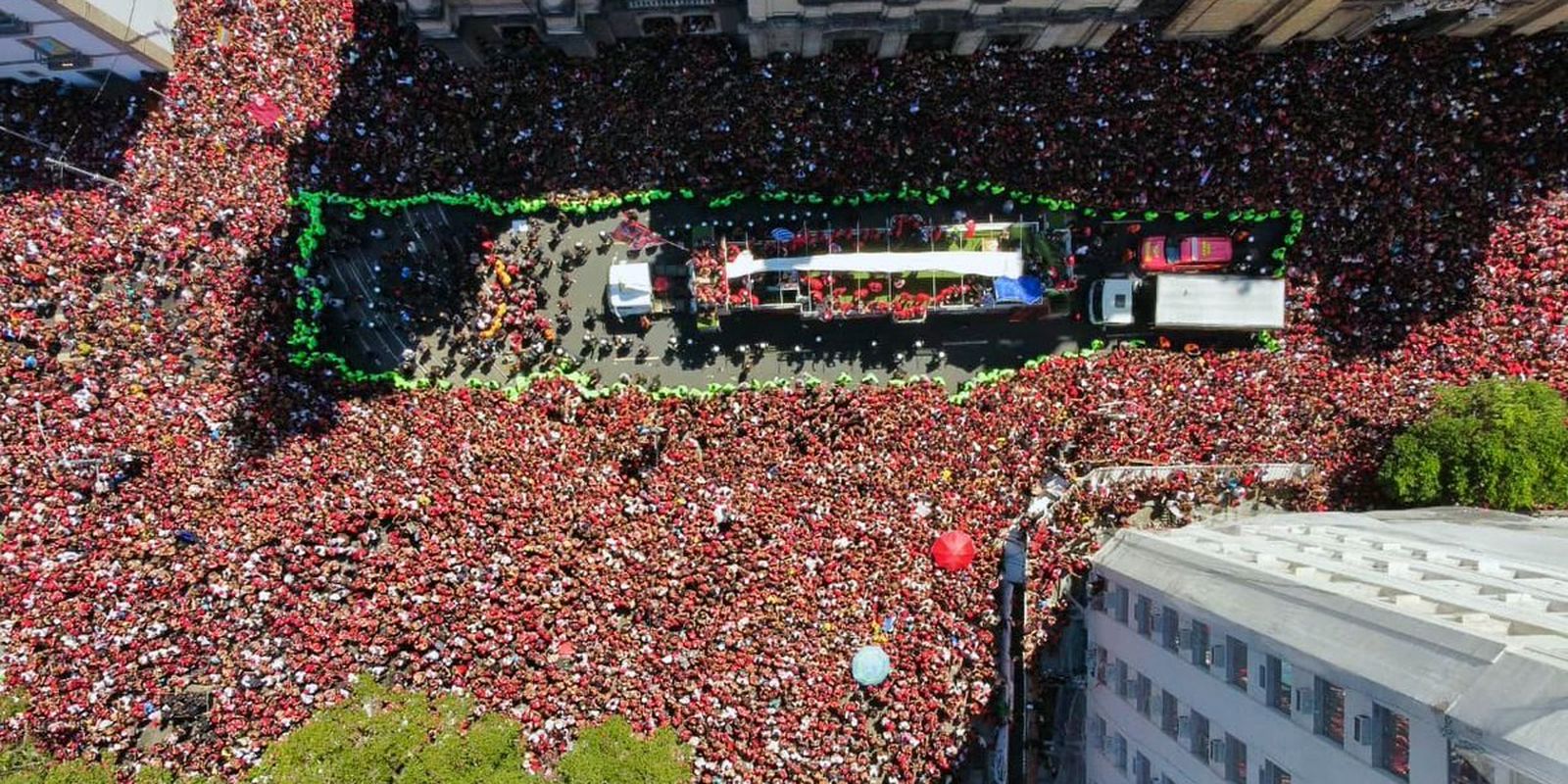
This Sunday (30), hundreds of thousands of these winners portrayed by Moraes Moreira gathered in the center of Rio de Janeiro to, together, show the team how important this victory was to them.
From the top of an open Fire Department truck, the players celebrated with part of the “Nation”, as Flamengo fans call themselves, the victory on Saturday (29) at the Monumental Stadium in Lima, Peru.
The crowd that waited hours under the sun and filled Rua Primeiro de Março and Avenida Presidente Antônio Carlos, two of the main roads in the city center, is an expression of the power of mobilization through football.
THE Brazil Agency talked to fans about the motivation and cohesion forged by the sport, which made people wake up early and travel from far away to watch the celebration in the center of Rio, 5,100 kilometers from the match site.
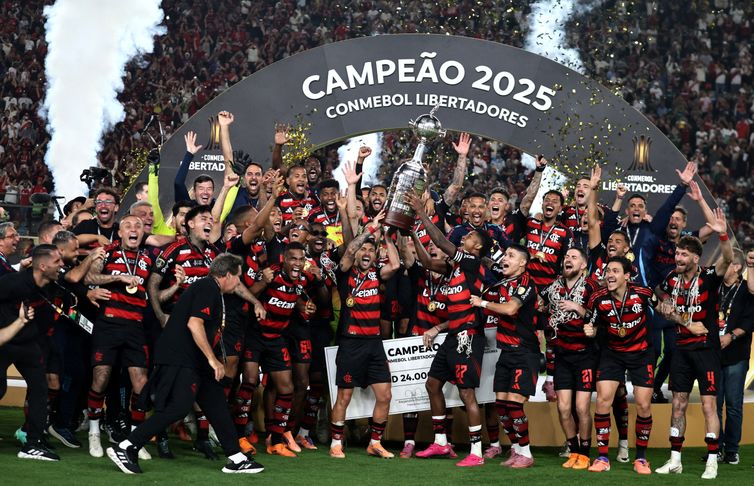
In a tense game with few chances, Flamengo beat Palmeiras 1-0 in Lima, Peru, and lifted the Copa Libertadores da América for the fourth time in its history. Photo: REUTERS/Sebastian Castaneda/Rights reserved
Double victory
The couple Eduardo Ferreira Henrique and Valéria Nunes Domingos said that celebrating a title on the field is also a form of motivation to face the pain of everyday life.
In their case, who live in Cosme Velho, a neighborhood in the south of Rio, the weekend is a double celebration. On the day of the game, great news came.
“Yesterday, we had two victories. My wife was suspected of having cancer, the result was negative; and Mengão’s victory. It was a wonderful, sensational day! Double celebration”, cheered Eduardo.
For Valéria, victories like Flamengo’s are motivation to keep a constant smile in life. The couple also praises the union that football provides.
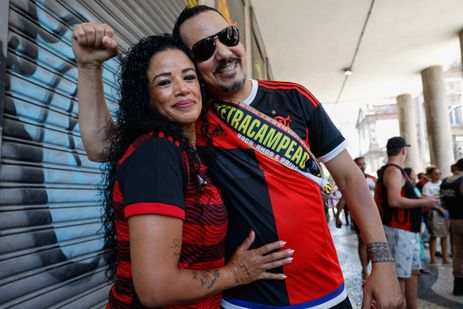
Valéria Nunes Domingos and Eduardo Ferreira Henrique had a double victory on Saturday: the victory of Flamengo and the negative result of a suspected cancer in Valéria. Photo: Fernando Frazão/Agência Brasil
“At the time of euphoria, everyone hugs each other, everyone shows happiness. This violence thing is a thing of the past, now the whole crowd unites, everyone together”, believes Eduardo.
Family
If Eduardo and Valéria left a nearby neighborhood, there were people who came from much further away. This was the case of Andressa Vitória, who lives in São Gonçalo, a municipality in the metropolitan region of Rio, about 30 kilometers away, almost two hours away.
Andressa was accompanied by her family and arrived around 9 am, more than three hours before the athletes passed by the place. Alongside her mother-in-law, Rosane Rodrigues, she told the reporter that the emotion with yesterday’s victory is a relief for her personal life.
“Especially for those who have an anxiety attack”, he reveals.
She also sees football as a way to bring people together to the point where, for her, they form a family.
“If you’re watching a game in the bar, it seems like everyone knows each other, they start exchanging topics about it. You end up making friends because you always watch a game in that place, you end up becoming a family”, he says.
Lighter life
Fan Eusébio Carlos André lives in Resende, a city in the south of the state 170 kilometers from Rio. Optimistic, he had planned to be in the capital of Rio de Janeiro this weekend and participate in a possible celebration.
For him, the joys of football help make life lighter. “Flamengo winning makes the family man happy, everyone happy. The guy happy at work, happy in love, happy with his son”, he says.
He also highlights what he considers to be the democratic side of football, among all fans, regardless of club.
“All the fans manage to bring together the poor and the rich, the guy who earns R$50,000 together with the guy who earns R$80 a day. Football unites everything, all races and ethnicities”, he declares.
Mass phenomenon
The passions and social cohesion caused by football have already been the subject of countless academic studies. One of them is that of retired professor Mauricio Murad, from the State University of Rio de Janeiro (Uerj).
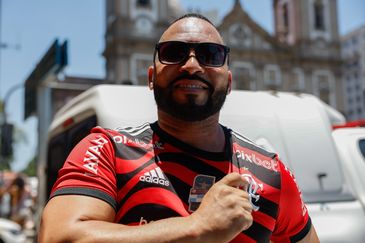
Eusébio Carlos André Vicente went to the state capital in advance, already thinking about the victory party. Photo: Fernando Frazão/Agência Brasil
In the article Football in Brazil: sociological reflectionsalso a doctor in sociology of sport from the University of Porto, in Portugal, states that football is one of the biggest mass culture events in Brazil.
“It mobilizes collective passions, expresses the anthropological foundations of our formation and represents our symbolic system, like few events in the social structure”, he writes.
Murad considers that “the greater materiality of football is not restricted to professional sport”. For him, the symbolic value of football spills over into all of social life.
“Football is the most significant phenomenon of crowd culture in Brazil, stimulating hearts and minds, in different regions, in different social classes, in different age groups, education levels and gender relations”.
The professor highlights that this effect surpasses even Carnival, as it spreads throughout the country and manifests itself throughout the year. “It is often said that King Momo’s reign lasts four days and that King Pelé’s reign lasts the whole year.”
Passion as inheritance
The couple Maurício Braz and Flávia Torres left Magé, a municipality in the metropolitan region, to attend the celebration. They took one of the youngest red-blacks there to the party: João Vicente, just 9 months old.
With the baby on his lap, the father proudly explained how the tradition of supporting the club passes from generation to generation. “It’s something that passes from father to son. Just like here, I’ve kept this shirt since November 1995”, he says while pointing to the red and black blouse on the Flamengo baby’s body.
“I’m passing it on to him here today with the Libertadores tetra”, he adds.
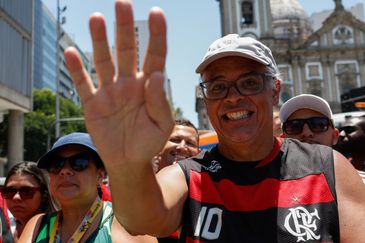
Hélio Marcos Ferreira Chaves hopes to celebrate another Flamengo title next Wednesday (3), this time accompanied by his son. Photo: Fernando Frazão/Agência Brasil
The generation may even pass from family to family, but for Hélio Marcos Ferreira Chaves, this Sunday’s party was a little more unattended than those of 2019 and 2022, when Flamengo was also champion.
“In 2019 and 2022, I was with my children. Now I’m without them”, he jokes, justifying that one of them was working and couldn’t attend.
“But on Wednesday he will be with me”, he promised for Wednesday (3), when the team faces Ceará in the Brazilian Championship. The game could give the club another championship title.
The famous samba singer João Nogueira once said: “when Mengo loses I don’t want to have lunch, I don’t want to have dinner”. But this weekend, the Nation ate lunch, dinner and slept happily.