In the midst of an economic crisis marked by a shortage of foreign currency, low national production and the persistent impact of United States sanctions, the Cuban Government intensifies its efforts to forge new international trade alliances.
The island continues to commit to cooperation with the Eurasian Economic Union (EAEU), and, especially, with Russia, as part of a strategy to diversify its partners and mitigate the severe situation it is going through.
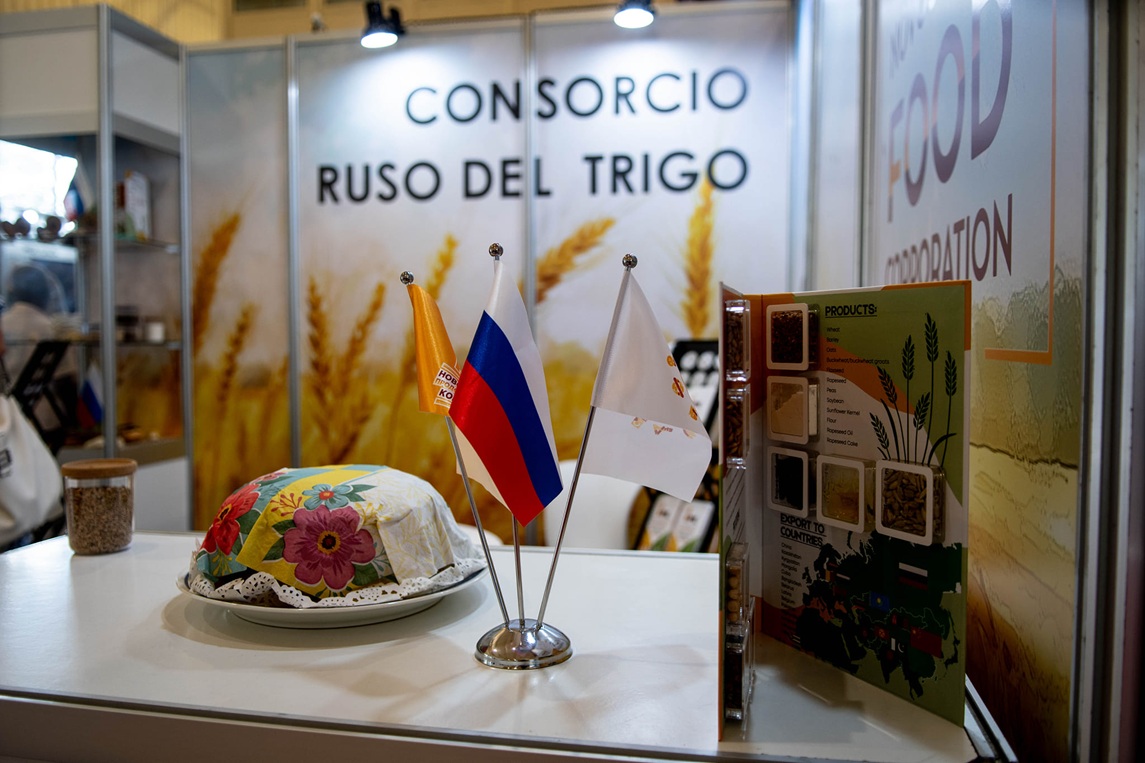
The 41st Havana International Fair (FIHAV 2025), held this week with the participation of more than 700 companies from 52 countries, became the showcase where the Cuban government exposed its urgent needs to attract foreign investment and consolidate joint projects.
The Deputy Prime Minister and Head of Foreign Trade and Foreign Investment, Oscar Pérez-Oliva Fraga, stressed that the immediate priority is to increase national production and external income, with foreign investment as an essential component of economic and social development.
Opportunities for collaboration in agroindustry are evaluated within the framework of the 4th Cuba-CEE Joint Commission, by the @minalcuba the VM @OrlandoBorrero7 exchanges with Mr. Dayinar Sharshenbekovich Imanaliev Member of the College and Minister of Integration and Macroeconomics of the EEC. pic.twitter.com/OP4fD8EXUf
— Ministry of the Food Industry of Cuba (@minalcuba) November 26, 2025
“Cuba does not want to be a burden; it wants to work side by side on mutually beneficial projects,” said Pérez-Oliva, in a message that sought to convey confidence to potential partners in a context of urgency.
Cooperation with the Eurasian Economic Union
During the fair, the fourth meeting of the Joint Commission between Cuba and the Eurasian Economic Commission was held, in which a protocol was signed that seals the agreements reached and projects new strategic lines for the period 2026-2030.
The document contemplates projects in key sectors such as food production, industry, biotechnology and tourism, detailed a dispatch from the Russian agency. Sputnik.
The Minister of Integration and Macroeconomics of the Eurasian Economic Commission, Daniyar Imanaliev, highlighted that this year marks the fifth anniversary of Cuba’s status as an observer state in the bloc, made up of Russia, Belarus, Kazakhstan, Kyrgyzstan and Armenia. “The island has taken constant steps to strengthen commercial and economic dialogue,” he noted.
One of the most relevant points was the proposal to create a logistics center in Cuba, conceived as a bridge to promote commercial ties between the EAEU and the countries of Latin America and the Caribbean. The initiative seeks to position the island as a regional platform in a market of more than 55 million people.
Russia asks Cuba to strengthen its alliance in the face of Western sanctions
Collaboration with Russia: specific projects
Cooperation with Russia took center stage at the Havana fair. 22 Russian companies participated in FIHAV 2025, exploring opportunities in sectors such as the automotive industry, energy and biotechnology.
The Russian ambassador to Cuba, Víctor Koronelli, described the relationship as “multifaceted and mutually beneficial,” although he acknowledged that there is still a need to fully reactivate economic and commercial cooperation.
Among the announced projects is the assembly in Cuba of a thousand vehicles from the Russian company UAZ together with the Cuban Empresa Integral de Servicios Automotores (EISA). In addition, the firm Intelligence Systems Russia (ISR) agreed with the Cuban Electrical Union to open an LED lighting assembly plant in Santa Clara, with plans to export some 80,000 lamps to countries in the region.
Another large-scale project is the construction of a metallurgical complex at the Antillana de Acero plant, on the outskirts of Havana. According to the Russian Ministry of Industry and Trade, the work is 70% completed and will allow the production of about 160 thousand tons of rolled steel per year when it is completed in 2026.
Biotechnology and food: strategic sectors
The director of the Russian National Committee for Economic Cooperation with Latin American Countries, Tatiana Mashkova, highlighted the potential of Cuban biotechnology and warned that Chinese companies could take advantage of these opportunities. “It would be very beneficial for the Russian business community to invest in this sector because the Cuban side is willing to organize production in Russian territory, selling the technology,” said the Russian executive.
Mashkova also highlighted the Cuban food industry, with products in high demand in Russia such as mango, avocado and banana. The Russian retail group X5 Import showed interest in importing tropical fruits, seafood and high-end Cuban cosmetics.
The Cuban government announced new measures to facilitate foreign investment, including a differentiated financial scheme, greater autonomy for companies, operations in foreign currency and national currency according to needs, encouragement of exports and electronic commerce with payments from abroad.
These decisions seek to offer a more attractive framework for investors, in a country with a domestic market of about 10 million inhabitants and little competition.
Mashkova described the conditions as “fantastic” and suggested that Cuba could become a logistics hub to re-export products to Central America and the Caribbean.
A context of sanctions and blockades
Both Cuba and Russia face great challenges derived from the sanctions imposed by the West. In the case of the island, the economic, commercial and financial embargo/blockade of the United States has been maintained for more than six decades, limiting its access to markets and sources of financing.
For Moscow, the restrictions derived from the war in Ukraine have driven the search for new partners in Latin America.
In this scenario, the alliance between both countries takes on a strategic character. “Relations are at an excellent level,” said Pérez-Oliva, who insisted that FIHAV constitutes a favorable scenario to reach agreements and take a leap in economic and commercial relations.
The signing of the Joint Commission protocol and the projects announced at the fair reflect Cuba’s willingness to play a more active role in the EAEU, which manages a joint GDP close to 2.6 trillion dollars and a population of more than 185 million inhabitants, and to consolidate its relationship with Russia. However, the main challenge will be to materialize the memorandums of understanding into concrete results that impact the Cuban economy, doomed this year to another decrease in its GDP.