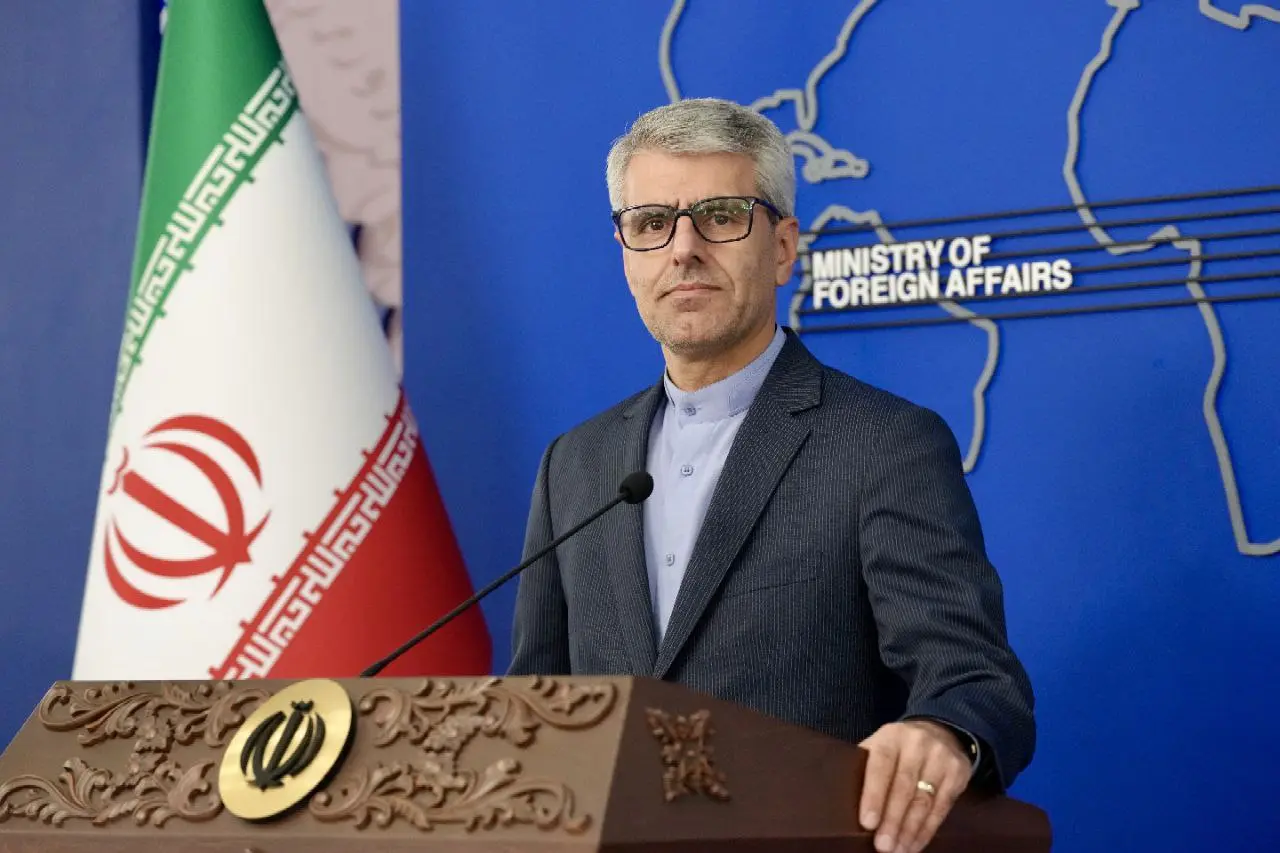
The Iranian Foreign Ministry raised its voice this Saturday against the decision announced by the president of the United States, Donald Trump, to close Venezuelan airspace. The measure was described as “arbitrary” and an “unprecedented threat” to the safety and security of international aviation.
Foreign Ministry spokesman Esmaeil Baghaei warned that this action could have “dangerous consequences” for the rule of law, peace and global security. He also stressed that the provision not only violates the rules that regulate international air transport, but is part of a series of “provocative and illegal actions” by Washington that, according to him, threaten the sovereignty of Venezuela.
With this statement, Tehran joins the critical voices that question the measure, warning about its impact on international stability and respect for the rules that govern civil aviation.
In a crazy social media post, The president of the United States, Donald Trump, issued a warning in the midst of a military escalation and of pressure on Venezuela and the Government of Nicolás Maduro: “To all airlines, pilots, drug traffickers and human traffickers, please consider the airspace over and around Venezuela as closed in its entirety.”
This attempted air blockade constitutes another step in the escalation of illegal aggressions that Washington applies against Venezuela.
The government of the Bolivarian Republic of Venezuela condemned in the strongest terms the “colonialist threat” from the United States.
Foreign Minister Yván Gil made public the government communicationin which it maintains that “this type of declaration constitutes a hostile, unilateral and arbitrary act, incompatible with the most basic principles of International Law.”
In this sense, the text states that Venezuela denounces to the world that such accusations constitute “an explicit threat of the use of force, clearly and unequivocally prohibited by Article 2, paragraph 4, of the Charter of the United Nations.”
Trump’s threat is the latest escalation in a military campaign that Washington began months ago, justifying it as “the fight against drug trafficking.” Since August, the United States has deployed warships, submarines, military aircraft and troops to the coasts of Venezuela, reportedly moving nearly a third of its naval fleet to the region.
In parallel to this deployment, US attacks against vessels suspected of transporting drugs in the Caribbean have resulted in a death toll of more than 84, intensifying the crisis in the area.