Havana/The appearance of African swine fever in groups of Catalan wild boars has forced the Spanish Government to suspend 120 health certificates for exports of various pork products to 40 countries, including Cuba. The ban affects pork meat and products, sausages, hams, pork fat, viscera, genetic material, semen, breeding pigs, raw materials for feed, fattening piglets, pork guts and embryos.
African swine fever is a highly contagious viral disease that exclusively affects domestic pigs and wild boars. It is not transmitted to humans, but causes hemorrhagic fever and high mortality in infected animals. Due to its ease of spread and devastating impact on farms, countries impose strict trade restrictions whenever an outbreak appears.
Spain has not suffered episodes of swine fever since 1994. The current outbreak causes it to lose its status as a country free of African swine fever (ASF) before the World Organization for Animal Health (WHO) and, therefore, its products can no longer carry that certificate.
Spain has not suffered episodes of swine fever since 1994
However, not all countries react the same way to an ASF outbreak. Some large importers, such as China, which is the largest buyer of Spanish pork, accept regionalization, which means that they will only restrict imports from the affected area, in this case Catalonia, allowing the rest of the Spanish territory to continue exporting normally. This is not the case of Cuba, which does not apply this principle and establishes a total veto on pork products as soon as a focus of the disease is detected anywhere in the country.
The unexpected outbreak is a strong blow for Spanish pork producers and also for Cuba, which depends almost entirely of imports to cover its meat demand due to the collapse of its industry, which is at historic lows. Spain is, since 2023, the main supplier of pork to the Island, followed by the United States and Brazil. We will have to see how these health measures affect Cuban tables, at least for those who can afford it this end of the year. The temporary loss of this key supplier coincides with a Cuban market already pressured by shortages, rising food prices and the persistent weakness of national production.
/ 14ymedio
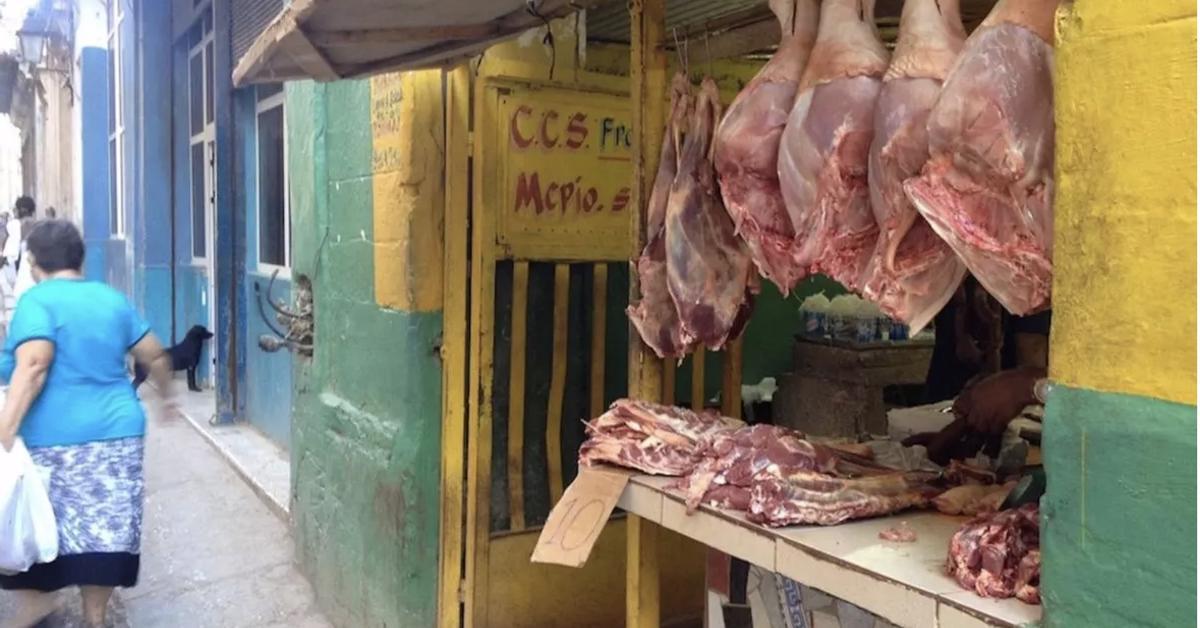
In most of the country’s agricultural markets, a pound of boneless pork has exceeded 1,000 pesos this November and, as usually happens, its price will rise as the celebrations approach; the suspension of purchases from Spain will make the traditional New Year’s Eve dish even more unaffordable.
The pound of boneless pork has exceeded 1,000 pesos this November
So far, there is no official statement from the Cuban health authorities on whether or not the entry, through travelers or personalized shipments, of pork products from Spain will be maintained. Common technique for introducing food into the country, which since 2021 has maintained a tariff exception for “non-commercial” imports of medicines and food. The situation is aggravated by the proximity to Christmas, a time when demand for pork, sausages and hams increases. This extraordinary situation could hit the already hard-hit pocketbooks of Cuban families hard at the end of the year.