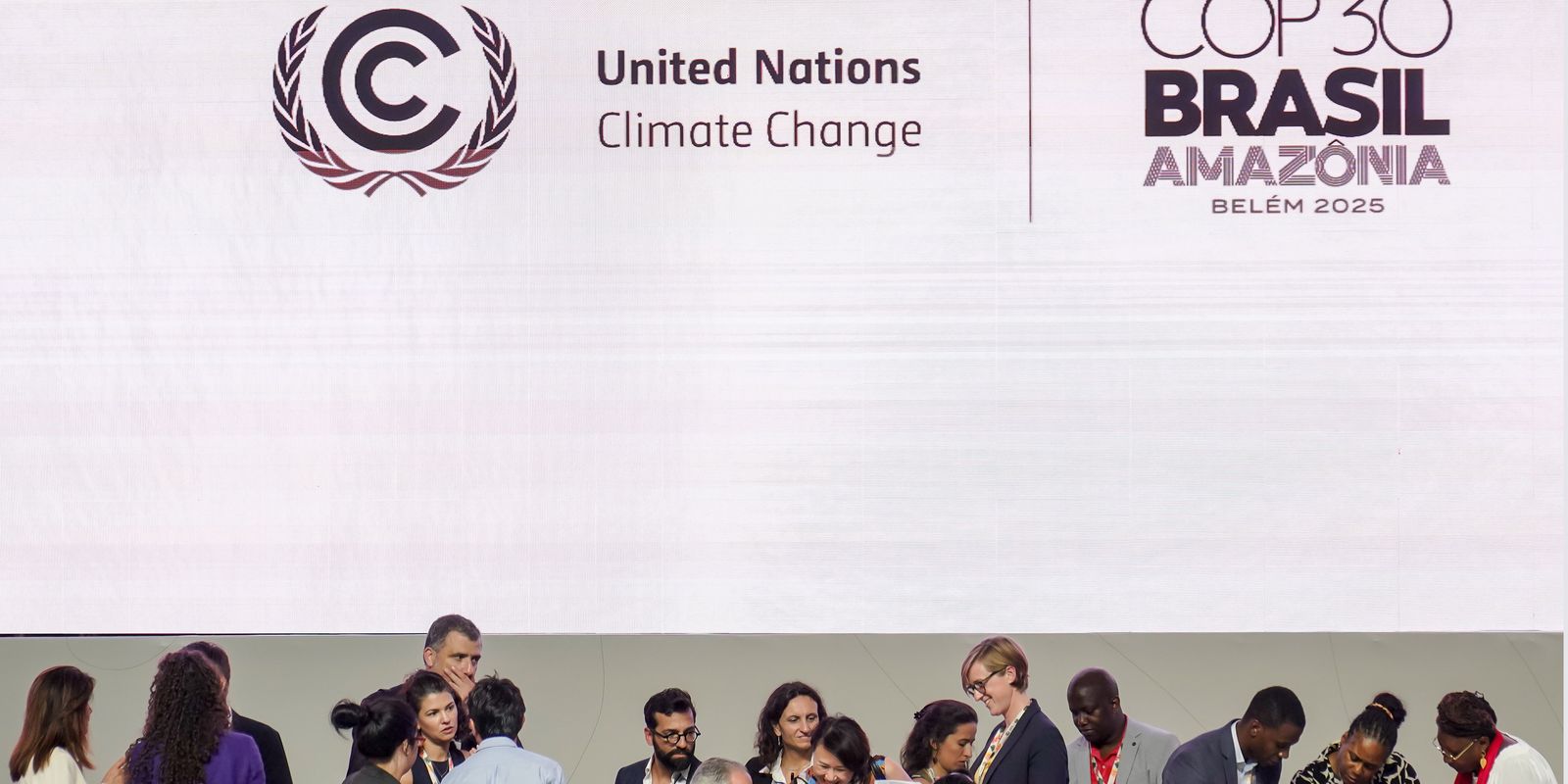
In the balance of the 30th United Nations Conference on Climate Change (COP30), held in Belém (PA), consensus on 29 items on the climate agenda was reached among the 195 parties that participated in the negotiations. The final document, expected at the end of each COP, does not include other agreements that go beyond official decisions, but which are also decided in the multilateral environment, such as the Action Agenda.
According to the general coordinator of the COP30 Presidency’s Action Agenda, Bruna Cerqueira, the creation at the end of COP30 of a document with 120 acceleration plans of climate initiatives and 190 countries acting in at least one of them was an unprecedented global feat.
For the first time, initiatives that converge to implement the decisions of a COP, built by other actors such as the private sector or subnational governments, were organized into a kind of bank of global good ideas. According to Bruna Cerqueira, the intention was to bring together voluntary actions to speed up the implementation of what had already been decided.
“We created six axes for the Action Agenda. Focused on energy, industry and transport; on forests, biodiversity and oceans; on food systems and agriculture; on cities, infrastructure and water; on human and social development and a last transversal one on financing, technology and training”, explains Bruna.
Results
In practice, the results could already be observed throughout the activities taking place in Belém. One example was the global initiative to land protectiona plan to accelerate the commitment to Forests and Land Ownership (Pledge, in its acronym in English), which already existed before.
According to the member of the COP30 presidency, an effort more focused on results and connecting negotiations to people’s lives resulted in greater countries adhering to the plan, and in the renewal of resources to finance the action.
“US$1.7 billion were anticipated and now they have set another target of US$1.5 to US$2 billion in new resources. And this was accompanied, in this new stage, by a commitment from some countries to improve their land management. Brazil even announced some demarcated lands during the COP, as part of this commitment as well.”
Levers
After being classified into the six axes, the initiatives received diagnoses based on 12 levers for implementing actions, based on perspectives ranging from the regulation of initiatives in the territories to demand, supply and public acceptance.
“We made a diagnosis of what is going well, what needs to be focused on and the plans are actions to deal with these levers, so that we can unlock the issues that are blocking and implement faster”, explains Bruna.
As a guide for this work, the COP30 presidency worked based on the Global Balance Sheet (GST), a transparency mechanism of the Paris Agreement, to assess progress on long-term greenhouse gas emissions targets. Every five years, the first was delivered during COP28, in Dubai, United Arab Emirates, held in 2023.
Connection
Based on the classification and diagnosis aligned with the results of the GST, the Action Agenda reached an effect that connects formal negotiations to people’s daily lives, assesses the coordinator. “If we want to transform economies, to be able to place everyone in a structure of these six axes, any economic actor or any actor in society has to understand. Hardly anyone will know paragraph X of the GST, but if you talk about energy, industry and transport, everyone understands”, he highlights.
With 120 plans built, many of which have been forwarded, Bruna Cerqueira assesses that the next steps are to continue so that the Action Agenda is strengthened in the next COPs. “The next presidency has already signaled in the agreement between Turkey and Australia that they liked the structure and that they want to build on that. The challenge now is to stabilize the legacy and work with them to continue bringing everyone to the table and accelerate this implementation”, he concludes.