He retirement savings has great challenges in terms of coverage, sufficiency and inequalityespecially for people who work in the informal economy, who receive less income from their work and lack social security.
He 58% of the population national has a retirement savings account or an afore; However, the gap between those who earn their living formally and informally is significant.
He 87% of formal workers claim to have an account with these characteristics. In contrast, only 34% of those who work in the informal sector – also called the underground economy – have one, according to an analysis (with data up to 2024) from Mexico, How are we doing? and Vanguard, the world’s second largest asset manager.
When looking in detail, the differences are more palpable. In decile I (lower-income population), the number of retirement savings accounts or afore of formal and informal is 64.8% and 20.3%respectively, that is, a ratio of three to one. In decile X (highest income), the figures are 87.2% and 44.7% in each case, practically two to one.
Sofía Ramírez, director of Mexico, How are we going?, highlights that the workers informal they must go through more steps to saveincluding the decision to do it and trust in the financial system, while formal employees are automatically affiliated to an Afore. Furthermore, in both cases, challenges remain, such as underestimating the importance of the future, overcoming loss aversion, taking responsibility for retirement, and avoiding complex financial decisions.
This own situation that 67.3% of people consider that they must continue working to cover their expenses in old age and 68.2% think that they will pay these with government support.
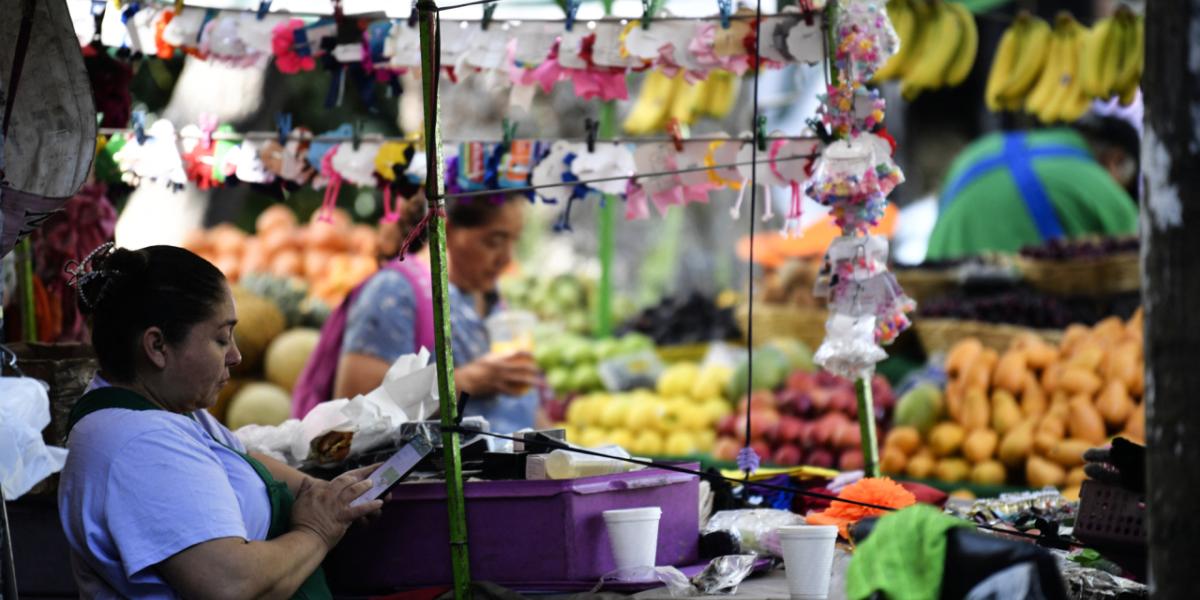
in the studio Mexico, How are we doing with retirement savings?they realize that 54.5% of the employed population works informallythat is, without social security.
This implies that 55 out of every 100 workers and 54 out of every 100 workers do not have access to contributions that are done to have a better pension.
David Cervantes, BBVA analyst, points out that this population segment not only lacks labor benefits, but also has lower incomes compared to the formal sector. In this last branch of the economy, the average hourly wage is 43.7% higher than that received in the underground economy. Furthermore, when seeing how many earn the equivalent of up to one minimum wage, the figures are 53.6% and 23.3% for informal and formalrespectively.
“Labor informality is one of the most important problems in Mexicobecause it has very relevant social and economic implications. You have more than half of the population that does not have rights. And although the government has managed to put in place patches with social programs, ultimately this segments the population and families into two groups with differentiated rights,” says Mireya Pasillas, professor at the ITESO Business School.
Women are the most affected
The Women face a series of structural disadvantages that limit their retirement savings capacity. On average, they start working almost three years later than men and often have lower educational levels, which directly influences the jobs they access and the income they receive, the study highlights.
This disparity is also observed in the access to retirement savings accountswhere 34.2% of women have an Afore, compared to 51.4% of men.
Among the most relevant factors that explain the gender gap are, in addition to the informality, low participation of women and a shorter stay in the labor market, because many interrupt their professional careers due to maternity or to assume care responsibilities and do not always return to work.
What can be done?
The study proposes seven measures to encourage savings, including link procedures such as the INE with the opening of Afore accounts digitalaccompanied by incentives and financial education; communicate the benefits of formal savings over informal schemes to make it more competitive against options and promote easy-to-use mobile applications and platforms.
You can write your questions to [email protected]