The authorization for American aircraft temporarily operate from two airports Dominicans, announced on Wednesday by the Government, is part of a limited scheme, strictly technical and fully supported by the bilateral legal framework that governs since the anti-drug agreements of 1995 and its Expansion Protocol of 2003. The operation will extend until April of next year and is limited to logistical and support work in regional interdiction missions against drug trafficking.
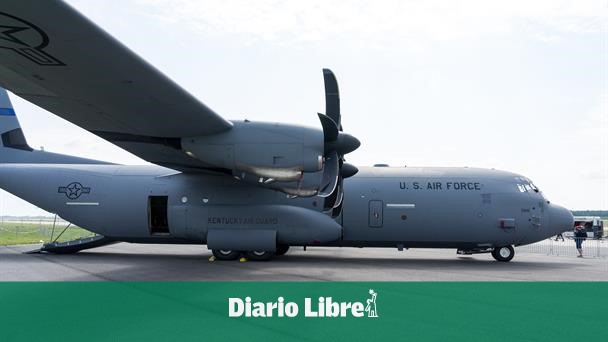
Official sources explained that the authorized air presence includes only tanker aircraft and aircraft military transportnecessary for replenishment, technical support and logistical mobility. These are not combat ships or offensive platforms, and there is no authorization for war operations, preventive attacks or force actions initiated from Dominican territory.
Cooperation is defined as non-combatant, in line with the commitments established in the 2003 Protocolwhose paragraph 19 ter.d expressly allows “the landing and temporary stay of aircraft on the order of the United States in airports “Dominican international” for resupply, assistance and logistics purposes.
The US personnel who will be stationed in the country during this period will be exclusively technical: crews, mechanics, support operators and aeronautical security personnel. There will be no combat troops or operational units deployed in warlike functions. In line with the current legal framework, the Dominican Republic maintains full control over its territory, its airspace and its airport facilities, and the authorized movements must comply with the procedures established in the articles that regulate the use of airspace (8 bis and 8 ter) and the transit of personnel in non-armed operations.
The signed authorization yesterday is the result of long and meticulous diplomatic negotiations that have developed over the past few months.
According to officials involved in the process, the Dominican side insisted on safeguarding three essential elements: strict observance of the Constitution and national laws, full respect for the operating limits set in the 1995 and 2003 agreements, and the protection of interest national in the face of an increasingly volatile regional context. This care—sources point out—explains the level of detail incorporated in the operational authorizations and notification protocols.
He 1995 agreement and, above all, the 2003 Protocol They constitute the legal basis on which this decision is based. The bilateral framework contemplates the right of overflight in anti-drug missions and the possibility of landing and temporary stay of aircraft, always for logistical purposes and in coordination with the Dominican authorities.
This instrument also establishes that any operation must be carried out with advance notice reasonable, subject to the dominican norms aviation and express prohibition of putting lives at risk or carrying out offensive actions from national territory.
The Government stressed that this cooperation is framed exclusively in the regional fight against drug trafficking and does not alter the Dominican foreign policy nor does it commit military participation in external conflicts. The technical presence of US aircraft and personnel responds to a transitional schemelimited and under already agreed rules, which are now activated at a time of tension and reorganization of illicit routes in the Caribbean.
The operation, valid until April, will be supervised by the competent Dominican authorities, who will maintain control over permits, movements and the execution of each phase. According to the source consulted, “cooperation occurs within the Dominican legal framework, without exceptions and no gray areas“.
1. Temporary and non-war authorization
The operation of US aircraft from two Dominican airports will be exclusively logistical and technical, without Dominican participation in war actions or authorization for offensive attacks from national territory. The validity is limited: until April of next year.
2. Legal basis in agreements of 1995 and 2003
The permit is based on the 1995 Agreement and the 2003 Protocol, especially paragraphs 8 bis, 8 ter (overflight and air coordination) and 19 ter.d (landing and temporary stay at Dominican airports for logistical purposes).
3. Type of aircraft allowed
Only tanker and cargo aircraft will operate, intended for resupply, transportation and technical support in anti-drug interdiction missions. Fighter ships and offensive platforms are not included.
4. Strictly technical US personnel
The North American contingent will be made up of crews, mechanics, maintenance specialists and aeronautical safety personnel. There will be no combat troops or operational military units deployed in Dominican territory.
5. Result of careful diplomatic negotiations
The permit signed yesterday is the result of a negotiation process in which the Dominican Republic emphasized respect for the Constitution, the bilateral legal framework and the national interest, ensuring that cooperation remains within the established legal and operational limits.