Brazilian airlines will be able to finance the purchase of aviation kerosene (QAV) with coverage from the Export Guarantee Fund (FGE). The Executive Management Committee (Gecex) of the Chamber of Foreign Commerce (Camex) approved, this Thursday (27), in Brasília, the creation of a mechanism that will allow airlines to seek up to R$2 billion in credit with the fund’s guarantee.
In exchange for having access to the FGC guarantee, which results in credit with lower interest rates, airlines will have to stimulate the development of the sustainable aviation fuel (SAF) market in Brazil. According to the Ministry of Development, Industry, Commerce and Services (Mdic), companies can exercise compensation in three ways:
• purchase nationally produced sustainable aviation fuel;
• invest in national SAF production factories;
• make contributions to the National Fund for Industrial and Technological Development (FNDIT), in projects related to the SAF.
Lower costs
According to Mdic, the initiative aims to reduce airline operating costs and support the energy transition in the sector. The ministry informed that the proposal was prepared by the ten member ministries of Camex, by the National Civil Aviation Secretariat of the Ministry of Ports and Airports and by the Brazilian Association of Airlines (Abear).
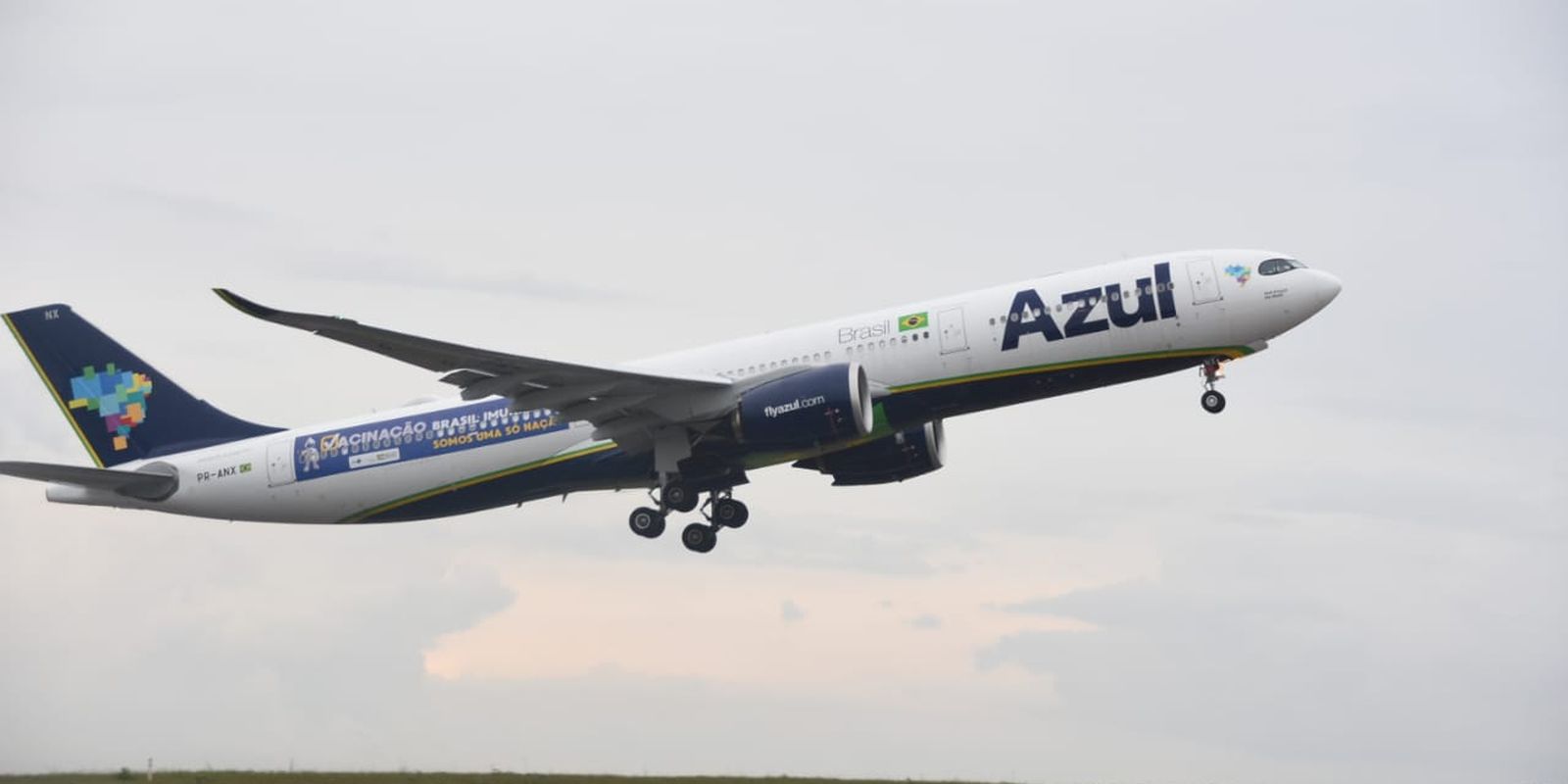
The measure tends to directly benefit Azul, which presented a judicial recovery plan to the United States courts and seeks to prove greater financial strength to enable its approval. The new mechanism will bring an immediate boost to cash, equivalent to working capital for the purchase of fuel.
Before Gecex’s decision, the Export Financing and Guarantee Committee (Cofig) had authorized, in May, the application of the FGE to reduce the cost of QAV. The approval paved the way for this Thursday’s decision.
Defense measures
Gecex-Camex also deliberated on trade defense and industrial competitiveness measures. The body approved the extension – for up to five years – of the definitive anti-dumping duty applied to motorcycle tires originating in China, Thailand and Vietnam. Gecex also decided to maintain anti-dumping measures on automotive speakers and revoke the provisional duty on nylon wires for reasons of public interest.
Antidumping tariffs are surcharges authorized by the World Trade Organization (WTO), when it is proven that imported products are sold below the cost of production, which harms the national competitor.
Gecex-Camex approved another 17 Brazilian requests under the shortage mechanism, which allows import tariffs to be reduced or zeroed when there is a lack of products on the domestic market. Import tariffs were temporarily reduced on inputs considered essential, such as printing inks, high tenacity textile fibers and electronic components.