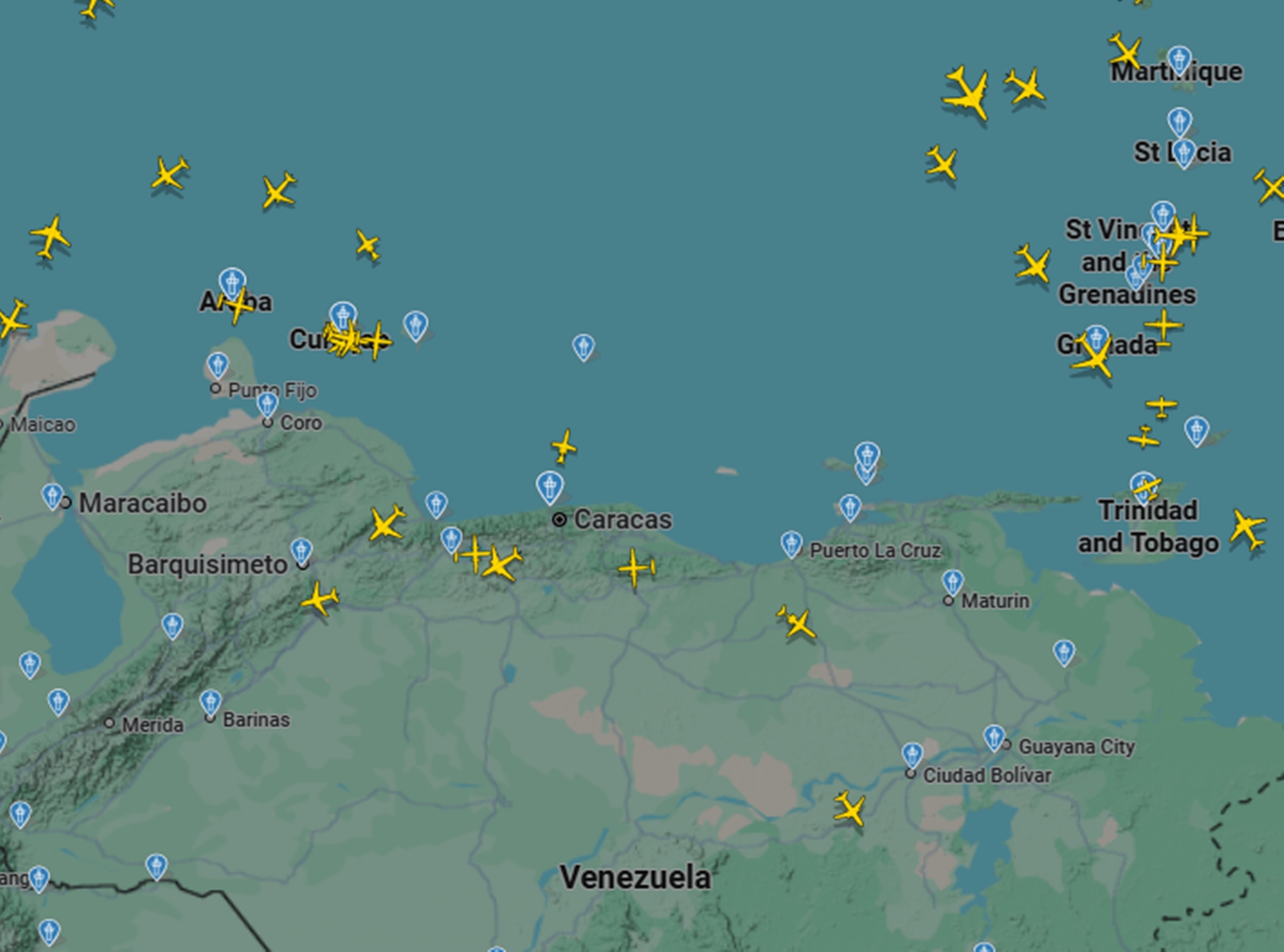
Persistent electromagnetic interference spreads over the Caribbean and converts Venezuelan airspace into a high-risk area for commercial aviation, revealed this Thursday Bloomberg in a report based on analysis of satellite data and aeronautical reports.
What for a phone user in Caracas can mean that a map loads slowly, for an airplane at 30,000 feet implies the possible loss of satellite navigation, problem serious enough to divert or cancel flights.
According to the data cited by the media, the disturbance began to intensify weeks before the United States Federal Aviation Administration issued the warning a week ago about “greater interference” in the region.
Since then, airlines like Avianca, Iberia and Gol They suspended their routes to Caracas, while Venezuelan companies continue to operate under state supervision.
Pattern associated with conflict zones
The interference affects the Global Navigation Satellite System, which includes GPS, Galileo and Glonass. It is the same technology that guides planes, boats and cell phones.
Data from NASA’s Cyclone Global Navigation Satellite System constellation shows an electromagnetic noise pattern over Venezuela much higher than that recorded in the same period of 2024, Indian Bloomberg.
“High levels of GPS interference are usually associated with military conflict zones explained Dana Goward, president of the Resilient Navigation and Timing Foundation, to Bloomberg.
Similar cases have been reported in Eastern Europe since the Russian invasion of Ukraine.
Figures provided by Spire Global show that even before the FAA alert more than 10% of the planes flying over Venezuela reported “degradation” in the integrity of navigation through the ADS-B system, essential for air traffic control.
The increase in disturbances coincides with the reinforced presence of US forces in the Caribbean, which includes attacks against vessels allegedly linked to drug trafficking – more than 80 people have died in these operations – and the recent arrival of the USS Gerald R. Ford aircraft carrier, the largest in the world.
Experts consulted by the media also point out that naval fleets usually deploy GPS jammers to protect yourself of drones or electronic attacks.
Added to this is thate Venezuela has for years considered satellite interference as part of its defense, especially since the alleged drone attack against Nicolás Maduro in 2018, event that promoted the expansion of its electronic warfare capabilities with the support of Russian technicians.