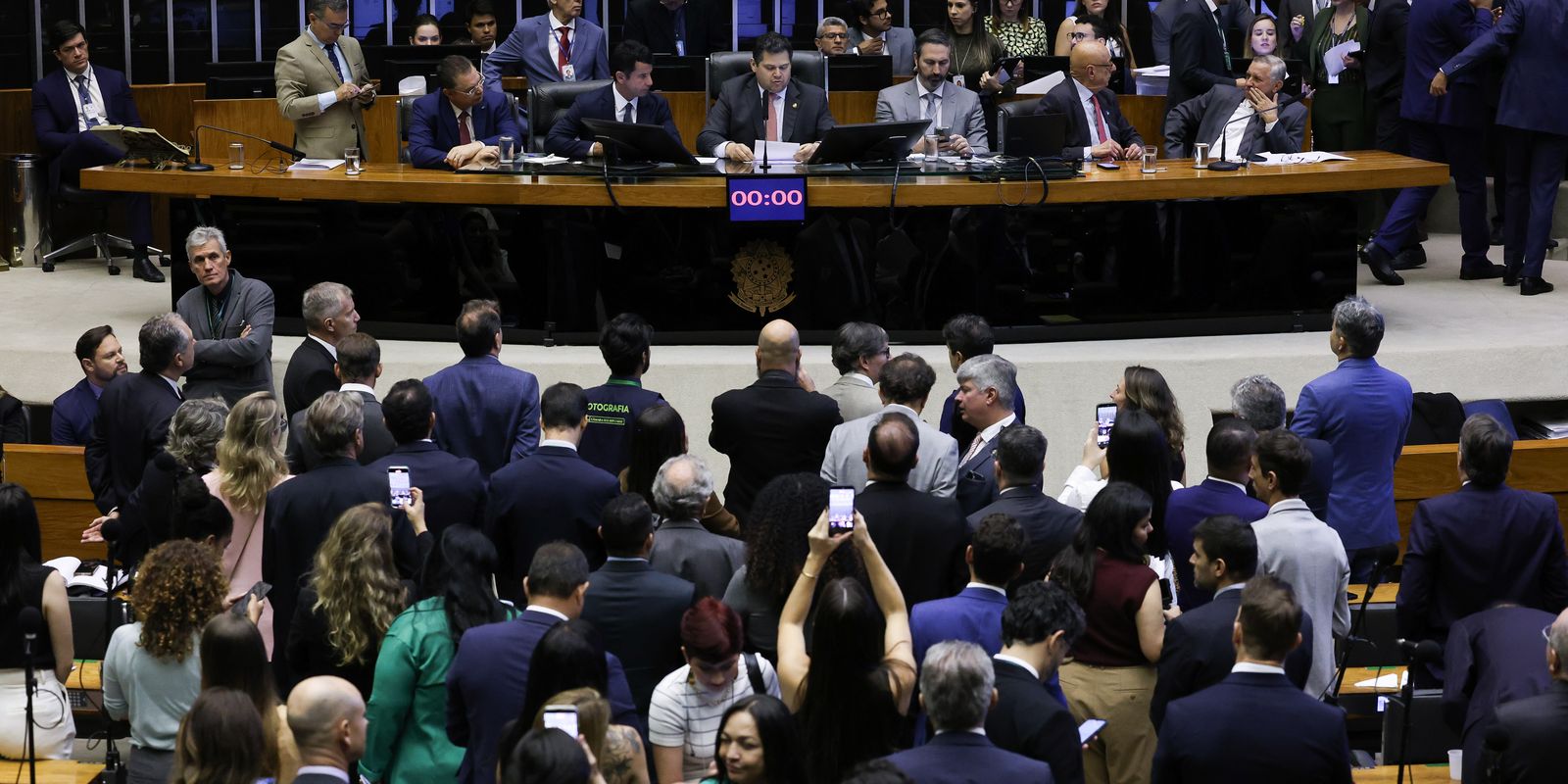
This Thursday (27), the National Congress overturned 56 of President Luiz Inácio Lula da Silva’s 63 vetoes to the bill (PL) that eliminates or relaxes rules for environmental licensing in Brazil. The text was nicknamed by critics the “PL of Devastation”.
The government managed, on the other hand, to postpone the analysis of seven of the vetoes relating to Special Environmental Licensing (LAE)a new modality created that provided for licensing in a simplified manner and with a “single phase” for works considered “strategic”.
When vetoing the LAE device, the Executive issued Provisional Measure (MP) 1308 of 2025, maintaining the provisions of this environmental instrument. However, instead of licensing in a single phase, the MP published by the government foresees exclusive teams designed to speed up the licensing of works considered strategic, maintaining all phases currently planned for the release of projects.
The rapporteur of MP 1308 in the Chamber is deputy Zé Vitor (PL-MG). The measure needs to be analyzed by December 5th to avoid losing its validity. The commission that analyzes the MP is chaired by Senator Tereza Cristina (PP-MS), an important leader of the ruralist group in Parliament.
Supported by the agribusiness and corporate sectors, the Environmental Licensing PL has been denounced as a serious setback by environmental organizations and the Ministry of the Environment (MMA).
With the vetoes overturned, provisions such as the one that authorizes self-licensing for medium-sized works, called License by Adhesion and Commitment (LAC), are resumed. This modality only requires a commitment from the entrepreneurs to release the works, without the environmental studies currently required.
The overturn of the vetoes also makes it possible to transfer the definition of environmental licensing parameters from the Union to states and the Federal District (DF); removes powers from environmental bodies such as Conama (National Environmental Council) and limits consultation to indigenous peoples and quilombola communities affected by the projects.
The Legislature also overturned the government’s veto that prevented removing the Atlantic Forest from the special protection regime for the suppression of native forests. The overturn of the veto reduces the requirements to deforest the biome, which currently maintains around 24% of the original vegetation.
The Climate Observatory, which brings together 161 social and environmental organizations, states that the overturn of these vetoes is the biggest environmental setback in the country’s history, and shortly after the UN Conference on Climate Change (COP30), in Belém (PA).
“Maintaining Lula’s vetoes is crucial to prevent the emptying of environmental licensing, the main instrument for preventing environmental damage in the country, created more than four decades ago by the National Environmental Policy of 1981,” said the Observatory, in a note.
Alcolumbre theme agenda after COP30
Deputies and senators in favor of President Lula’s vetoes criticized the president of Congress, senator Davi Alcolumbre (União-AP), for raising the issue after COP30, while there are many other vetoes in the queue to be considered.
Alcolumbre argued that the vote on environmental licensing was necessary to unlock the legislative process.
“There are entire regions waiting for Congress to finalize this discussion so that major projects can get off the ground, generating jobs, income and economic growth — always with environmental responsibility,” said the president of the Senate.
Federal deputy Nilto Tatto (PT-SP), speaking as PT leader, highlighted that the vote on the topic after COP30 reflects a political decision by private sectors that want to make environmental rules more flexible in Brazil.
“The moment in which we are bringing it to vote, right after the Climate Conference, has a political position from sectors that have distorted the debate on environmental licensing to defend lesser interests and not the interests of the country, not the interests of Brazilian society”, he said.
Debate
Senator Eliziane Gama (PSD-MA) assessed that overturning the vetoes will increase deforestation by transferring responsibility for defining parameters and criteria for environmental licensing to the states and the Federal District.
“A real environmental war will be created in an attempt to carry out some type of project without due rigor and, therefore, [sem] the protection of our biomes and our environment”, he stated.
Representative José Vitor (PL-MG) argued, on the other hand, that the approved project respects the environment and that the current licensing model in Brazil prevents works from being carried out. He also defended the exclusion of Ibama from the works release processes.
“None of us here are giving up any flexibility or any point that puts the environment at risk. After an environmental body, such as a state secretariat for the environment, carried out all the technical analysis and granted an authorization, which, even so, needed the Ibama stamp, a stamp that, in fact, does not protect anything”, he stated.
The leader of the PL in the Chamber, deputy Sóstenes Cavalcante (PL-RJ), defended that Brazil explore its riches.
“[O governo] wants to put the brakes on agribusiness, which is the only thing that is still working, economically, in Brazil. Then they want to place here the veto on environmental licensing voted by these two Houses. The true Brazil we have is the Brazil that exploits its agricultural riches”, he stated.
In turn, federal deputy Túlio Gadêlha (Rede-PE) argued that the delays that eventually occur in the environmental licensing process are the result of the dismantling carried out against environmental agencies over the years.
“If there is slowness today, it is due to the dismantling of the previous government in relation to the environmental agenda, which removed salaries, daily wages, fuel and instruments so that these civil servants could act”, he commented.
Gadêlha also criticized that environmental bodies such as Ibama, Funai, Iphan and others now have an “observer” role without their opinions having a “binding nature” in the licensing processes.