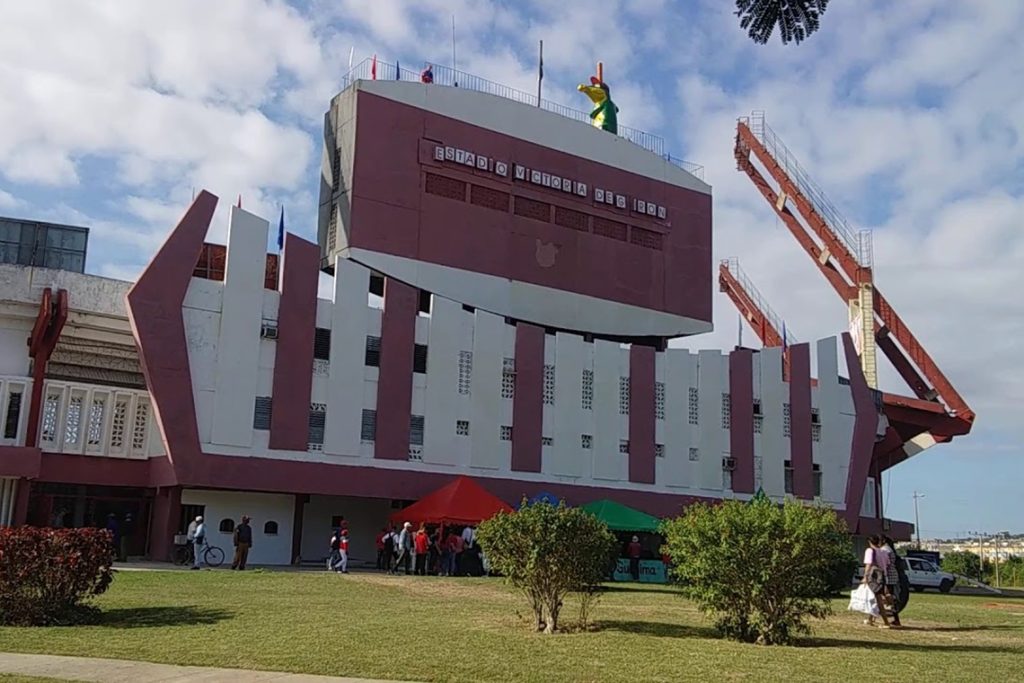
San José de las Lajas/Virginia is surprised by the silence. It is not an absolute silence—in Cuba it never is—but it is a strange, alien one, unbecoming of the piquera of San José de las Lajas. In front of the old train terminal, that building that seems to resist falling as it loses pieces, barely five or six people are gathered. Nobody shouts “Havana, Havana!” nor are seats disputed as in other times. Even the parkers seem to have swallowed the proclamation.
The woman asks who is the last one for the capital, with that tone that is half resignation, half urgency that one assumes when one has a sick mother on the other side of the road. The wind carries the smell of rancid frying from the fast food kiosks, now half empty. On the pavement, oil stains draw dark circles around the almond trees, as if marking the territory of an endangered species. A silver one—perhaps a 1950s Dodge with tricked-out wheels—glints sadly under the cloudy sky.
“Before covid, when the ticket cost 20 pesos, one car left after the other,” Virginia remembers. It is a simple, direct nostalgia, which does not idealize the past but does compare and conclude: this is worse, much worse. “First they raised it to 100, then to 200… and so on until 500 pesos now.” She doesn’t know all the factors behind the rise, but she knows what hurts. “The people are the ones who pay the consequences,” he repeats.
/ 14ymedio
About 30 kilometers separate San José from Havana, but today they seem like a world away. Inflation not only empties pockets: it also empties spaces. The piquera is a portrait of that. The passengers are dispersed, without rushing, knowing that rushing is of no use when private taxis are conspicuous by their absence. In a corner, a tall man in a cap and blue sweater leans against the door of a car.
“Many of the drivers are not owners,” intervenes a man of medium height, arms crossed and a weathered face, who claims to be the first in line. “My cousin has to pay 15,000 a day to the owner. The boss doesn’t care how many trips there were… just that he gets the money.” The phrase remains floating in the air like a dry echo, a reminder that precariousness is also rented.
A few meters away, a blue truck adapted as public transport starts off with a roar. Inside, people travel tightly, with their bodies trained to sway without falling. For many, that is the only option. Manuel, a self-employed worker, sums it up bluntly: “Here you spend an hour or two waiting for a machine, if it appears. And when it does, there are no people to fill it and for it to finally come out.” He knows that for someone who travels several times a week, paying 500 pesos is almost an offense.

/ 14ymedio
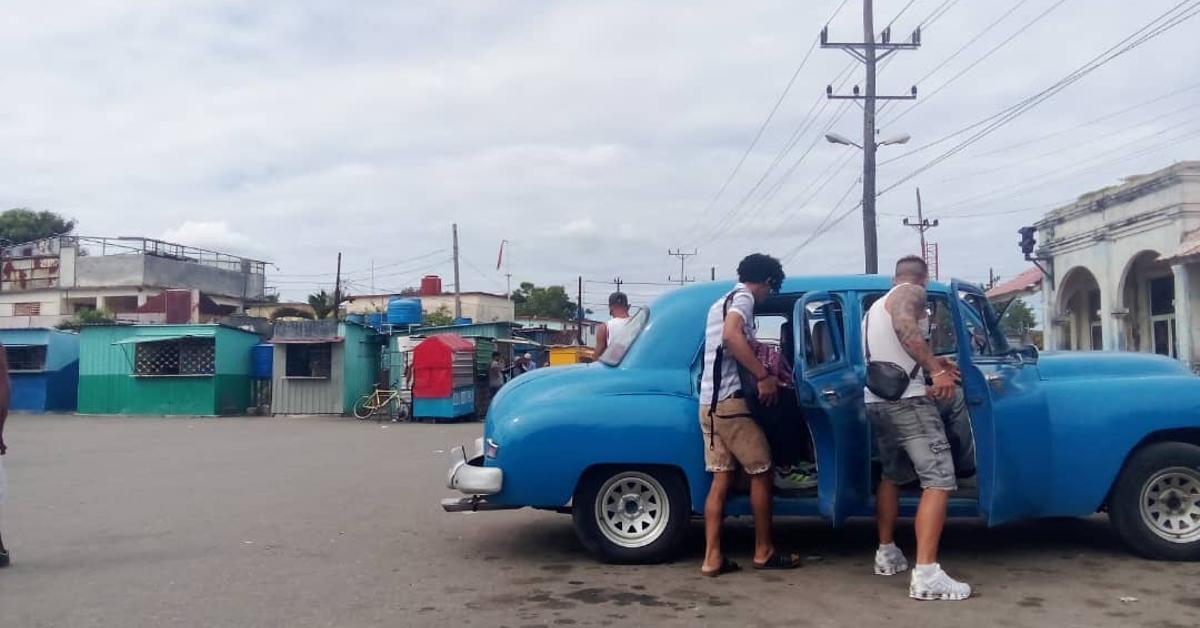
A young man with a star-studded cap looks at his watch, another man puts his backpack in the back seat of an old private taxi waiting for more passengers willing to pay the high sum to travel to the Cuban capital. According to Manuel, after noon things get worse: taxis to Güines, if they appear, go up to 600 or even 700 pesos. And if you want to rent a complete car, the figure can reach 10,000. “Who understands that?” he asks out loud, but no one answers because everyone understands, and that’s the problem.
Desperation begins to appear when a Chevrolet enters the esplanade. It is lighter blue, old but elegant. “Get organized! Go look for the 500 pesos!” shouts a parker leaving a kiosk, as if the mere presence of the car justified rushing the bags. “Let’s go, taxi to Havana,” he concludes, knowing that before the machine fills up, he will have already received his commission.
Virginia sighs. The initial silence is no longer there: now it is filled with murmuring, impatience, the sound of the truck moving away, the parker repeating his line, the rattle of the almendron adjusting its engine, the tenuous hope that the trip leaves before noon.
In San José de las Lajas, the piquera has always been a crossing point: of routes and lives, but today it is also a node where rising prices and the urge to travel intertwine.