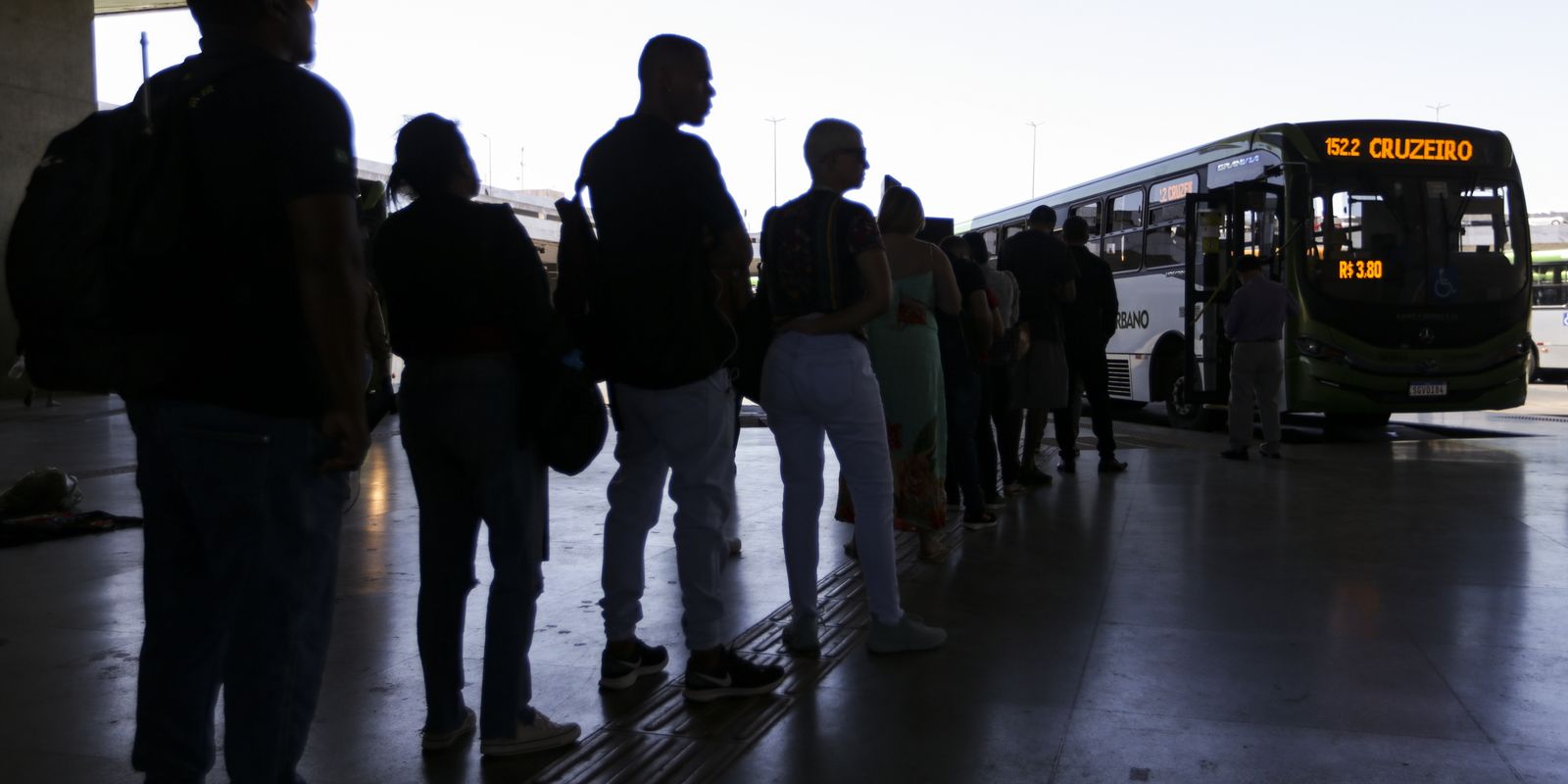
Researchers from the University of Brasília (UnB), the Federal University of Minas Gerais (UFMG) and the University of São Paulo (USP) released, this Wednesday (26), a study that argues that it is possible to have zero fares on public transport in the country from a fund created with the contributions of companies. 
Check out the study here Paths to zero tariffs.
In practice, it would be the replacement of the transport voucher system with another type of financing initially from private and public companies with 10 employees in the country’s 706 cities with more than 50 thousand inhabitants.
The research group’s estimate is that 81.5% of establishments would be exempt from contributions. The study, financed by the Parliamentary Front in Defense of the Zero Tariff, was signed by Letícia Birchal Domingues (UnB), Thiago Trindade (UnB), André Veloso (ALMG), Roberto Andrés (UFMG) and Daniel Santini (USP).
“An establishment with 10 employees will pay the contribution in the amount of one. With 20 employees it will pay the amount corresponding to 11 and so on”, explains professor Thiago Trindade, from UnB.
The professor explains that the contribution would be approximately R$255 per month for each employee, which would generate approximately R$80 billion per year. “This amount would be enough to cover zero tariffs in 706 cities”, he says.
Currently, 137 Brazilian cities do not charge for public transport. To support the national proposal, the researchers developed an estimate of the current cost of public transport in Brazil, which would be around R$65 billion per year.
The researchers estimate that implementing free access in all 706 cities with more than 50 thousand inhabitants would cost around R$78 billion per year, benefiting 124 million people who live in these cities.
By examining different financing scenarios, the report highlights that it is possible to implement zero tariffs without allocating resources from the federal government and without creating new taxes
Model reformulation
Currently, to subscribe to the transport voucher, the worker has a 6% discount on their salary.
“What we are proposing is a reformulation of this model. Instead of the company paying the worker, the company will pay into a fund”, he highlights.
The idea is that the federal government would create a contribution fund where each entrepreneur would pay a rate that could be equivalent or even lower than what they currently pay in the voucher.
“We can create a zero-tariff program without burdening the Union budget”, says Trindade. He advocates that, in 2026, a test project be started in some metropolitan regions to evaluate how it could work in practice.
The team that carried out the study estimates that the first, most immediate impact of zero fares is that people who use public transport will stop spending money on tickets and this money will boost the economy.
“This will generate an increase in tax revenue. Because there will be more money circulating”, says the researcher.
Immeasurable losses
Another reflection that the study brings is that the zero fare would mean that people who use individual transport would start using public transport more, which would also reduce traffic accidents.
A survey published this Wednesday by the Institute of Applied Economic Research (Ipea), showed that the participation of motorcycles in deaths by traffic accidents went from 3% in the late 1990s to almost 40% in 2023.
These motorcycle accidents represented around 60% of hospitalizations due to land transport accidents and represented more than R$270 million in public hospital expenses
“We will increase the useful life of the Brazilian population. People will work longer, produce more wealth and the government will raise more money”, says Trindade.
The researcher believes that it is expensive for the country to not pursue social policy. “This would be one of the largest income distribution programs in the world.”
Money in the economy
The research team calculated that in the Federal District, for example, if this program was implemented, it would generate R$2 billion in revenue in the hands of citizens in one year.
To approve a possible bill on this topic, the researcher at the UnB Institute of Political Science believes that an awareness campaign is necessary regarding the importance of zero tariffs.
“We had social mobilization that managed to put this issue on the agenda of Brazilian society.”