Havana/Despite the fact that, from the same ruling party, through the journalist Cuscó Tarradell, it was stated this Tuesday that two people had died in Santiago de Cuba due to exposure to an “industrial bleach” allegedly stolen and sold under the name “alum bleach”, with the intention of the population believing that it served to purify the water, which is sold as if it were “alum bleach”, the provincial authorities denied this version hours later.
Through its official Facebook account, the Santiago de Cuba General Directorate of Health clarified that, “after a verified record of the deceasedboth in adults and pediatric age, there is none registered for this cause. “We also do not have critical or serious patients hospitalized due to exogenous poisoning.”
The organization also ruled out that there were any “critical or serious” patients hospitalized due to exogenous poisoning, and promised to maintain “close surveillance from all levels of care.” In addition, the authority called for information “through official channels.”
The statement came hours after Cuscó Tarradell – citing the Communication area of the Municipal Assembly, which later deleted its message – pointed out that two people had died in the province due to exposure to “a product that, far from being harmless, it stated, represents a serious risk to health.”
The compound that was allegedly circulating in the informal market is a very dangerous industrial chemical
According to the information disclosed by the communicator – which remains public and has not been denied – the victims had been two university workers. In addition, he indicated that those allegedly responsible for marketing the counterfeit product stole a batch of industrial bleach from the Mar Verde warehouses and relabeled it to pass it off as “alum bleach.” The compound that was allegedly circulating in the informal market is a very dangerous industrial chemical, even when exposed to small quantities.
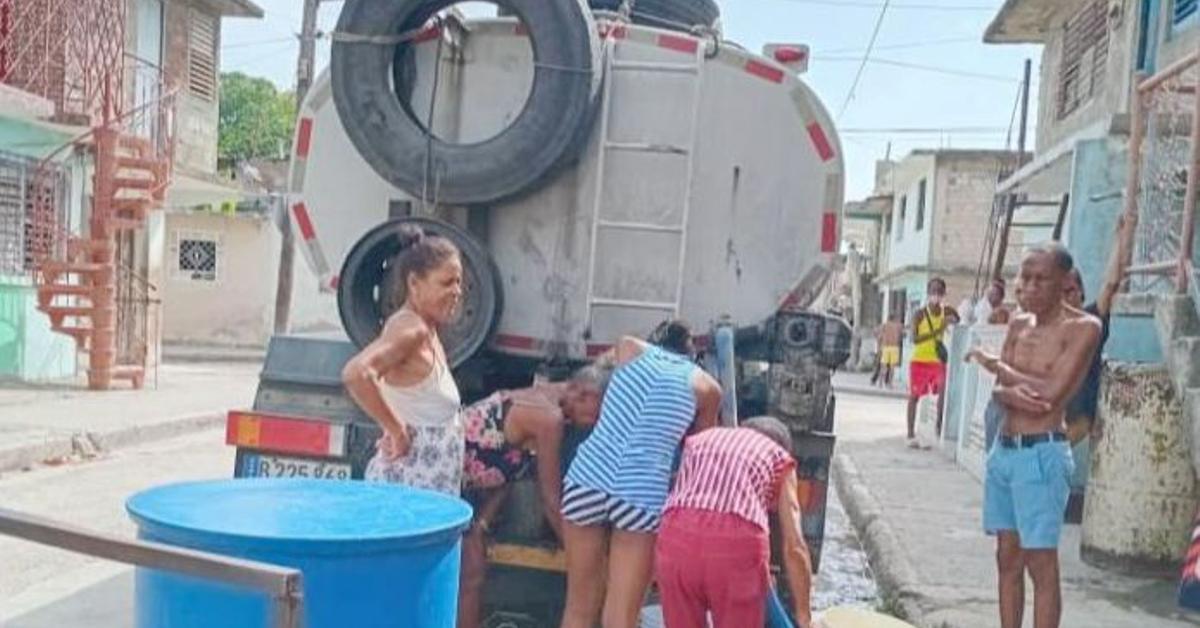
In his report, Tarradell called attention to the local authorities and the Aguas Santiago Company, for the poor quality of the water that is distributed and that forces many Santiago residents to look for substances to clarify it on their own. That need, he warned, leaves the population exposed to scams and dangerous compounds such as counterfeit “alum bleach.”
Shortly after this demand, and before the health authorities denied the alleged deaths, the Provincial Delegation of Hydraulic Resources of Santiago de Cuba seemed to confirm the journalist’s first version and issued an urgent alert in which it asked the population not to buy the “alum”, sold “illegally on the streets”, as it “represents a serious risk to health”. So far, no other communication has been issued in this regard.
True alum is a mineral salt that has traditionally been used to help clean water
True alum is a mineral salt that has traditionally been used to help clean water. When added to the liquid, it allows dirt and suspended particles to clump and fall to the bottom, making it easier to filter and improve clarity. The product has been used for decades in domestic and community basic purification processes, always in small quantities and under controlled conditions.
The poor quality of the water that comes through the pipes has worsened after Hurricane Melissa passed through the eastern part of the country. Residents in the city of Santiago de Cuba report that the water they receive has an earthy color, suspended particles, and often has a bad smell.
The authorities have advised not to consume chemicals purchased on the street, even when they are presented as known substances, and to always verify the origin and labeling of any compound intended for water treatment or domestic use.