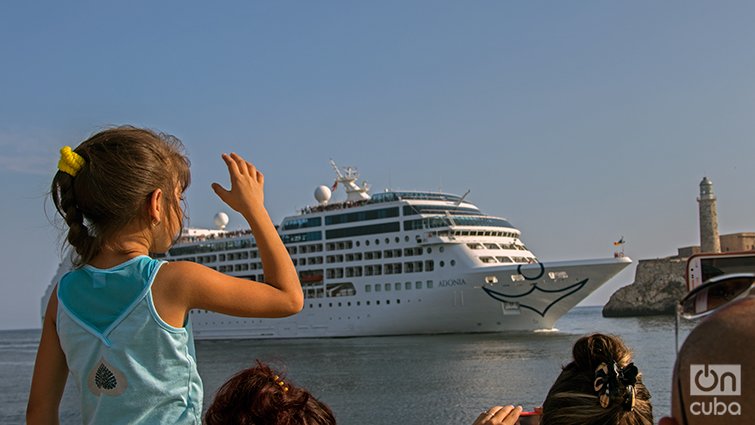
Congressmen from Florida asked the United States Supreme Court this Tuesday to maintain the punishment against four lines of cruise “for profiting from the transportation of passengers to a dock in Cuba confiscated from the Havana Docks company by the Cuban Government”, to which they paid 130 million dollars.
Republican Mario Díaz-Balart led a amicus brief bipartisan to ask the Court to apply Title III of the Helms-Burton Act, which allows people with “property confiscated by the Castro regime” to sue companies that “deliberately trafficked in those stolen goods.”
Details in the link: https://t.co/4jOw0y9yVq
Congressman Mario Díaz-Balart, along with bipartisan legislators, presented a legal document before the Supreme Court in the case Havana Docks Corp against Royal Caribbean.
➡The document highlights the importance of Title III… pic.twitter.com/MSWK35oIsg— Martí Noticias (@martinoticias) November 25, 2025
The case stems from accusations against the parent companies of Carnival, Royal Caribbean, Norwegian and MSC that, between 2015 and 2019, they allegedly made profits “through the use of stolen property” by transporting almost 1 million tourists to the confiscated land of Havana Docks in Cuba, where their ships docked.
Cruise companies received more than $1 billion for such voyages, according to information presented in lower courts that Díaz-Balart cited.
“The regime in Cuba also made considerable profits through the use of that confiscated property, as the cruise lines declared in court documents to have paid the regime more than 130 million (dollars) in fees and taxes,” said the federal representative from South Florida in a statement.
The Supreme Court will analyze the case after a ruling in December 2022 by a US federal court that ordered the four companies to pay nearly $440 million for several lawsuits that accuse the shipping companies of doing business with assets expropriated in Cuba after the Cuban revolution in 1959, in this case docks.
The legal basis is Title III, which had remained ineffective since the promulgation of the Helms-Burton or Freedom Act in 1996 until President Donald Trump, in his first term (2017-2021), activated it in May 2019 as part of his pressure policy towards Cuba.
US federal court stops millionaire fine against cruise companies that traveled to Cuba
But a federal appeals court based in Atlanta reversed the lower court’s order in 2024, arguing that the Havana Docks company’s concession to use the dock in Cuba expired, anyway, in 2004.
Now, legislators from Florida, where the largest Cuban diaspora lives in the United States, ask the Supreme Court to reverse this latest ruling by implementing the Helms-Burton Act, which does not contemplate this time limit.
“The US Congress enacted the Freedom Act to hold the anti-American Cuban regime accountable for its crimes and ensure that those who were stripped of their property by the Castro regime have a legal avenue to obtain justice,” Díaz-Balart argued.