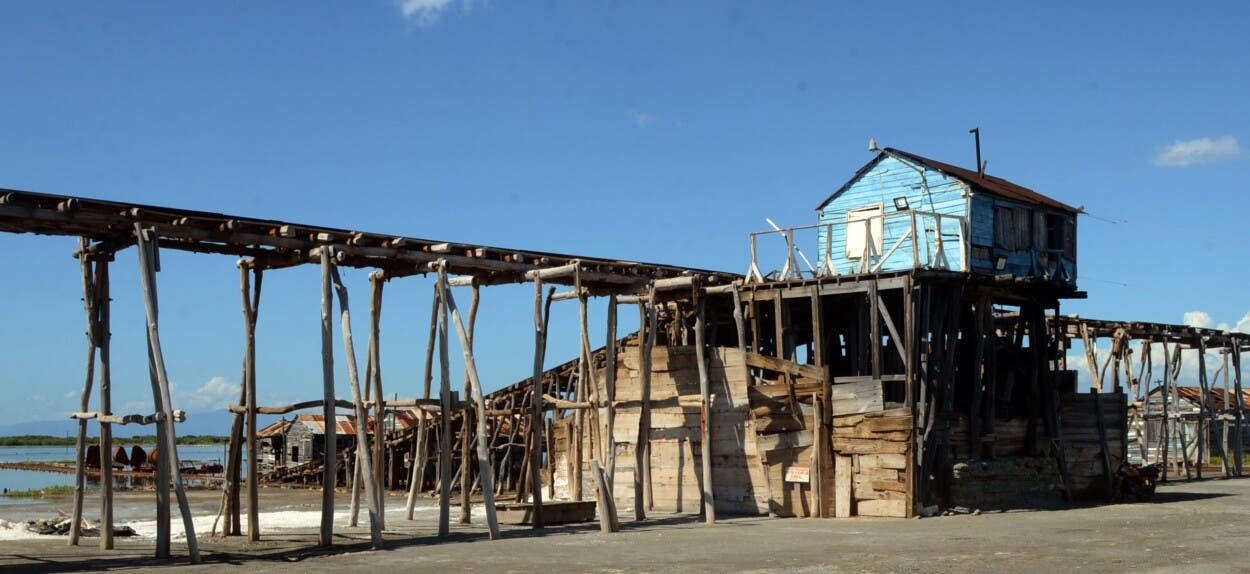
For decades, The Bani Salt Flats was one of the industrial and tourist landscapes most characteristic of southern dominicansince the emblematic shacks, rusty wagons and rails, as well as the different salt mountains in combination with the breeze and the different shades of the sea in the area, which form a chimerical environment typical of surreal and magical stories, could disappear.
Today this whole area looks completely silence. Very contrary to times past, when the constant noise of the machines, the locomotive and its carriages marked the pulse of the salt productionthe area now remains closed and without operations after the severe Damage caused by Storm Melissa and the neglect of town council.
The quadrants where the salt solidifies through the action of the sun they were seriously affectedcompletely interrupting the production process. The atmosphere that previously combined the singing of the workers, the conversations of the day laborers and the chirping of birds, is now a desolate and motionless terrain.
You can read: The great dilemma of the three electricity generation barges on Los Negros beach, in Azua
The stoppage of salt production maintains dozens of employees and chiriperos without salarieswhich has generated concern among families that directly depend on the salt activity to survive. Many workers They assure that they have not received clear answers from the Mayor Santos Ramirez about when they will be able to resume their work.

“Within the paintings there were thousands of quintals of saltand the rains of Melissa They took it away, also affecting all the solidification pools, which is why a investment for its adaptation. But above all the City hall have delays in payment of salariesand the trustee doesn’t even meet with us or come here,” he said. Ofandy Matoscompany employee to reporters from El Nacional.
He worker calls on President and to the trustee to go in help from that industry and symbol of the south that could disappear lack of investment.
Despite the magnitude of the economic and social impactcommunity members denounce that the Bani Town Hall has not taken forceful actions to expedite the recovery of the area or manage a solution that allows reactivate production.
Meanwhile, the iconic rustic structure of The Salt Flatsonce considered attractive for its natural beauty and historical valuenow resembles a ghost towndeteriorated and on the verge of collapse. The residents fear that, if they do not intervene soon, the abandonment I ended up deleting one of the most representative symbols of the banileja identity.
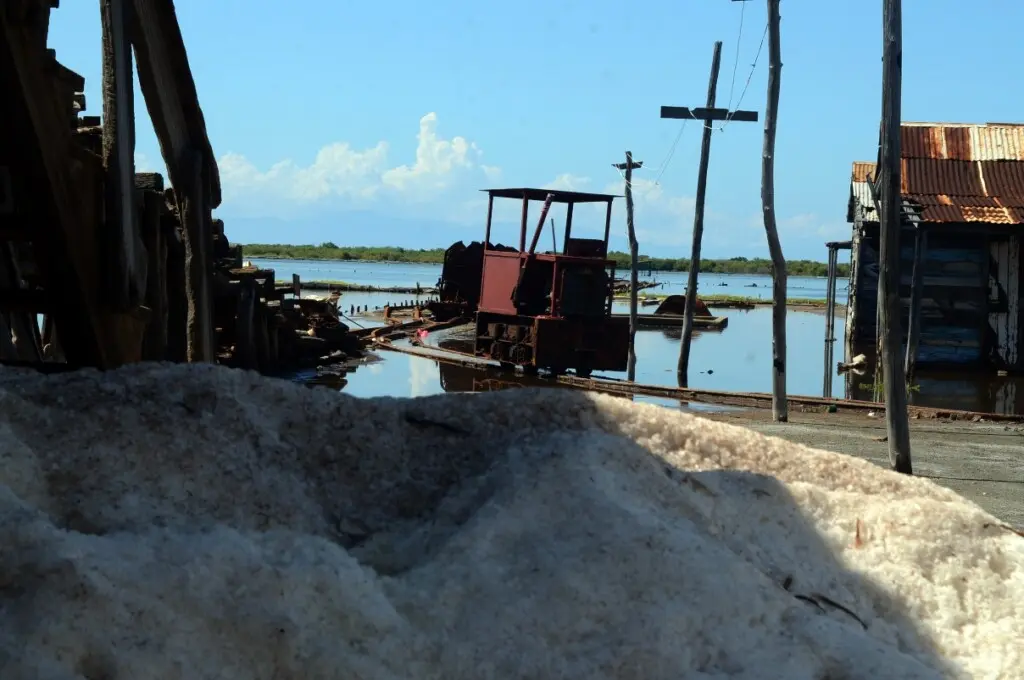
Salt Production
The Las Salinas de Baní salt mineis one of the most important in the country in the production of the precious mineraland it has also become one of the favorite places to photographers and tourists; also being a source of jobs for the residents and a symbol of the Peravia province.
The Las Salinas salt mine since the founding of Bani has been part of the economic life of the town. It is a public property that has been around for more than 510 years of existence. It has been administered by various public institutions.
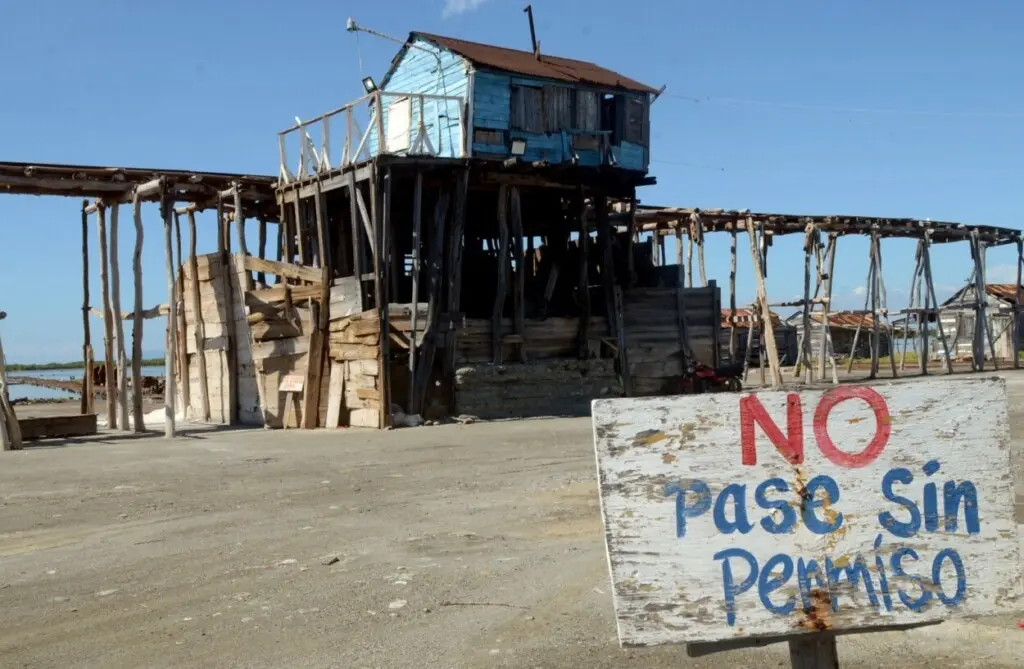
How is it made?
The sea salt production is based on the sea water evaporationin artificial lagoons of great extension and shallow depth. This evaporation originates exclusively through the action of sun and wind. After the entire structure is formed, which will be divided into quadrantswill be brought sea water to fill the interconnected gaps (quadrants). These quadrants They will be of three types: some will be feeders, others will be heaters and the last crystallizers. Thanks to the action of the sun and the wind and through evaporation, the sea salt crystallizes on the surface.
Amount
From this company generating thousands of quintals of salt per monthsome live 70 employees (salt scooperswagon fillers, locomotive drivers, packers and watchmen), among fixed and chiriperos.