Madrid/The human rights organization Amnesty International (AI) has denounced this Wednesday the violence that the Cuban regime exercises against women activists, journalists and human rights defenders by resorting to abuses and authoritarian practices differentiated by gender.
“It is not traditional repression,” Johana Cilano Peláez, AI regional researcher for the Caribbean and author, told the EFE agency. of the report They want us to remain silent, but we continue to resist: authoritarian practices and state violence against women in Cuba, which in its 40 pages documents this type of practices.
The testimonies show that the Cuban State “uses the maternal role to try to get women to abandon activism.” Furthermore, says Cilano Peláez, “many mothers and wives of people imprisoned for political actions have been forced to undress in order to have access to visits.”
The activists also receive threats of “denial of food, medicine, visits, phone calls and greater penalties for their detained children” if they continue with their work, explains the researcher.
“Many mothers and wives of people imprisoned for political actions have been forced to undress in order to have access to visits”
Amnesty also denounces “the subordination of the judicial system to political power”, the lack of complaint and reparation mechanisms, and the lack of a comprehensive law against gender violence, as “factors that perpetuate impunity.”
Cilano Peláez emphasizes that repression does not affect all women equally, given that institutional violence intersects with gender, race and socioeconomic level.
“Black women suffered more aggravated processes and physical violence came earlier than in the case of white women. We also saw that activists from more impoverished neighborhoods or those further away from the capital were more vulnerable,” she points out.
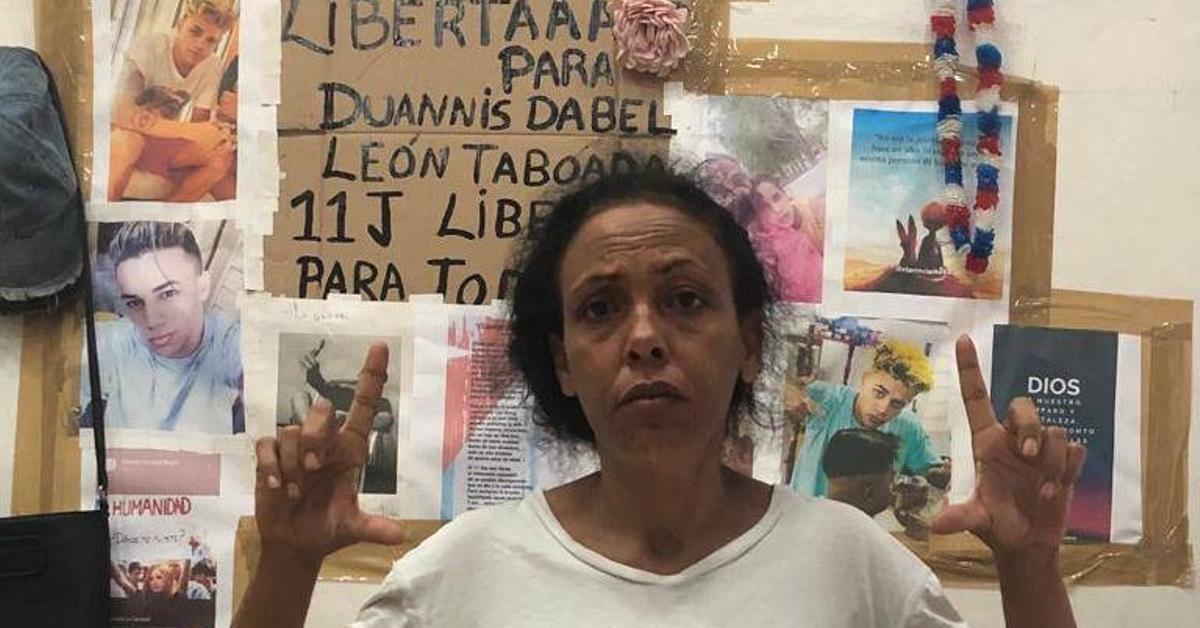
For the report, AI has interviewed 52 people, 34 of them female victims, specifically analyzing the cases of five of them. Yenisey Taboada, Luz Escobar, Carolina Barrero, María Matienzo, Camila Lobón and Alina Bárbara López have been interviewed and have shown that the pattern of state violence is not incidental or isolated, but “structural and sustained.”
Furthermore, black women, single mothers and women with diverse sexual orientation face aggravated forms of violence, which requires an urgent intersectional response, AI warns.
Amnesty International points out that these situations occur in an environment of restrictions on the exercise and defense of human rights and where the subordination of the judicial system to political power, the lack of complaint and reparation mechanisms, and the lack of a comprehensive law against gender violence perpetuate impunity.
“The international community cannot continue to remain silent in the face of the differentiated repression that women suffer in Cuba,” stressed Ana Piquer, regional director for the Americas of Amnesty International. “Women defenders in Cuba are punished not only for raising their voices, but also for being mothers, journalists and social leaders. The State uses gender violence as a tool of repression: it seeks to break their dignity, their family environment and their collective strength,” she adds.
The organization emphasizes that the lack of guarantees, the lack of judicial independence and the absence of political freedoms stifle any possible legislation that on paper appears beneficial for the protection of women.
The document includes a section in which it analyzes Cuban legislation, which yesterday was claimed by the official press as a reference and model for the protection and integration of women in public life. AI considers, however, that there is a recurring lack of statistical data – specifically those of deaths due to gender violence, whose announced updated record has been reserved for internal consumption – and absence of regulations demanded by feminist associations.
Furthermore, the organization emphasizes that the lack of guarantees, the lack of judicial independence and the absence of political freedoms stifle any possible legislation that on paper appears beneficial for the protection of women.
The report concludes with a specific section that demands that the Cuban authorities end the harassment against women activists with gender bias. “It is time for States, especially inter-American organizations and the European Union, to demand concrete protection measures. State repression against women activists and defenders in Cuba constitutes a form of institutional gender violence that must be made visible and publicly condemned.”
AI calls for specific protection measures for women human rights defenders and sustained surveillance by the international community.
“What we saw is that the repression against women is systematic and differentiated. The State instrumentalizes motherhood and punishes more harshly those who have less visibility or resources. That is why sustained international action is needed,” concludes Cilano Peláez.