Martiño Ramos Soto chose Havana not only because of his leftist vocation.
MIAMI, United States. – The arrest in Havana of Martiño Ramos Soto, a Galician teacher sentenced in Spain to 13 and a half years in prison for raping and sexually abusing an underage student, has put the spotlight on the Island as a chosen refuge to try to avoid the sentence.
The Cuban authorities reported the arrest to Spain this Monday, after an international arrest warrant was placed on him and he was among the 10 most wanted fugitives by the National Police.
For the criminologist and lawyer Beatriz de Vicente, who analyzed the case in the program Better late of the Spanish network laSexta, the choice of Cuba was not coincidental: Ramos, he stated, “like a good predator he knew where he was going.”
According to the sentence ratified by the Supreme Court, the fugitive was sentenced to 13 and a half years in prison and 21 years of disqualification for violent and continuous sexual assaults against a student whom he began to abuse when she was 12 years old and continued until she was 16. The case, highly covered in the media in Galicia, was aggravated by the nature of the practices described as “sadistic” and by the fact that the teacher maintained his teaching work for a good part of the process. judicial.
Ramos disappeared in July, shortly before or immediately after the conviction became final. The investigation by the Fugitive Location Section of the National Police reconstructed an itinerary that took him first to Portugal, then to Brazil and Peru, and finally to Cuba, where he entered with his own passport and where he settled in Havana.
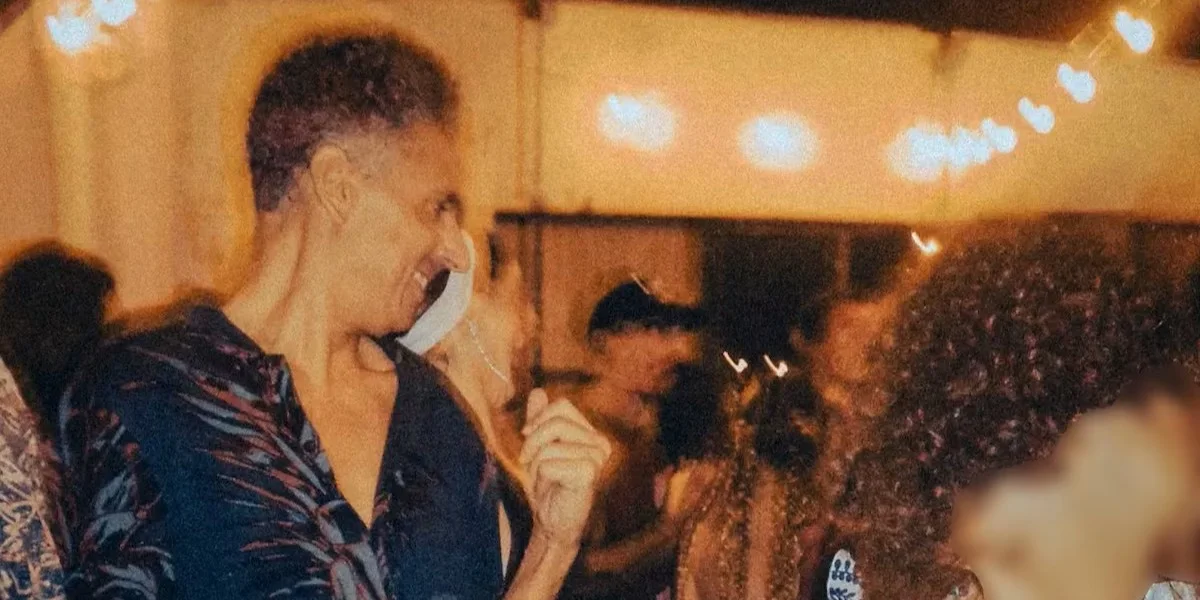
On the Island he opened an Instagram account under the name “Martín Soto”, participated in cultural activities and presented himself publicly as a professional photographer, an identity that had also caught the attention of the Observatory of Academic Freedom (OLA-Cuba) before his arrest.
According to laSexta, the professor moved around at parties and leisure environments “always accompanied by very young girls.” A young woman identified as Paola, who met him in Cuba, said that Ramos himself claimed that “he was exploring his sexuality” on the island and that, when they saw him with “a very young girl,” he was quick to justify himself.
This pattern, according to criminologist Beatriz de Vicente, fits the profile of a sexual offender who seeks contexts where he can surround himself with adolescents with an appearance of social normality.
In her analysis, the lawyer also maintains that Ramos presents what in criminology is called lolitaisma sexual preference aimed specifically at adolescents—not young children—and that these types of aggressors “organize their entire lives” to maintain asymmetrical relationships of power and control with girls between 14 and 16 years old.
From this perspective, the specialist interprets the flight as a planned strategy to insert oneself into an environment where access to vulnerable young people would be easier and the institutional response less predictable.
One of the central factors that places Cuba on the map of destinations for fugitives from Spanish justice is the absence of a current bilateral extradition agreement. De Vicente remembers that the fugitive chose a country with which Spain does not have an operational extradition treaty, something that, without legally preventing his surrender, introduces more political and legal complexity into the process (the surrender of convicted persons depends on case-by-case decisions between governments).
In statements reported by Spanish media, the head of the fugitive section of the National Police, Fernando González, underlined precisely this point: although Spain does not have a bilateral extradition agreement with Cuba, “that does not mean that he will not be extradited,” and highlighted that the Provincial Court of Ourense requested extradition on October 31, which activated the international order and the express request to the Cuban authorities to increase surveillance over Ramos.
The other key element that, according to De Vicente, explains the choice of the Island is the context of sexual exploitation. The criminologist stated that in Cuba “sex tourism, sadly, is a scourge, where, in fact, there is a lot of child prostitution” and linked this reality with the deliberate search for a scenario conducive to the interests of the aggressor. In his opinion, Ramos not only sought a country without an effective extradition treaty, but a place where he could continue approaching teenagers in a tourist market crossed by economic inequality and prostitution networks.
This reading connects with the concerns expressed by OLA-Cuba, which had denounced Ramos’ presence in Havana when he was still a fugitive from Spanish justice. The observatory warned of the risk posed to Cuban children that a teacher convicted of pedophilia could move around the capital as a photographer and come into contact with young people in situations of economic vulnerability. In its public statement, the entity demanded that the Cuban authorities “immediately deport” the aggressor.
The capture of Ramos in Havana was communicated by the Cuban authorities to Spain this Monday. The arrest occurred after the Ministry of the Interior included him on the list of the 10 most wanted criminals and the Spanish Police intensified cooperation with the National Revolutionary Police (PNR) of Cuba, and with the Interior Department of the Spanish Embassy on the Island.
The case has reopened the debate about the use of Cuba as a refuge for different types of fugitives. OLA-Cuba recalls that for decades the Island has hosted members of the terrorist organization ETA by virtue of political agreements between governments, and warns that the absence of updated extradition agreements makes it easier for other convicted persons to seek the same path.
The organization highlights that Cuban immigration control is especially strict and raises questions about how a person convicted of sexual crimes against minors was able to enter the country and carry out public activity without institutional alarms being triggered.
In addition to his profile as a teacher, Ramos was a well-known figure on the Ourense left: he was active in Ourense en Común and became a leader of the En Marea coalition. That political capital and her public discourse in favor of women’s rights contributed, according to testimonies cited by The Countryto the fact that initially part of his entourage questioned the victim’s complaint.