“They demand that we come as if everything were normal,” denounces a student.
SANTIAGO DE CUBA. – Almost a month after the passing of Hurricane Melissastudents from the University of Medical Sciences denounce that they continue to be forced to attend classes and stay in the student residences without minimum hygiene conditions. The restart of the course also occurs in the midst of an epidemiological rebound that keeps the entire province on alert.
The reintegration was hasty: first the sixth year students – summoned just days after the cyclone – and then the rest of the students, despite the fact that the streets remain littered with rubble, the shortage of drinking water and the electricity cuts.
On social networks, students were already warning of the enormous cost of returning to classes under their conditions: in a Facebook post (November 10), the communicator Yosmany Mayeta included the complaints of a medical student, who described a panorama of houses without roofs, neighborhoods without electricity, lack of water and shortage of food. Furthermore, the young man questioned how they could resume the course without the real losses having been evaluated, “as if nothing had happened.”
“The Ministry of Education of Santiago de Cuba has to take measures, it cannot begin; neither the teachers nor the students are prepared to start classes, without water, without gas, without food, without electricity…”, commented the user identified as Irela Beltrán Igarza.
Despite the discontent, the Provincial Director of Education, Raúl Samon Soto, advertisement in a television appearance that, on Tuesday, November 11, the educational centers of Santiago de Cuba would receive their students, “as part of a process of gradual resuscitation of the school year, taking into account the damage caused.”
In practice, although some facilities resumed activities that day, others did not do so until the 19th or even later.
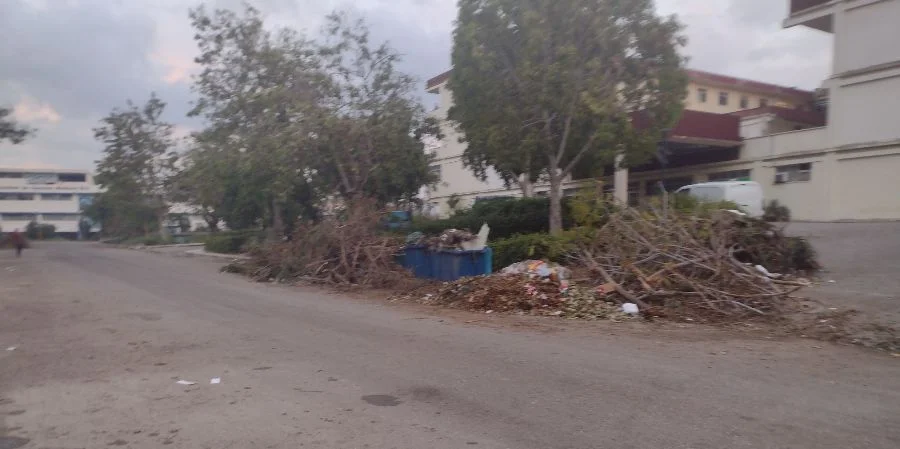
Faculty No. 2 of the University of Medical Sciences, for example, has been operating without essential repairs. The exterior areas of the educational facility remain covered in debris and fallen trees. The building has leaks and destroyed blinds, among other damages. Added to this is the state of the residences, where students complain of receiving spoiled food and cloudy water.
Two sixth-grade students, who asked to protect their identity for fear of retaliation, told CubaNet that they are required to attend classes and other activities without exception, as well as perform hospital duty even in extreme conditions. As they explained, this insistence does not respond solely to the teaching program: “A good part of us is used as a workforce to replace tasks that health professionals should perform,” commented one of the two students, a resident of the municipality of Palma Soriano.


During the shifts—which can last 12 or even 24 hours—they are assigned duties unrelated to their training: “Fill out documentation, carry out errands, look for laboratory results, convey medical instructions or cover personnel shortages.” They also participate in investigations without means of protection.
Added to this burden is the irregularity of stipends. The monthly subsidy of 800 pesos has been delayed for up to two months, as happened recently: students received two monthly payments at a time, only after the first complaint was made public.
“They ask us to come as if everything was normal, but we still don’t have clean water or enough food. The guards are exhausting and we do tasks that don’t correspond to us,” said another sixth-year student, who lives in the city of Santiago de Cuba.

For students and families, return seems more like a formal compliance than a real guarantee of decent conditions. Many young people have not been able to repair their homes, recover belongings or secure stable basic services. On the other hand, the spread of chikungunya adds an element of urgency: they fear for their health in environments where there is no fumigation or vector protection measures. Rather than following the course, they ask that the humanitarian crisis they still experience be recognized and that action be taken accordingly.
However, the general perception is that the institutional priority is to continue the course at all costs, rather than guaranteeing that the minimum conditions to do so exist. For many students, this return to classes has meant returning to the same precariousness as always, but now aggravated by the health crisis and the impact of the hurricane.