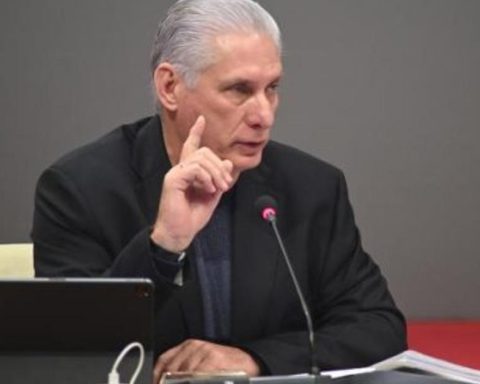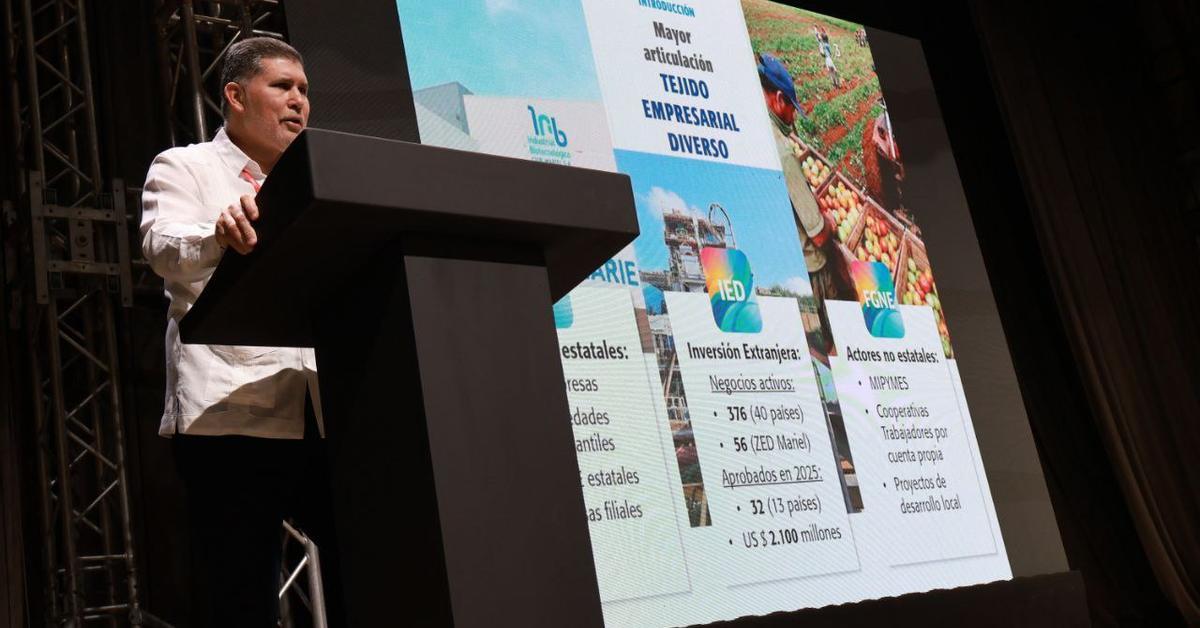
Havana/In response to the urgency that the country is experiencing, the Cuban Government assures that it is now willing to open doors and loosen ties, without changing the current model. The VIII Investment Forum of the Havana International Fair (Fihav 2025) returned this Tuesday to promise dynamism, new regulations and a package of measures that, according to the deputy prime minister and head of Foreign Trade and Foreign Investment, Oscar Pérez-Oliva Fraga, seeks to “correct distortions” and reinvigorate an economy in free fall.
“Cuba currently has 376 businesses with foreign capital from 40 countries, 56 of which are in the Mariel Special Development Zone,” declared the official. And he added that in 2025, 32 new businesses from 13 countries have been approved, with a committed capital of 1.1 billion dollars.
In a speech that recalled other similar announcements of the last ten years, the great nephew Fidel and Raúl Castro presented what they described as a “comprehensive” set of incentives to attract foreign capital. The package, which is still awaiting legal formalization – “it will be published shortly,” he promised – includes a simplification of procedures, greater freedom in hiring labor, facilities for operating in foreign currency and access to underused structures in the country. All of this with the aim of offering a “more attractive and competitive” business environment.
The most striking announcement was, without a doubt, the commitment to reduce project approval times. According to Pérez-Oliva, state agencies will have only seven days, instead of the current 15, to respond to investment proposals. If they do not do so, an automatic “yes” will be assumed, something unprecedented in a country where bureaucracy has ruled for decades.
For the first time, the employer will be able to participate in the selection of its workforce
The scheme is reminiscent of other peremptory deadlines announced in different sectors and never met. The question remains the same: what will prevent agencies, historically reluctant to give up control, from being able to block in other ways what they do not wish to approve?
Another point highlighted by the deputy prime minister is related to hiring. For the first time, the employer will be able to participate in the selection of its workforce, partially breaking with the model in which state agencies acted as mandatory intermediaries. Even so, the reform does not eliminate these agencies and it remains to be seen how it will be applied in the hotelsthe first sector that should benefit from this measure.
The Government will also authorize the payment of bonuses in foreign currency, an incentive that implicitly recognizes the insufficiency of the salary in pesos, incapable of sustaining daily life. These bonuses – which do not replace the official salary – have existed for decades, always under the shadow of informality. Recognizing its existence is one step, although these deliveries will have quite strict limitations: they can only be made from profits, through bank payments and as long as the company generates external income.
The novelties also include the authorization so that companies with foreign capital can market “without restrictions” with national economic actors. They will also be allowed to import fuels directly if they consider it necessary. So the Government opens a highway in hard currency for those who can generate income for the State, escaping the annoying blackouts, which will continue to affect the rest of the population.
Added to this is the announcement of the creation of new special development zones
In fact, nothing in the package suggests that the benefits granted to foreign capital will be extended to Cuban entrepreneurs, who continue to deal with obstacles, inspections, regulatory uncertainty and a very unfavorable exchange rate.
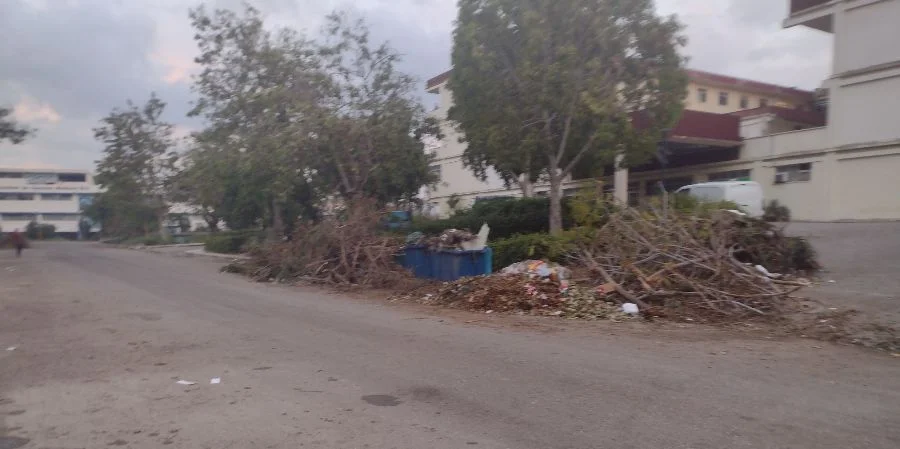
The minister also discussed the possibility of investors gaining access to underutilized facilities. The country has hundreds of abandoned factories, half-demolished industrial warehouses, disused warehouses and hotels without guests, all owned by the State. Added to this is the announcement of the creation of new special development zones, whose location and calendar were not specified, although some experts point to the Antilla project, in Holguín.
The experience of the Mariel Special Development Zone, after more than a decade of operations, serves as a reminder of an attractive structure on paper that does not guarantee results when the macroeconomic environment is unstable, access to foreign currency is uncertain and the State reserves the conduct of all processes.
The vice prime minister clarified that “none of these proposals has any contradiction with the Constitution of the Republic of Cuba or with the guidelines of the economic and social policy of the Party of the Revolution or with the conceptualization of the Cuban economic model.” All the decisions explained, he said, are perfectly possible and can be executed without difficulty under the existing regulations.
The Government admits that the materialization of foreign investment continues to be low, perhaps because the true deterrents remain intact. Among them is the absence of legal certainty, to which has recently been added the freezing of all foreign currency funds in the bank accounts of foreign companies.