The lack of integration between the different security forces in Brazil is one of the main problems in confronting drug trafficking organized in factions, assesses one of the main prosecutors in the state of São Paulo (SP) who is investigating the Primeiro Comando da Capital (PCC), Lincoln Gakiya.
“We need, in some way, something that I have not seen in the last 34 years [trabalhando como promotor]find a way for these security forces to act in a coordinated, integrated, cooperative and synergistic manner. What I see today are, unfortunately, institutional disputes between the police and the Public Ministry [MP]”, he said.
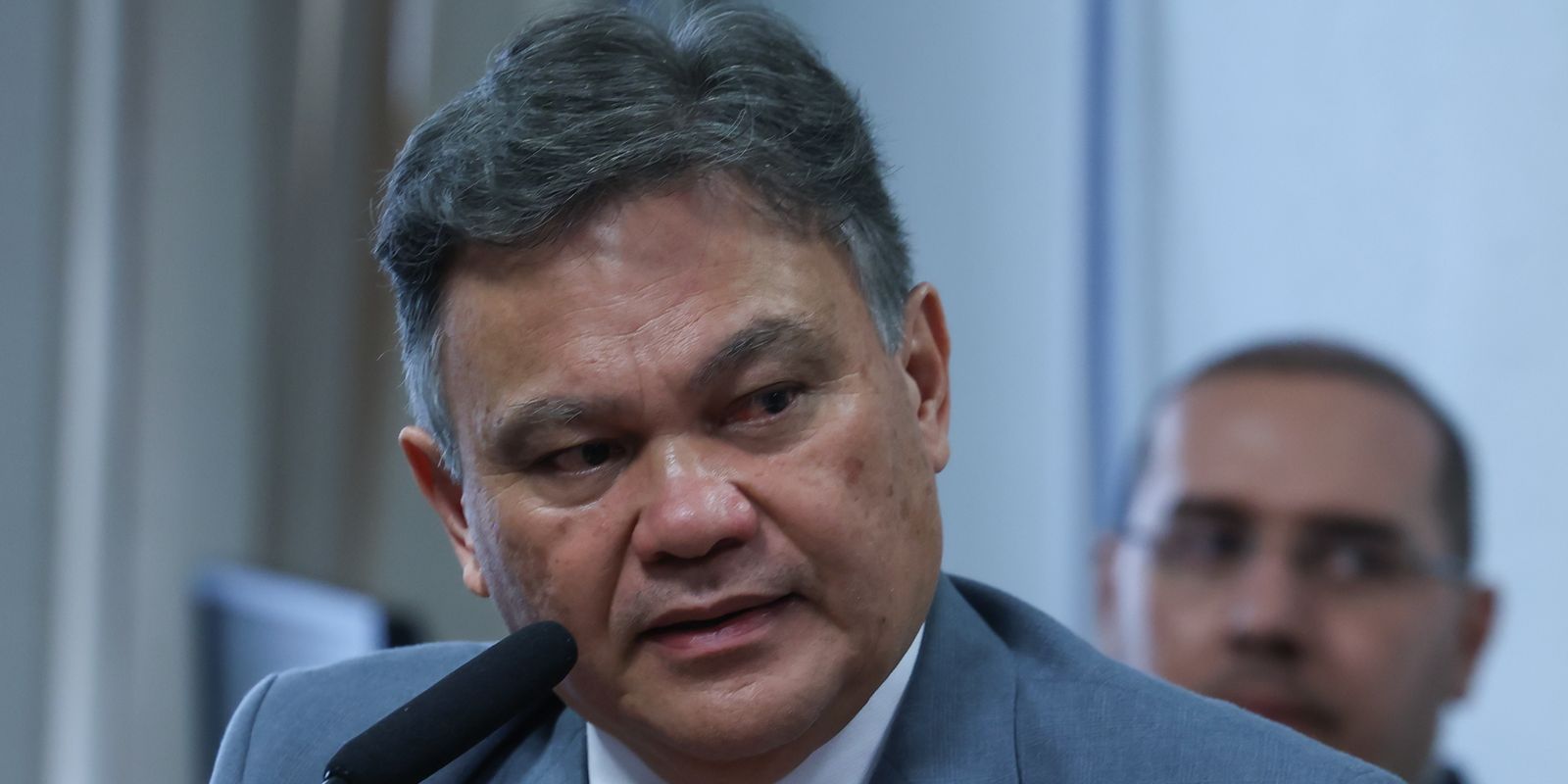
Lincol Gakiya spoke this Tuesday (25) at a session of the Senate’s Parliamentary Commission of Inquiry (CPI) on Organized Crime, created after the repercussions of the operation in Rio de Janeiro (RJ) with 122 people murdered, including five police officers.
The prosecutor, sworn to death by the PCC, also assessed that Brazil could become a narcostate if nothing is done, that factions are infiltrated in the formal economy and have used fintechs, bets and cryptocurrencies from the digital financial system, still with little regulation, to launder money and hide assets.
Gakiya highlighted that a mere change in the law, with tougher penalties, is not enough. He criticized part of the Anti-Faction bill (PL), approved in the Chamber, saying that it does not allow for a precise differentiation between the leaders and the “soldiers” of organized crime.
“Perhaps, senators, there is not a crucial problem of lack of legislation in the country. It is clear that the legislation needs to be improved”, stated the prosecutor, adding that the most serious “is an absolute lack of coordination, integration and internal cooperation” between State bodies.
Political polarization
Prosecutor Lincoln Gakiya added that political polarization between different governments has hampered the integration of security forces. “The political polarization that has taken over this country, unfortunately, ends up harming this integration even further”, he highlighted.
For Gakiya, operations such as Carbono Oculto, led by the Federal Police (PF) and which dismantled the PCC’s money laundering schemes in São Paulo, occurred more due to initiatives by state employees than a structured integration between institutions at the leadership level.
“We would hardly have Operation Hidden Carbon today: would federal forces have cooperation – and I’m talking at the level of an institution, of the head of an institution – with state forces if they are politically opposing governments? [Isso] It’s something that worries me a lot,” he said.
Gakiya proposed the creation of a National Authority to combat organized crime, with the presence of representatives from all police and state bodies as a way of continuing the security policy.
“[Essa seria] the way to overcome these institutional differences and these disputes between police and Public Prosecutor’s Office. The PF could not, in my opinion, coordinate these task forces because there would be a conflict with the states”, he added.
The federal government sent the Proposed Amendment to the Constitution (PEC) for Public Security to Congress, claiming that the text deepens this integration. The proposal suffers resistance in the Chamber.
Narcostate
The expert stated, during the CPI, that Brazil is taking “great strides” towards becoming a narco-state due to the growth of groups such as the PCC, which operates in the formal economy. For him, a narcostate is one that becomes dependent on drug trafficking.
“If nothing is done, we will become a narcostate. However, we have institutions capable of dealing with this. But institutional, internal, corporate disputes and political disputes have hindered this”, he reinforced.
Lincoln Gakiya recalled that the PCC is in all states of the country and has a presence in at least 28 countries. The group saw its revenue increase from around R$10 million annually in 2010 to around R$10 billion annually, according to investigations.
The SP prosecutor cited the case of bus companies that operated in the city of São Paulo and were controlled by the PCC. The companies transported more than 25 million people per month, with members of the group among shareholders and company directors.
“All you had to do was type the name of these directors in an open source and you would see that they are wanted, including on the Interpol red list. So, it is a mockery. These contracts were extended there on an emergency basis, etc., with additions. These companies earned more than R$1 billion per year from the city hall in subsidies alone”, said Gakiya.
The prosecutor added that organized crime infiltrates the State through contracts, mainly in city halls after campaign financing.
“In several municipalities, we realized that there was influence in campaign financing by organized crime, by the PCC. Why? The PCC wants to do business with public authorities and, to do so, it needs to dominate a part of that public power”, he added.
Financial system
The entry of factions into the formal economy is one of prosecutor Lincoln’s main concerns, especially infiltration of the financial system through fintechs, purchase of cryptocurrencies and also through online betting games, bets.
“Many of these companies [as bets] they are being used by organized crime to launder money, mainly through contracts with digital influencers, who manage to make a fortune in a few years and have contracts with these bets, but which are closely linked to organized crime money laundering and this will soon come to light”, he stated.
In June this year, the CPI das Bets in the Senate had its report rejected by the majority of the committee’s members. The text called for the indictment of 16 people, including digital influencers. It was the first report of CPI rejected in ten years in the Senate.
According to the prosecutor, the lack of regulation of fintechs in Brazil, which are companies that operate in the financial system, has contributed to money laundering by factions.
“We realized that there was, and still is, a deficiency in regulation and a deficiency in supervision. See that until Operation Carbo-Ocupo, the Central Bank (BC) did not supervise fintechs, Coaf [Conselho de Controle de Atividades Financeiras] there was no information about fintechs,” said Lincoln.
PL Antifaction
Regarding the Anti-Faction PL approved in the Chamber of Deputies, prosecutor Lincoln Gakiya highlighted that the text does not precisely differentiate between leaders and other members of the factions, the simple “soldiers”.
“We need to classify this better. As it is in the PL, we don’t have this differentiation”, he commented during the CPI.
Gakiya considered that the Antifaction PL should differentiate between smaller criminal organizations and more structured ones which, according to him, have “mafia” characteristics.
“These organizations [mafiosas] they need to be handled in different ways, with procedural tools that are actually more intrusive from the point of view of individual freedoms, but they are necessary in extremely serious cases. This happens in Italy”, he argued.
The prosecutor also criticized the change made by rapporteur Guilherme Derrite (PP-SP), who removed the homicides carried out by faction members from the Popular Jury Court, claiming that these jurors could suffer pressure from criminal organizations.
“I understand the justification that the juror may suffer greater pressure, but know that the judges suffer too”, he commented.