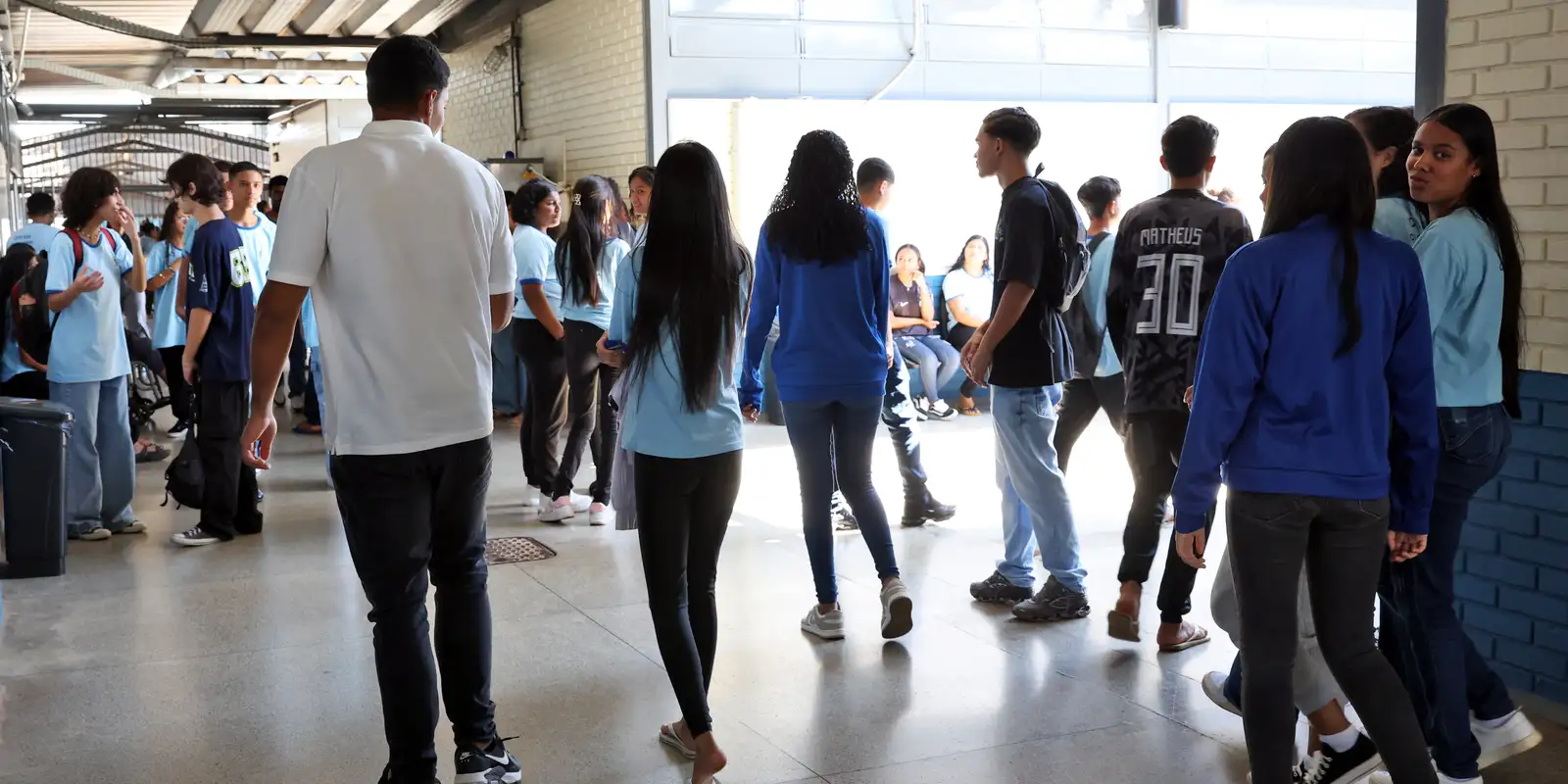
The Ministry of Education (MEC) begins, this Monday (27), the payment of the new installment to participants in the 2025 Pé-de-Meia program.
Those benefiting from the federal program are high school students enrolled in the regular public network, between 14 and 24 years of age, and also in the Youth and Adult Education (EJA) modality, 19 and 24 years of age, registered in the federal government’s National Registry of Social Programs (CadÚnico) until February 7, 2025.
To be entitled to the benefit, they must have a minimum attendance of 80% in classes and have a regular Individual Taxpayer Registry (CPF).
In this new stage, Caixa Econômica Federal – responsible for managing the resources transferred by the MEC – points out that, in total, around 3.2 million public school students will receive the benefit until next Monday, December 2nd.
Those born in January and February are the first to receive the amount of R$200 corresponding to the class attendance incentive.
Staggered payment
Attendance incentive payments occur until November 3rd, depending on the month of birth of students who are enrolled in one of the three high school grades in the public education network.
Check the calendar:
– those born in January and February receive it on November 24th;
– born in March and April, on November 25th;
– born in May and June, on November 26th;
– born in July and August, on November 27th;
– born in September and October receive on November 28th;
– born in November and December, on December 2nd.
Deposits
The installments of the so-called high school savings from 2025 are deposited in a Caixa Econômica Federal savings account, automatically opened in the name of the students.
If the student is 18 years old or over, the account will already be unlocked for immediate movement of the amount received through the attendance incentive. The public bank advises that it is possible request the Pé-de-Meia card for free on the Caixa Tem appwhich allows the use of financial resources in purchases and payments.
If the participant wishes, the amount can also be withdrawn at self-service terminals, even without a card, just using the previously registered biometric identification.
In the case of a minor, it will be necessary for the legal guardian to authorize the movement of the account. Consent can be done in the application itself or at a Caixa branch.
The participant can consult the Student Journey app from MEC school information, program rules and payment status (rejected or approved).
Payment information can also be found on the Caixa Tem app or in the Social Benefits app.
Incentives
The so-called High School Savings has four types of financial-educational incentives.
enrollment incentive: for enrollment registered at the beginning of the academic year, amount paid once a year, in the amount of R$200;
attendance incentive: for minimum school attendance of 80% of the total teaching hours. For regular education, there are nine installments during the year worth R$200.
incentive-completion: for completion and approval in each of the three academic years of high school and participation in educational assessments, in the total value of R$3,000. Withdrawal depends on obtaining a high school graduation certificate;
incentive-Enem: paid after participation in the two days of the National High School Exam (Enem), in the year that the student completes the 3rd year of high school. The R$200 is paid in a single installment.
In this way, the sum of the financial-educational incentive can reach R$9,200 per student, at the end of the 3rd year of high school.
nest egg
Created in 2024, the federal government program is aimed at low-income public high school students. The initiative works as a savings to promote retention and completion of school at this stage of education.
Find out here what are the requirements to be included in the program.
The MEC clarifies that there is no need to register. Every student who meets the program’s criteria is automatically included in the federal government’s initiative. The MEC only verifies the data provided by education networks and CadÚnico.
To answer questions about the Pé-de-Meia program, the Ministry of Health created a website with questions and answers. Check it out here.