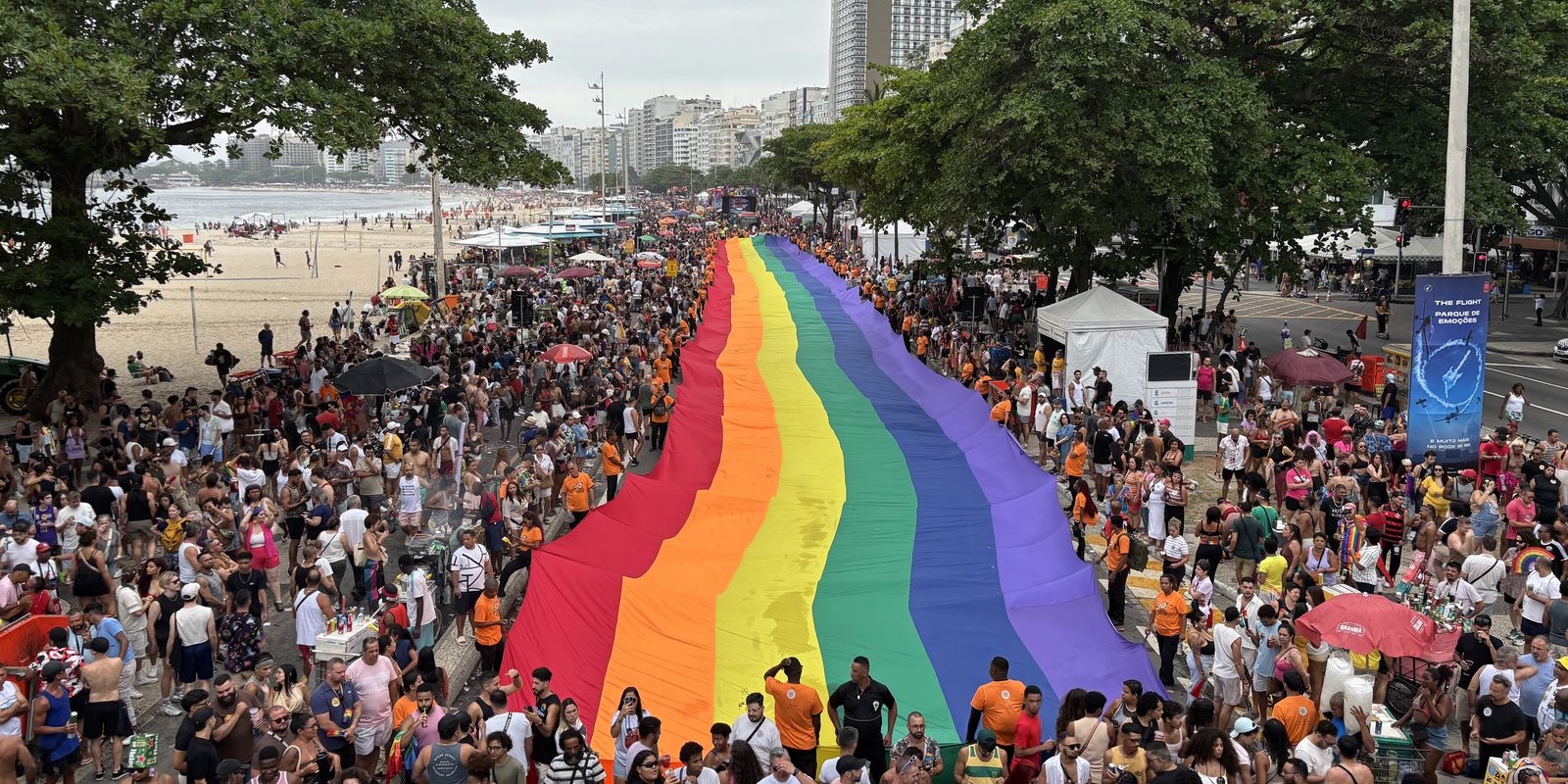
Despite the cloudy day, there was no lack of vibrancy on the Copacabana waterfront this Sunday afternoon (23). Avenida Atlântica and the sands of Brazil’s most famous beach were the stage for the 30th edition of the LGBTI+ Pride Parade (lesbian, gay, bisexual, transvestite, transsexual and transgender, intersex and other gender identities and sexual orientations).
In addition to the traditional message of LGBTI+ visibility, respect and against prejudice, the march celebrated 30 years of the oldest parade in the country.
Amidst the hustle and bustle provided by the electric trios, a scene paid homage to the first Brazilian parade: inside a red car, two drag queens recalled the characters who opened the 1995 march, also inside a convertible vehicle.
Read here: 30 years ago, a march in Rio opened LGBT pride parades in Brazil
Another direct reference to the 30-year milestone was activist Cláudio Nascimento, one of those present in Copacabana that year in 1995, then 23 years old.
Today he is president of the Grupo Arco-Íris de Cidadania LGBTI+, a civil society entity that has organized the parade since the first edition.
“It’s a glorious moment for us. We are very emotional,” he told Brazil Agency.

Cláudio Nascimento, president of Grupo Arco-Íris participated in the first march, 30 years ago – Tuany Faria/Disclosure
He points out that during the 30 years of resistance, the Rio de Janeiro parade is intertwined with the history of achievements for the rights of the LGBTI+ community.
“We led movements for the criminalization of LGBTIphobia in several campaigns we carried out, we also had equal civil marriage with an extremely strategic agenda for our fight and we achieved it”, he highlighted.
According to him, the Rio march influenced more than 400 parades that are currently held in the country.
“Surgical” message
The organizers of the 30th LGBTI+ Pride Parade state that the movement always has a “surgical” message, that is, punctual and specific.
Held the day after the end of the 30th United Nations Conference on Climate Change (COP30), held in Belém, this year’s parade had the theme: 30 years of making history: from the first struggles for the right to exist to the construction of sustainable futures.
“We must always be concerned and concerned about producing messages that can point out paths for our future”, explains Cláudio Nascimento.
“The future needs to be diverse, plural, it needs to incorporate discussions of environmental sustainability, understand specific issues on the lesbian agenda, the agenda of trans people, the agenda of people with disabilities, families, elderly people”, adds the organizer.
Artists and services
The electric trios offered the public performances by DJs and artists such as Daniela Mercury, Grag Queen, Aretuza Lovi, Diego Martins and Diego Martins. There was also space for around 100 artists from Rio’s LGBTI+ community.
In addition to the mix of rhythms and excitement, there was space for mobilization, guidance and provision of services related to the health and rights of the LGBTI+ population.
Tents offered information on preventing sexually transmitted infections (STIs), distribution of condoms and educational material.
The event was supported by Rio de Janeiro city hall, the state government and the LGBTI+ dating app Grindr.