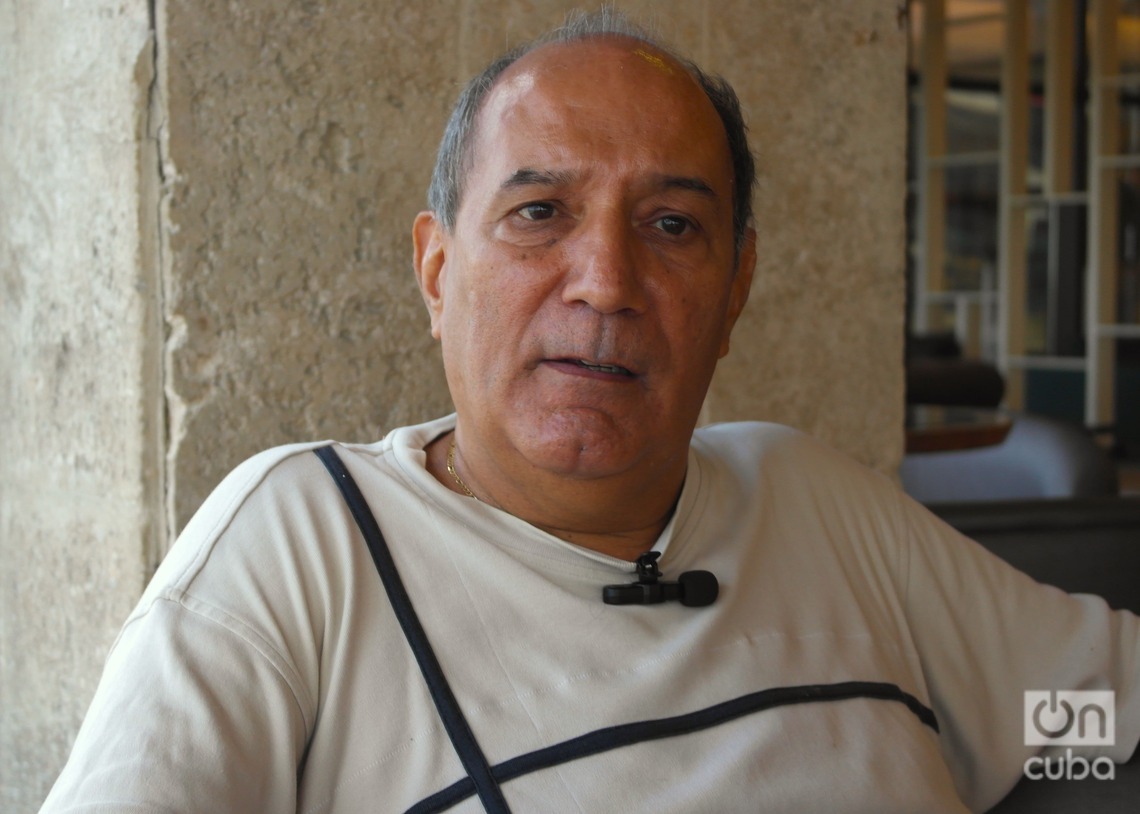
Dr. Antonio Romero Gómez, one of the most relevant economists and Cuban academics, died this Saturday in Havana. He was 64 years old.
The news was confirmed by the National Association of Economists and Accountants of Cuba (ANEC)which described him as a great professional in economic sciences, although without specifying the cause of his death.
Professor, researcher, analyst, Romero Gómez dedicated more than four decades to teaching and economic studies, in which he stood out in areas such as international economy and development.
His work was particularly significant at the University of Havana, where he served as Dean of the Faculty of Economics and as director and professor of the International Economics Research Center (CIEI).
In addition, he was president of the “Norman Girvan” Chair of Caribbean Studies, an entity that after his death remembered his relevant career and considered that his “departure leaves an irreparable void in the university, academic and diplomatic community of Cuba, the Caribbean and Latin America.”
Dr. Romero—whom his colleagues and friends called Tony—also gave lectures at universities and events outside the island, and represented Cuba in international organizations. In addition, he was the author of more than 60 specialized publications.
He also stood out in the organization for many years of the International Meeting of Economists on Globalization and Development Problems, an event that brought together scholars from all over the world and contributed from the island to the specialized exchange on these topics.
For his career, he received recognitions such as the title of Honorary Doctor in Social and Human Sciences from the Simón Bolívar University of Barranquilla.
Outside the academic field, he was a contributor to spaces for debate and economic analysis in the media, such as he recalled in his obituary the portal Cubadebate.
Last year he offered a interview with OnCubain which he sharply analyzed the country’s economic scenario at that time and referred to issues such as macroeconomic stabilization and the dollarization of the economy and his considerations remain fully valid today.
In the interview he opined that “macroeconomic stabilization has to entail modifications in terms of monetary and exchange rate policy.” In his opinion, “it is very unlikely to stabilize the economy with the disparity in exchange rates” and the government thesis of “accentuating dollarization and then de-dollarizing the country” was “a contradiction.”
“The dollarization of the economy, in any country, implies a loss of economic sovereignty,” he noted then.