“Sawabona” Systems analysis and development student, Daniel Messias explains what the greeting means to the Zulu people: “I see you, you are important and thank you for existing.” The word translates the philosophy of the ethnic group from the south of the African continent who choose to remember qualities and values instead of punishing people for their mistakes.
“By reconnecting with their essence, the person can respond ‘shikoba‘. I exist and I am good for you”, adds Messias.
The culture sawabona-shikoba it also helps to explain what guides Messias’ research at the Recife Center for Studies and Advanced Systems (Cesar). He teaches robotics to young people deprived of their liberty in the capital of Pernambuco.
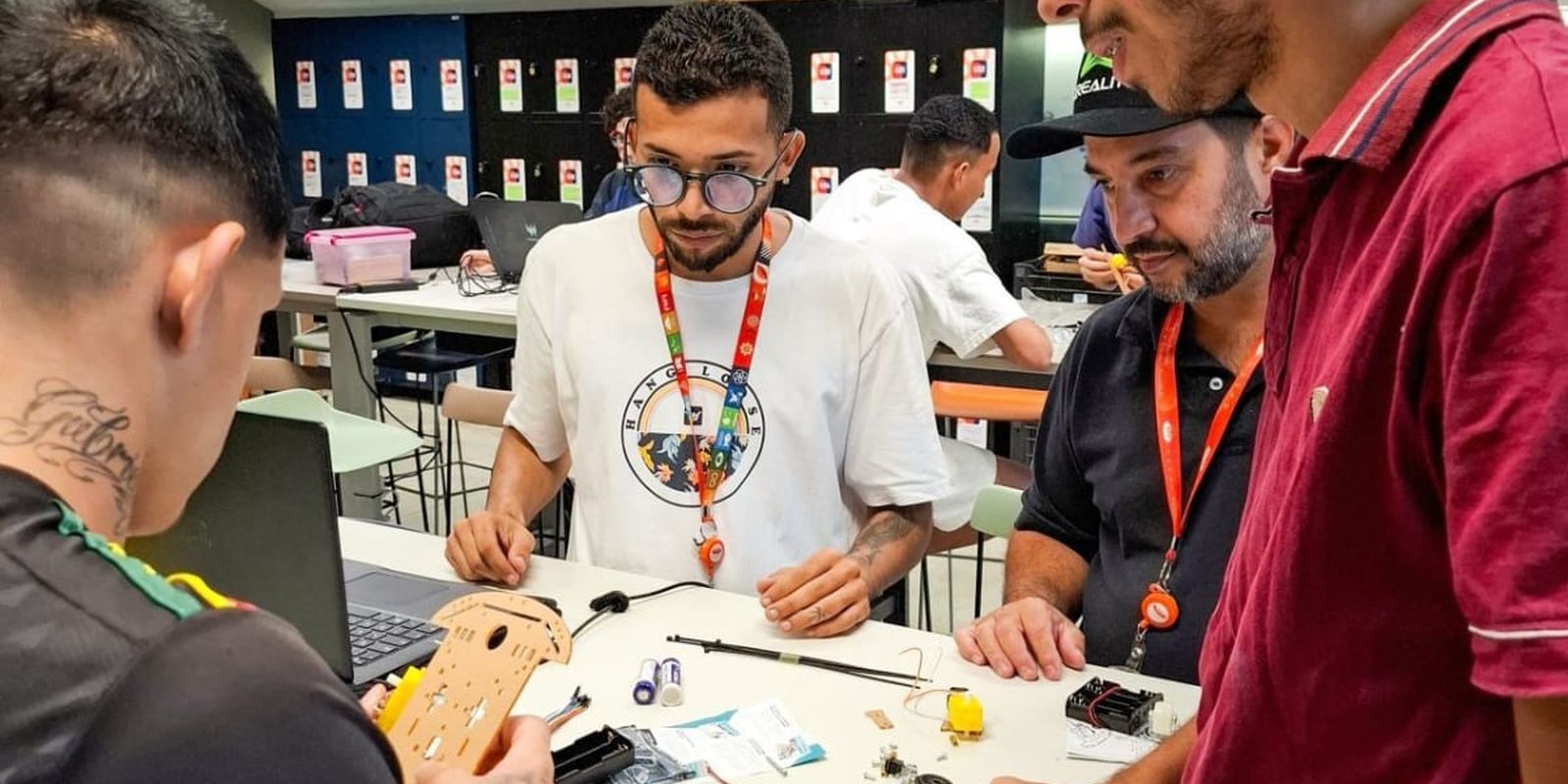
“Education needs to be restorative. Rescue people not for their mistakes, but for their qualities”, argues the researcher, while showing the line-following robot (which navigates along a marking) developed by the group of young graduates from the units of the Fundação de Atendimento Socioeducativo de Pernambuco (Funase).
For Messias, these are principles that can help the country find solutions for the reintegration of people deprived of their liberty, currently centered on what he calls “necropolitics”. The term coined by Cameroonian philosopher Achille Mbembe refers to a type of “license to kill” people who are part of some social groups, such as young black people. “Not necessarily a policy of physically killing. It is also a policy of killing narratives, dreams, perspectives and possibilities”, he explains.
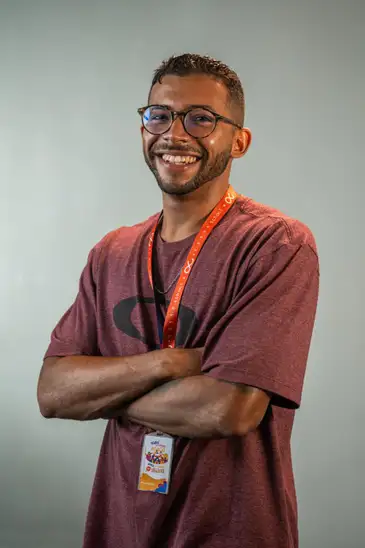
Daniel Messias teaches robotics to young people deprived of their liberty in Recife – Photo: Cesar/Disclosure
The project presents notions of robotics and computational thinking to young people who have just left or are still in socio-educational systems. The first class trained 18 young people who had graduated from Funase units. The second group, still ongoing, is made up of teenagers who are undergoing socio-educational measures.
“These are young people who thought they had no conditions whatsoever to integrate into society”, says professor Henrique Foresti, systems engineer and creator of the Roboliv.re platform, a methodology created to democratize robotics and which is used to train young people. “This feeling of belonging is the biggest challenge. The boys get here [no Cesar] and discover that through technology they can have a different life”, he adds.
According to the most recent data from the National Council of Justice (CNJ), in 2024, there were 11 thousand teenagers complying with socio-educational measures across the country. More than 95% of them are boys. Almost 74%, black or mixed race.
The initial objective of the research was to help in the reintegration process, but, after the first training, what they begin to realize is that These young people have skills that can be used in many other fields.
“They came from a context of vulnerability, of so many problems, of so many barriers that they are able to have a critical look and a look of innovation that is different from a young person who came from a background of privilege, who knows English, who has already traveled outside the country, who already knows how to program. People who came from a background of much less privilege have a look of creativity, of bringing solutions to different, plural contexts”, highlights Messias.
The next stage of the research is to investigate the gap between training and income generation. The researchers evaluate the creation of a startup to work in partnership with socio-educational units.
“When he leaves the system, he finds no support. This process is called disaffiliation. And then what happens? The person ends up reoffending”, argues the researcher, who recalls the rebound effect that this lack of support means for the entire society.
“Trafficking is a place where he will have a support network, he will have support from the factions, he will have this help for basic things, like being able to support his family. This support that he does not have from the State. This is how the crime proves to be much more – how can I say? – much more interesting. It brings immediate income”, points out the researcher.
For Messias, “the socio-educational system ends up being a ‘school’ to train people who go to prison”. “School” that helps feed one of the largest prison systems in the world. According to the Ministry of Justice and Public Security, in the first half of 2025, Brazil had almost 942 thousand people in the prison system. Only China and the United States exceed this number, and only 15 Brazilian cities have populations larger than this.
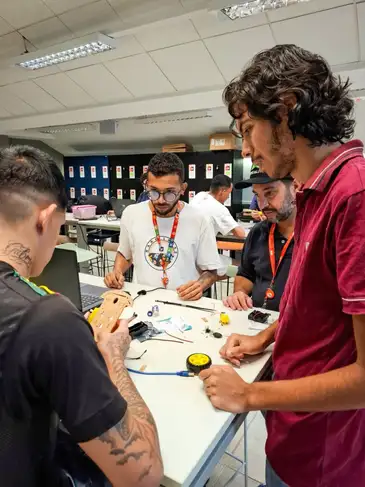
Daniel Messias, Henrique Foresti and Rafael Cavalcante (from left to right) accompany a young person leaving an inpatient unit (from the back) in a robotics project – Photo: Cesar/Disclosure
In addition to robotics, the research will also test the application of vocational tests to help map skills and design career plans aligned with market demands. At this point, research has a territorial advantage. It is located in the region of Porto Digitalone of the main technological innovation hubs in the country, located in the center of Recife and bringing together 475 technology companies.
To put the project into practice, it was necessary to face prejudices. “When these young people came here [para o Cesar]that moment of tension was clear. The look on people’s faces saying: ‘What are these people doing here?’. I replied, very calmly: ‘they are innovating’”, remembers Messias.
The researcher has, as they say, a speaking role. He himself has experienced this feeling of not belonging to the place where he currently carries out his projects. Born and raised in Coque, officially Ilha Joana Bezerra, a neighborhood that in 2006 recorded the lowest Human Development Index (HDI) in Recife, Messias also completed socio-educational measures as a teenager. Between his hospitalization and his semi-prison sentence, he was deprived of his freedom for three years and six months.
Today, at 26 years old, when asked about what he did to be apprehended, he shows in practice what philosophy means sawabona-shikoba:
“I don’t want to talk about the act I committed, because then I’ll be looking at the Messiah who made a mistake”, he says, in conclusion. “Don’t look for me in the past, no, because I’m not there anymore.”