The UN rapporteur on the impact of unilateral coercive measuresAlena Douhan, stated this Friday in Havana that the US sanctions “have substantially exacerbated the humanitarian situation” in Cuba.
Douhan, who arrived on the island on November 11 to evaluate the current effects of the economic, commercial and financial embargo imposed by Washington for more than six decades, said that the measures are “designed to prevent the country from receiving economic income, especially in foreign currency,” as he declared at a press conference at the Office of the UN Resident Coordinator.
Furthermore, he warned that these measures have a severe impact on the population.
However, he stressed that are not the only cause of the serious crisis facing the country, also marked by the internal economic recession, natural disasters, the pandemic and other structural problems.
In her preliminary report – the final version will be presented in September 2026 before the Human Rights Council – the Belarusian jurist called on the US to “stop using the rhetoric of sanctions, maximum pressure campaigns, the inclusion of Cuba as a state sponsor of terrorism and allegations of forced labor in medical missions as a political instrument.”
During his stay, Douhan held meetings with Cuban Government officials, representatives of the United Nations system and other official actors.
UN warns of accelerated deterioration of life in Cuba
The UN rapporteur described a scenario marked by severe deprivation and accelerated deterioration of living conditionsand lamented the “humanitarian” impact of the restrictions in a context in which the country has accumulated five years of deep crisis.
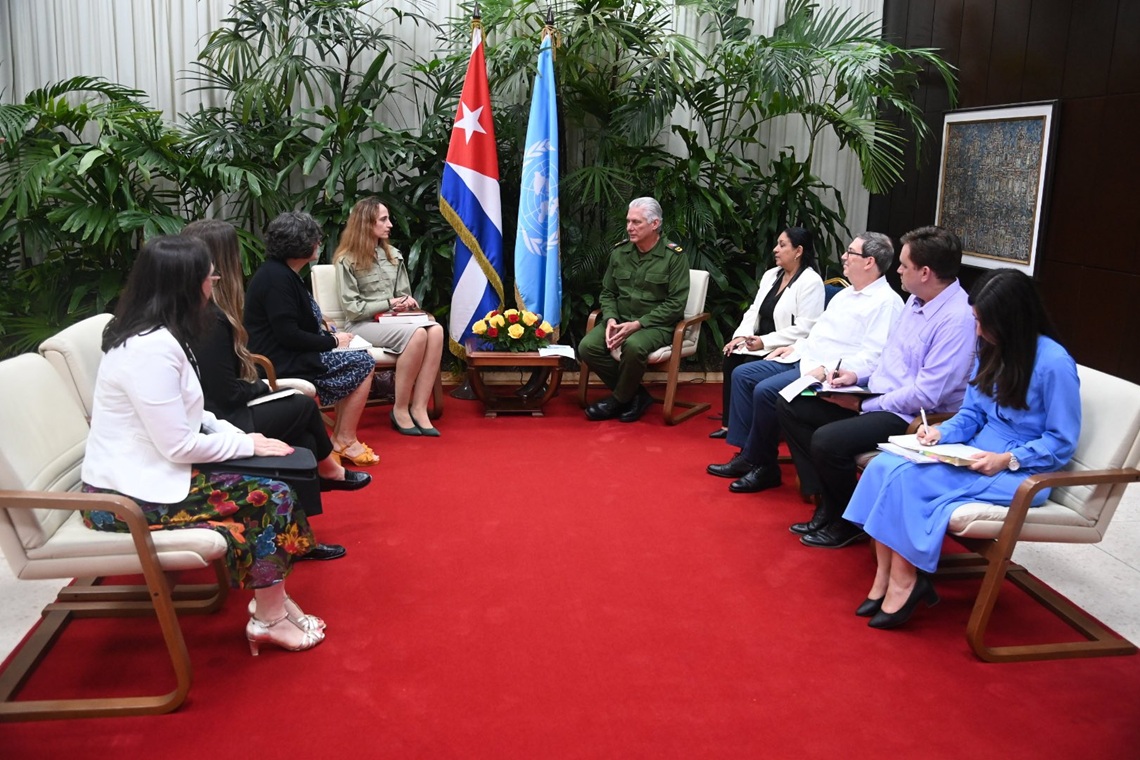
From the Government, the Presidency of Cuba He assured that “the lives of all Cubans have been marked by the blockade,” as expressed by Miguel Díaz-Canel when receiving the rapporteur at the Palace of the Revolution.
The president updated Douhan on what he described as the “profound effects” of the intensification of US sanctions and the island’s permanence on the list of countries supposedly sponsoring terrorism.
He also thanked the cooperation sent by the United Nations after the passage of Hurricane Melissa and shared details of his tours through the affected areas.
Díaz-Canel also reiterated the country’s willingness to continue collaborating with UN mechanisms, while Douhan recognized Cuba’s methodology to quantify the damage of the so-called “blockade” and expressed solidarity with the population after the impact of the recent cyclone.
| “The lives of all Cubans have been marked by the blockade,” stated the President @DiazCanelB when receiving Alena Douhan, special rapporteur of the UN Human Rights Council on the negative impact of unilateral coercive measures.
— Presidency Cuba (@PresidenciaCuba) November 22, 2025
Economic crisis in Cuba
According to eight Cuban economists interviewed by EFE, although the sanctions have severe repercussions, they are not the main origin of the current crisis.
The crisis that the island is going through is marked by a sustained economic contractionuncontrolled inflation, as well as shortages of food and medicine.
Cuba’s “polycrisis” widens inequality gaps, sociologists warn
Added to this are prolonged blackouts, deterioration of the health system, increasing dollarization and mass migration that has emptied key sectors of the workforce.
According to the news agency, the crisis is compounded by errors in economic and monetary policy, particularly since 2021, which have deepened historical structural weaknesses.
In his preliminary assessment, Douhan insisted that all these elements come together today to aggravate the humanitarian impact of the sanctions.