The cash shortage continues to affect the Cuban population and, based on the current situation, it does not appear that it will be resolved in the short term. The lack of availability in ATMs, limitations in bank branches and the dysfunctions of the Central Bank of Cuba have made access to cash an increasingly complex process.
HAVANA.-After more than a week of attempts, Elsa was finally able to collect the pension from her husband, convalescing from chikungunya. On Monday he went to Metropolitan Bank located on Dolores Avenue between 18 and 19, but there they informed him that they could not pay him over the counter without a legal power of attorney. The only option was to withdraw the money through an ATM. To do this, he had to go to the branch on Diez de Octubre road, because the ATMs on Dolores and 18 had been out of service for some time.
On Tuesday he tried again, but after almost an hour of waiting there was a blackout. On Wednesday he returned, but that day the ATMs had not been stocked due to lack of money. The same thing happened on Thursday. On Friday, although there was cash available, the authorized employee to replace the equipment was missing. Elsa was only able to collect the following Monday at the bank, after accumulating transportation costs and physical wear and tear.
Cases like this are frequent. Accessing one’s own money has become difficult due to recurring problems: lack of electricity, connection failures, lack of personnel and, above all, insufficient availability of cash.
The problem also affects those who sell their homes. In Cuba, the buyer must deposit the payment in the bank, which issues a cashier’s check in the name of the seller. However, due to the cash crisis, the branches do not deliver the full amount reflected in the document. Clients can only withdraw a daily amount that usually does not exceed 5,000 pesos, and in many cases it is even less.
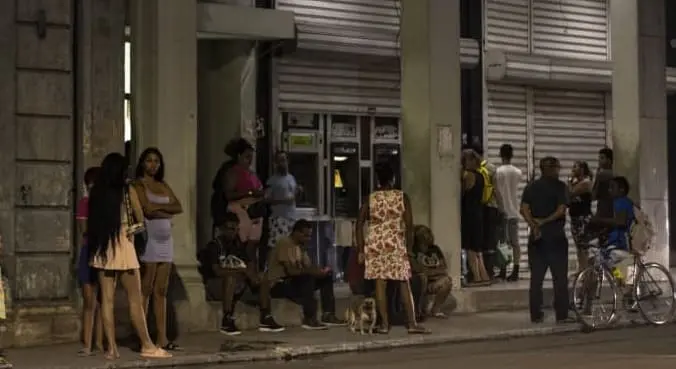
Added to this is that a significant percentage of the country’s ATMs are empty or out of service. In areas such as Lawton, in Havana, many residents—including many older adults—must travel to other parts of the municipality, such as Diez de Octubre, Luyanó or Virgen del Camino, either walking long distances or paying for private taxis, in a context where public transportation operates on a limited basis. Added to the transfers are the early mornings in front of the branches in search of a collection opportunity.
Although the Regime has promoted the use of electronic payments, cash remains essential for most daily operations. Not all goods or services can be paid for by transfer, and many self-employed people only accept digital payments for a portion of the amount. Furthermore, a large number of older people do not have smartphones or an internet connection, or do not master these tools.
To distrust in the banking system Added to this are technical errors, instability of the internet service and frequent power outages, factors that further complicate the use of digital payment methods.
Access to cash continues to be a daily challenge across the country. At the moment, there are no signs that the authorities foresee an immediate solution to the critical situation of ATMs or bank branches.