On November 12, 2025, the Food and Agriculture Organization of the United Nations (FAO) and the World Food Program (WFP) They published a report which once again raises alarm bells about the state of global food security. Both organizations warn that the “window to prevent millions of people from falling into acute food insecurity is rapidly narrowing.”
Specifically, the document identifies sixteen regions of the world where the risk of severe food crises not only continues to grow, but could trigger large-scale humanitarian emergencies if urgent and coordinated measures are not adopted.
Armed conflicts that block food and paralyze economies
The armed conflict remains the central cause in most of the countries mentioned. Prolonged violence, the destruction of arable land, mass displacement and the blockade of humanitarian corridors drastically reduce access to food.
Sudan appears as one of the most critical scenarios: After months of intensifying fighting, millions of people have been trapped in areas where markets have collapsed and aid distribution is virtually impossible. FAO warns that some regions could approach technical famine thresholds if the situation cannot be stabilized.
Yemen presents a similar scenario, with more than 40% of the population in severe food crisis levels. There, the destruction of essential infrastructure and the lack of fuel hinders the arrival of importson which most of the country’s diet depends.
In Palestine, the report highlights that chronic instability and restrictions on the movement of essential goods have further reduced food availability, generating a rapid deterioration in nutritional indicators.
Also worrying is the situation in Mali and Burkina Faso, where insecurity and unstable control of the territory are generating disruptions in markets, blockages to agricultural trade and significant losses in crop production.
Thus, in Burkina Faso, the poorest households living in conflict-affected areas face “market disruptions and limited humanitarian assistance,” according to the most recent food safety analysis.
These dynamics are also observed in Mali, where the same conditions are causing “a rapid deterioration in local levels of food consumption and nutrition.” It is a diagnosis reinforced by the data from the Insufficient Food Consumption (IPC)which placed the proportion of the population underfed at around 52% in September 2025.
Economic shocks that multiply vulnerability
The second driver of food insecurity is economic instability, which is manifested through rising food prices, the depreciation of local currencies and the increase in the price of fuel and agricultural inputs.
In Haiti, this situation is aggravated by violence and disruption to the normal functioning of markets, which has left millions of people extremely vulnerable. In fact, around 5.7 million Haitiansmore than half of the country, are already at levels of acute food insecurity, a figure that continues to increase.
Similar circumstances are observed in Myanmar and Ethiopiawhere the devaluation of the currency and the interruption of economic activities have increased the price of basic foods, drastically reducing the purchasing power of households.
The climate crisis, a structural factor
The third major factor identified is climate change, which no longer acts as an exceptional phenomenon, but as a structural driver of vulnerability. Prolonged droughts, flash floods, cyclones and heat waves recurrently affect regions whose agriculture largely depends on seasonal rainfall.
The Horn of Africa is the most obvious case: After five consecutive seasons of failed rains, millions of herders and farmers have lost their livestock and crops, leading to mass displacement and a dramatic increase in dependence on nutritional programs.
The WFP report highlights that these phenomena, intensified by variations associated with The Childthey will continue to repeat themselves. In countries such as South Sudan, Somalia and Ethiopia, extreme rains that follow droughts destroy basic infrastructure, destroy crops and contaminate essential water sources.
A crisis deepened by the deficit in humanitarian financing
The fourth factor, and one of the most decisive in understanding the magnitude of the problem, is the enormous deficit in humanitarian financing. The WFP has warned that the funds available this year could be around $6.4 billion. This is a figure much lower than what is necessary to sustain its global operations and is clearly below previous levels. which forces us to cut rations, suspend nutritional programs and strictly prioritize the most vulnerable beneficiaries.
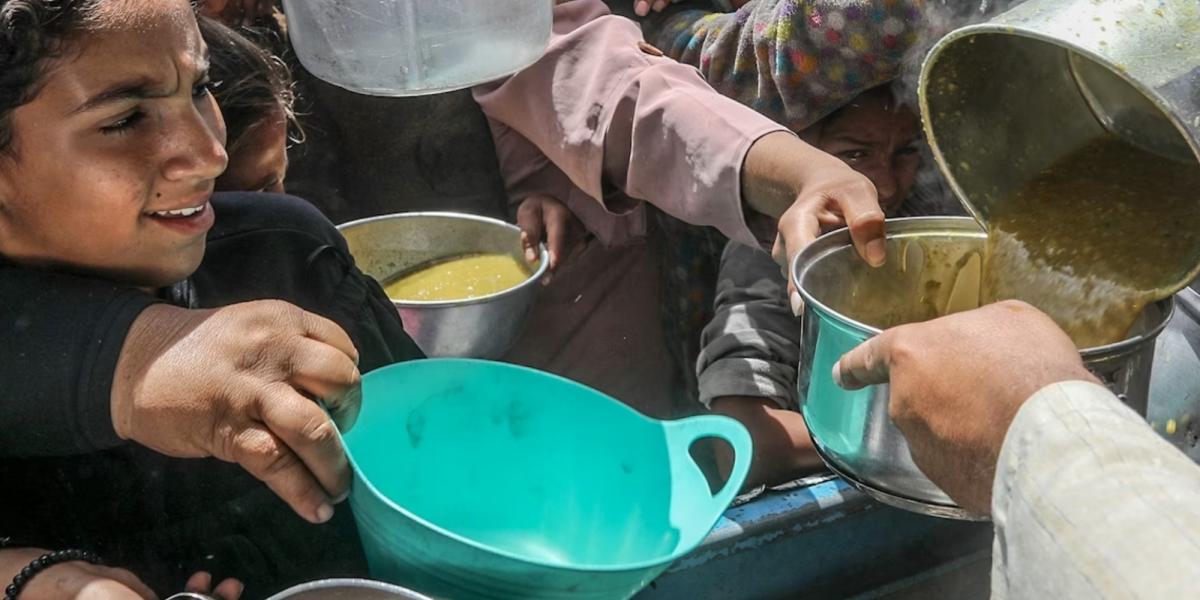
The consequences of these cuts are direct: in areas where conflict prevents access to food and local markets have collapsed, humanitarian aid constitutes the only source of sustenance. If funding remains insufficient, millions of people risk rapidly moving from a crisis situation to a severe food emergency or even near-famine conditions.
The WFP itself has pointed out that the lack of resources is seriously compromising the ability to anticipate peaks of seasonal or climatic hunger, limiting its scope for action in some of the most fragile environments on the planet.
Food as an indicator of global stability
This report demonstrates that nutrition is not just a domestic matter or a matter of individual habits. Food insecurity becomes both a symptom and a cause of instability, with effects on public health, the functioning of local economies and migratory movements. The interdependence of global markets means that food crises in the sixteen hunger hotspots (hunger hotspots) identified have repercussions in regions very far from them, generating additional tensions in importing countries and vulnerable economies.
Despite the warning tone, the FAO-WFP report concludes that it is still possible to avoid the massive deterioration projected for 2026. It points out that investing in livelihoods, resilience and social protection before hunger reaches its peak will be “ua smart investment in long-term peace and stability”.
It also underlines that agricultural support, such as seeds, livestock health or anticipatory action, is essential to stabilize food production and reduce dependence on emergency aid. At the same time, it warns that lack of funding and blocked humanitarian access are seriously compromising the ability to act in time, and that ignoring this window of opportunity will have an incalculable human cost.