Around 3.4 billion people around the world do not have access to basic sanitation, according to a recent report by the United Nations (UN). In addition to the impacts on the environment and human health, the problem worsens the climate emergency.
In an interview with Brazil Agencythe Water and Climate consultant at Sanitation and Water for All (SWA), Jose Gesti, explains that Floods, prolonged droughts, food insecurity and forced displacement are symptoms of the intensification of the water and sanitation crisis.
According to him, without resilient water and sanitation services, countries are unable to adapt to the climate emergency. Each event takes on even more extreme dimensions where the urban infrastructure is flawed.

Water and Climate Consultant at Sanitation and Water for All (SWA), Jose Gesti – Photo: Disclosure/SWA
Gesti participated in events promoted by SWA at the 30th United Nations Conference on Climate Change (COP30), in Belém. SWA is an international association linked to the United Nations Children’s Fund (Unicef), which brings together governments and civil society.
The basic sanitation situation in Belém is an example of the connection between the local and global situation of the problem. The COP30 headquarters is among the ten worst municipalities in the country in terms of ranking of sanitation produced by Instituto Trata Brasil. In 2025, only 27.51% of the city had sewage service.
In this sense, the specialist advocates that public and private policies and financing prioritize historically excluded communitieswith more transparency and social participation.
Brazil Agency: What are the main challenges today in moving forward with the basic sanitation agenda?
Jose Gesti: One of the most pressing challenges is the gap between political commitments and real progress. With just five years left to meet the Sustainable Development Goals, we are still far from universal access.
A recent UN report shows that 2.1 billion people do not have access to safe drinking water, and 3.4 billion lack safe sanitation, including 354 million people who still practice open defecation.
These are not abstract numbers – they represent children drinking water from contaminated rivers, families trapped in cycles of preventable disease, and communities unable to break out of poverty.
Brazil Agency: How can we connect the topic with the climate emergency?
Gesti: We face climate impacts that are rapidly intensifying. Floods, prolonged droughts, food insecurity and forced displacement are all symptoms of worsening water insecurity.
Without resilient water and sanitation services, countries cannot adapt effectively to the climate emergency. Each extreme weather event becomes more devastating where infrastructure fails.
This is why, at the 2025 Sector Ministers Meeting in Madrid, we advocate an end to fragmented and isolated approaches. Integrating water, sanitation, health, environment and finance is essential to strengthen resilience and improve efficiency.
Evidence shows that every dollar invested in water and sanitation generates multiple returns, improving public health, economic productivity and climate stability. Water and sanitation, therefore, are not peripheral issues – they are central to climate action.
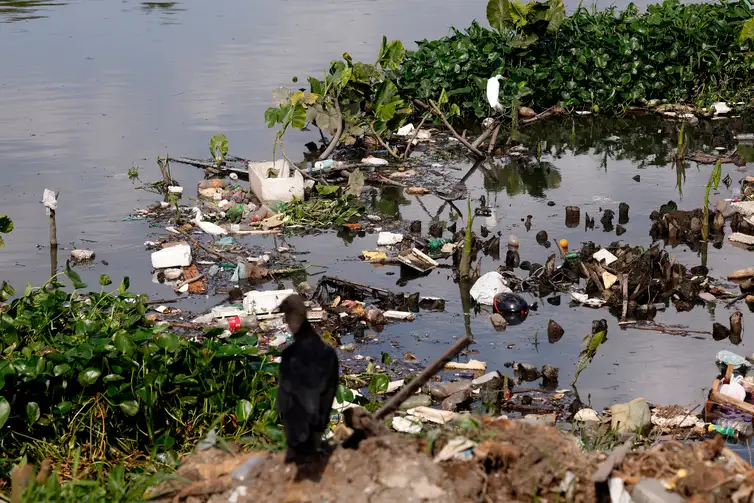
Open sewage in the city of Belém – Photo: Tânia Rêgo/Agência Brasil
Brazil Agency: Considering that Belém faces historical challenges in this area, which you may have observed during your stay, to what extent does COP30 represent an opportunity to highlight these themes and connect the local reality with global debates?
Jose Gesti: Water supply and basic sanitation are fundamental to human dignity, economic opportunity and climate resilience. COP30 provides a key platform to elevate this agenda to the highest political level, especially as the presidency has emphasized adaptation, equity and real delivery of results.
The debates show that the global community increasingly recognizes that, without strong water and sanitation systems, countries are not prepared for the climate pressures already underway. Putting water and sanitation at the center of climate negotiations creates space to transform local challenges into global priorities, attract financing, mobilize policy initiatives and accelerate practical implementations.
COP30 is also an opportunity to give visibility to community perspectives and demonstrate integrated solutions – such as permeable urban designs, resilient sewer networks and watershed protection – that reduce disaster impacts and strengthen social resilience. This allows local voices to influence global decisions, shifting the debate from promises to measurable results.
Brazil Agency: Do you agree that there is a direct relationship between unequal access to water and sanitation and what experts call environmental racism?
Jose Gesti: Around the world, the communities most affected by the lack of adequate water and sanitation services are disproportionately marginalized populations. They are more likely to live in areas with limited infrastructure, greater exposure to contamination and recurrent flooding, and fewer resources for recovery. These patterns are the result of decades of uneven public investment – not coincidence.
When access to clean water depends on race, geography or income, we’re not just talking about infrastructure gaps – we’re talking about structural injustice and violations of basic human rights. This is the practical expression of environmental racism.
To overcome it, policies and financing mechanisms need to explicitly prioritize communities historically left aside, ensure transparency and accountability, and strengthen the role of civil society in decision-making.
Equity must be the foundation of public service delivery – because resilient and inclusive sanitation is essential for healthy, safe and prosperous societies.