The Belarusian jurist visited Cuba from November 11 to 21 “to evaluate the impact of the sanctions” imposed on the regime.
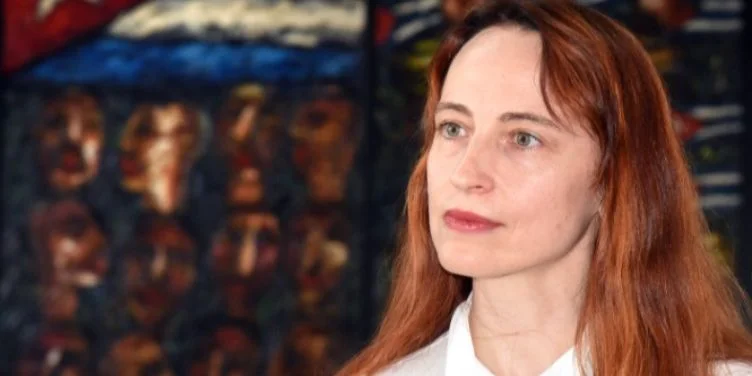
MIAMI, United States. – The UN special rapporteur on the negative impact of unilateral coercive measures, Alena Douhan, urged the United States this Friday to lift the sanctions it has applied against the Cuban Government for more than six decades, at the close of an official visit to the Island focused exclusively on the embargo and its “overcompliance”, at a time of extreme economic and social crisis for the Cuban population.
“For more than 60 years, the United States has maintained a broad regime of economic, commercial and financial restrictions against Cuba, the longest unilateral sanctions policy in American foreign relations,” declared Douhan in Havana when presenting his preliminary conclusions. “As a result of this sanctions regime, generations of Cubans have lived under coercive unilateral measures, which have shaped the country’s economic and social landscape.”
The Belarusian jurist visited Cuba from November 11 to 21 “to evaluate the impact of unilateral sanctions and over-compliance on the enjoyment of human rights in Cuba”, within the framework of her mandate as special rapporteur on unilateral coercive measures.
The expert announced that she will present a complete report to the Human Rights Council in September 2026, but she has already requested the lifting of Washington’s restrictions, to which attributes “significant effects on all aspects of life on the Island.”
Douhan claimed to have heard testimony that sanctions have been tightened since 2018, with new measures added to existing ones and “intensified” after Cuba’s reinstatement to the US list of state sponsors of terrorism in 2021, during the term of President Donald Trump.
The UN statement highlights that these restrictions, combined with “de-risking” and over-compliance by banks and companies from third countries, “limit the ability of both the Government and citizens to plan long-term and are suffocating the social fabric of Cuban society.”
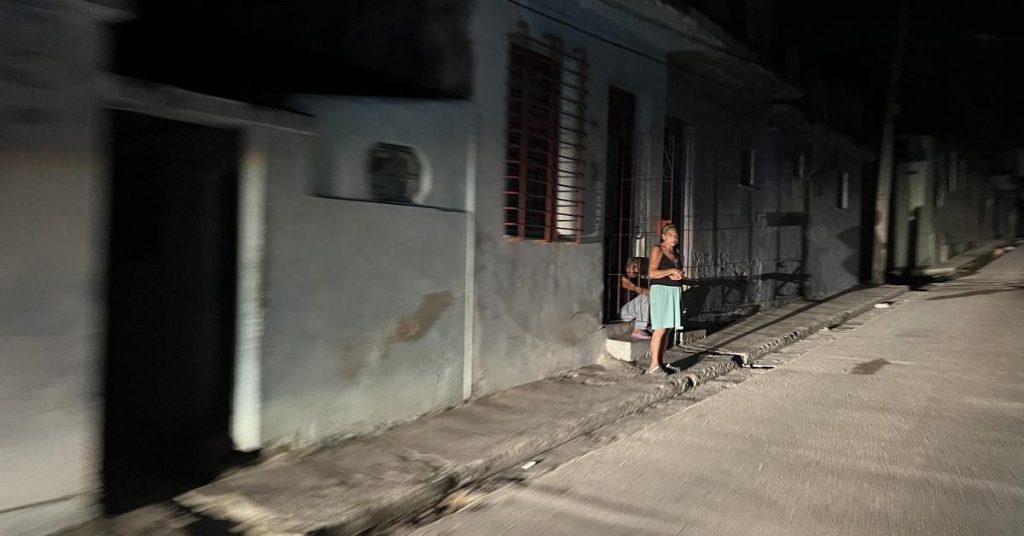
The visit took place in the midst of a crisis that international media described as “acute”with shortages of food, fuel, medicine and water, prolonged power outages and lack of liquidity that affect all sectors of Cuban society.
Sanctions, not rights violations
The design of Douhan’s mandate partly explains the narrow focus of his statement. The UN itself defines its position as rapporteur on “the negative impact of unilateral coercive measures on the enjoyment of human rights”, that is, a mandate specifically dedicated to studying sanctions such as those that the United States applies to Cuba. This is not a report on the general human rights situation in the country, but on a specific factor: sanctions.
However, Douhan could have pointed out that the Cuban Government does not allow other rapporteurs of the United Nations or the Inter-American Commission on Human Rights (IACHR) to travel to the Island to carry out their work.
Before traveling to Havana, the Office of the High Commissioner announced that the expert would meet with government authorities, UN agencies, international and regional organizations, the diplomatic corps, the business sector, academics and “other non-governmental actors”, in addition to holding a press conference at the end of the visit.
In his appearance in Havana, Douhan said he had met with officials, diplomats, international organizations, religious representatives, academics and the private sector, but, according to Reuters“did not specify whether he had contacts with opponents or independent media.”
The omission is especially significant in a country where repression against journalists, activists and opponents has been repeatedly documented by international organizations and NGOs.
In parallel, official media such as Canal Caribe highlighted his meetings with senior figures of the regime, including the vice president of the National Assembly, Ana María Mari Machado, and the Minister of Education, Naima Trujillo, who presented the government version on the effects of the embargo in areas such as the regulated family basket, internal trade, the food industry and the educational system.
Was there criticism of the Cuban Government?
CubaNet reviewed the official documents available so far on Douhan’s visit: the note announcing the trip and the end-of-mission communiqué published by the Office of the High Commissioner on its website, as well as the version disseminated by news services that reproduce that text in its entirety.
In these documents there does not appear any direct criticism of the actions of the Cuban Government. The rapporteur focuses on describing the impacts of US sanctions and over-compliance by third countries on the economy, financial system and basic services, and makes calls to sanctioning States and the international community to lift or mitigate these measures.
There are also no explicit references to the lack of internal economic reforms, corruption, military control of strategic sectors or the systematic repression of civil liberties, factors consistently pointed out by human rights organizations and independent analysts as central causes of the current crisis.
From the official texts published by the UN so far, it is not observed that Douhan has criticized the Cuban regime. Nor are there references to specific cases of political prisoners, arbitrary detentions or violations of civil and political rights, despite the fact that, recently, the UN Working Group on Arbitrary Detention, determined that Cuba is today the country with the most convictions for deprivation of liberty for political and ideological reasons since 2019, with 93 cases recognized in six years.
The very logic of the rapporteur’s mandate ―focused on unilateral sanctions― does not oblige her to address all these issues, but the contrast within the United Nations system is evident: while a specialized working group points to Cuba as the country with the most decisions for arbitrary detentions, the rapporteur who now visits the Island only makes visible the effects of the embargo and does not mention the direct responsibility of the Cuban State in the violations of rights.
Numerous academic analysis and study centers – not linked to the Cuban Government or Washington – agree that the crisis that the Island is going through is not explained only by the embargo or only by internal management, but by the combination of both factors, aggravated by the COVID-19 pandemic and the collapse of tourism.
However, the priority that Douhan gives to sanctions, without balancing his speech with a visible evaluation of the state’s responsibility in the repression and economic failure, reinforces the official narrative of the regime, according to which the external “blockade” is the almost exclusive cause of the current disaster.