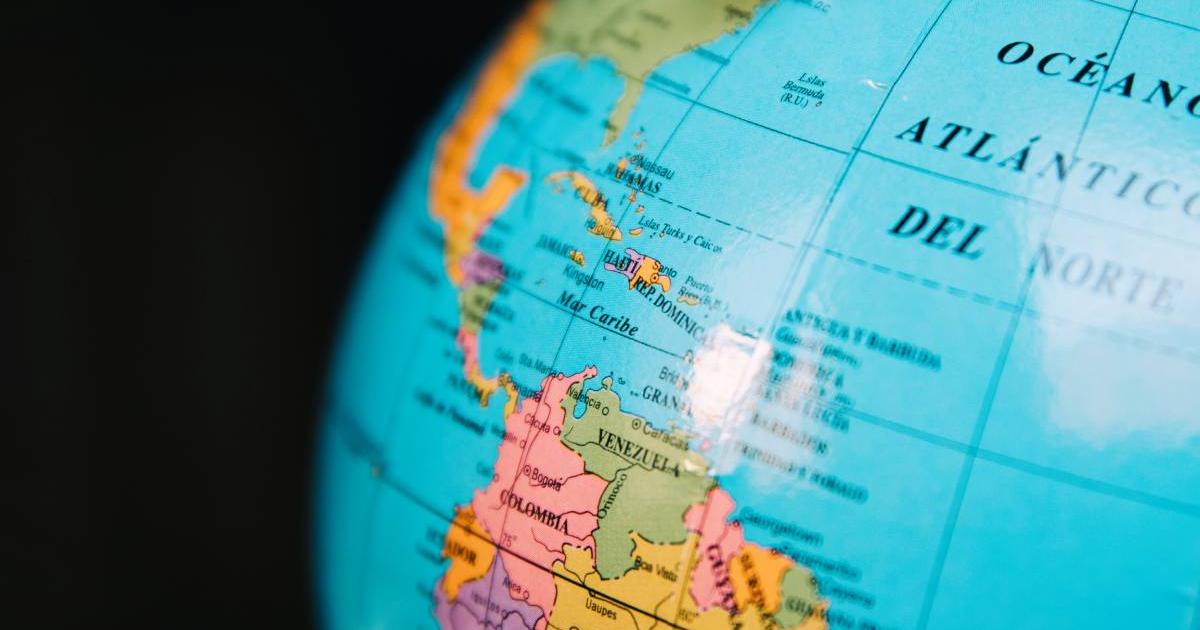
Some countries have even hosted US troops that threaten Venezuela.
The United States military deployment in the Caribbean, which has intensified pressure on the government of Nicolás Maduro, is advancing with the logistical and diplomatic support of several countries in the region, although with nuances ranging from open support to more cautious collaborations. Meanwhile, the operation—which Washington justifies as an offensive against drug trafficking— already accumulates more than 80 deaths in attacks against ships without the White House having presented public evidence to support its accusations.
Trinidad and Tobago: the strongest support
The strongest support has come from Trinidad and Tobago, located just 11 kilometers from the Venezuelan coast. Since the start of the deployment in August, the prime minister Kamla Persad-Bissessar expressed its full support for the US maneuvers and hardened its stance towards Caracas.
At the beginning of September, after the first US attack against a ship, Persad-Bissessar stated: “I am glad that the US naval deployment is succeeding in its mission”, adding that all drug traffickers “should be violently murderedThe president even warned that her government would give access to the United States in the event of a Venezuelan attack against Guyana, abandoning the historical neutrality that Trinidad had maintained for its energy interests with Caracas.
Also read: Tesla officially lands in Colombia. How much will its new vehicles cost?
the destroyer USS Gravely arrived in Port of Spain in October to conduct military exercises, an action that the Maduro government called a “hostile provocation.” Caracas’ response included the suspension of bilateral gas agreements and accusations of turning Trinidad and Tobago into “aircraft carriers of the empire.”
However, this week the United States began new maneuvers in the country, which Maduro called “irresponsible” actions. The Trinidadian Chancellor Sean Sobers defended the exercises alleging “constant acts of violence and criminal gang activity.”
In the midst of the debate, the former prime minister Keith Rowley denied the existence of a secret agreement with the US. The 2007 SOFA treaty regulates the temporary presence of US military personnel and was recently updated without a specific expiration date.
Guyana: support in the midst of the territorial dispute
Guyana, which maintains a 789-kilometer land border with Venezuela, is another key ally. Tensions flared after the 2023 Venezuelan referendum to demand the Guyana Essequibarich in oil.
In August, Georgetown officially endorsed the US moves, underscoring its commitment to a “collaborative and integrated” approach to transnational crime. The Guyanese government expressed “serious concern” about narcoterrorism and directly mentioned the Cartel of the Sunswhich Washington links to Maduro. Caracas rejects these accusations as an “invention.”
This month, then-Southern Command chief Adm. Alvin Holseyvisited Guyana to reinforce the “long defense alliance” between both governments.
El Salvador: the arrival of the AC-130J
At the beginning of November, satellite images confirmed the presence in El Salvador of a AC-130Jone of the most powerful attack aircraft in the US Air Force, equipped with large-caliber cannons and the ability to carry Hellfire missiles.
The basis of Comalapatraditionally used for unarmed aircraft, offers a strategic position to control the Pacific, where a good part of the cocaine destined for the United States transits. According to the analyst Ryan Bergoperating from El Salvador allows “to monitor and defend a much wider strip” of the ocean.
You may be interested in: Andrés Idárraga takes over as interim Minister of Justice in the Petro government
The president Nayib Bukele He has avoided speaking directly about the deployment, although he maintains a close relationship with Donald Trump.
Panama: cooperation with caution
In Panama, US military personnel carry out training under bilateral agreements. The president José Raúl Mulino He denied any link with operations against Venezuela and stated: “In relation to Venezuela, we have nothing to do with that.”
The country, without armed forces since 1990, has regularly hosted US exercises. In April, both governments signed a memorandum allowing for greater military presence, including the use of air and naval bases.
Dominican Republic: direct coordination with the DEA and the role of Puerto Rico
The president Luis Abinader announced new joint actions with the DEA “much more extensive and deeper.” In recent days, Dominican authorities seized two shipments of cocaine, 806 and almost 500 packages, in operations linked to Southern Spearname used by the Pentagon for regional military deployment.
As a US territory, Puerto Rico has become the core of military deployment. The island concentrates numerous Pentagon bases, including Fort Buchanan, Muñiz Air Base and Camp Santiago. The Naval Station Roosevelt Roads —closed since 2004—recently returned to operation.
At the end of September, US Marines conducted amphibious landing tests on the island. The FAA issued a NOTAM warning of a significant increase in military flights through February 2026 and recommending “extreme caution” for civil aircraft.
Other bases in the region
The United States maintains other strategic positions in the Caribbean:
Guantanamoin Cuba, a key military enclave rejected by Havana, Venezuela’s ally.
La Palmerolain Honduras, an air base with about 1,000 troops, including US and Honduran personnel.
In recent months, the president Xiomara Castro He has criticized both the accusations against Maduro and the regional military deployment.
Political support outside the Caribbean: Ecuador, Paraguay and Argentina
Some South American governments also aligned themselves with Washington through political decisions directed against the Cartel of the Suns.
Ecuador declared it an “organized crime terrorist group” in a decree by the president Daniel Noboa.
Paraguay classified it as an “international terrorist organization.”
Argentina did the same, highlighting in its justification transnational illicit activities linked to drug trafficking and smuggling.
Source: Integrated Information System