Alessandra Rojo de la Vega, the mayor of Cuauhtémoc, once again proposes melting them down.
CDMX, Mexico. – Four months after being removed from the Tabacalera Garden, the statues of Fidel Castro and Ernesto Che Guevara are still stored in a warehouse in the Cuauhtémoc Mayor’s Office. The mayor herself, Alessandra Rojo de la Vega, exhibited this Thursday new photographs of the sculptures and proposed melting them down to turn them into a monument to the murdered Mexican mayor Carlos Manzo.
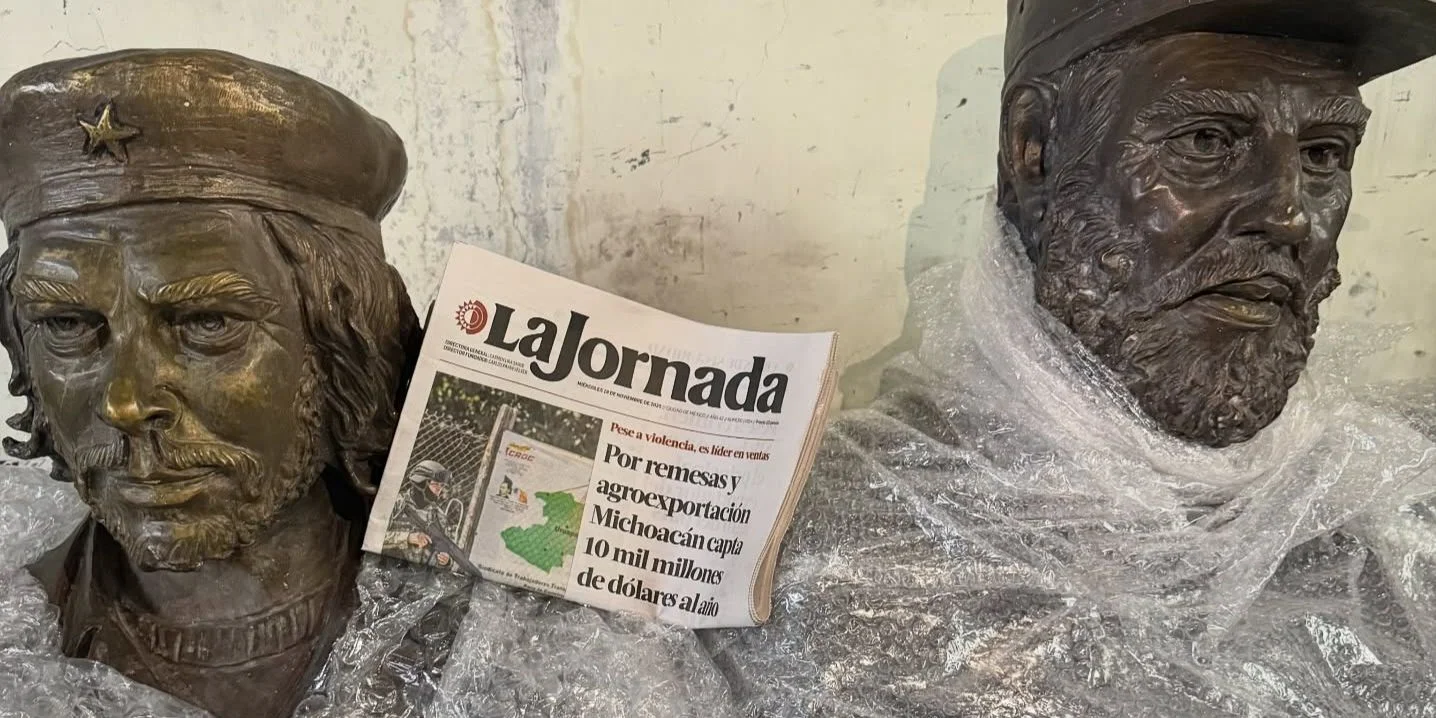
In a message spread on his social networks, along with four images of the bronze figures protected with bubble wrap, Rojo de la Vega wrote: “These are the ones who should be the real political prisoners, dictators and murderers, that you venerate and apparently follow in the same footsteps. A great idea would be to melt them down and pay tribute to Carlos Manzo. Long live resistance and freedom!”
Two of the photos show the mayor posing next to the sculptures and pointing out the date on the covers of national newspapers, as proof that the pieces are still under the protection of her administration. In one of them he appears smiling while holding the newspaper Millennium; In another, the heads of Fidel and Che appear next to a copy of The Day.
Previously, the Government of Mexico City itself had reported that the sculptures would remain in the custody of the demarcation while the controversy over their removal was resolved. Rojo de la Vega’s new message confirms that, despite official claims, the figures have not been delivered to the central administration or relocated to another point in the capital.
The mayor’s publication took place hours after the Congress of Mexico City released a statement about a debate in the plenary session in which pro-government deputies accused her of alleged participation in the riots that occurred during a march on November 15 in the Zócalo. In that session, the majority urged that the role of opposition figures be investigated and requested the “temporary separation” of Rojo de la Vega and PAN mayor Mauricio Tabe while the investigations progress.
The proposal to melt the statues to erect a figure of Carlos Manzo – municipal president of Uruapan, Michoacán, assassinated on November 1 – thus fits into a broader political struggle between the mayor of Cuauhtémoc and the ruling Morena party, which since July has questioned the removal of monuments to the leaders of the Cuban Revolution.
The sculptures are part of the Encounter Monumenta park bench with full-length figures of Fidel Castro and Ernesto Che Guevara, work of the Mexican sculptor Óscar Ponzanelli. The piece was installed in 2017 in the Tabacalera Garden to commemorate the first meeting in Mexico City, in 1955, between the two leaders, before the Granma yacht expedition and the overthrow of Fulgencio Batista.
The set, popularly known as “the Bench of Che and Fidel,” weighs about 250 kilograms and was authorized by the Committee of Monuments and Artistic Works in Public Spaces (COMAEP) as cultural heritage of the city, according to statements from the capital’s Government. Since its inauguration, however, the work aroused controversy: it was vandalized several times and in 2019 it was temporarily removed and stored in a municipal warehouse.
The July retreat: “This city cannot be a refuge for dictators”
Last July 16, already under the administration of Rojo de la Vega, crews from the Cuauhtémoc Mayor’s Office dismantled the bronze bench of the Tabacalera Garden with the help of heavy machinery. The mayor released a video in which she explained that the sculptures were removed because “there was never a correct procedure to place them” and there was “not a single piece of paper” that authorized “their installation.”
That same day, on the social network
In a later interview with CubaNetRojo de la Vega assured that the decision responded to complaints from residents of the area and administrative irregularities. “We realized thanks to the complaints of many citizens that these sculptures had been placed irregularly,” he stated. As he explained, the neighbors told him: “We don’t want these repressors, murderers, dictators in our space.”
The mayor also defended that Cuauhtémoc should not serve to exalt the leaders of the Cuban dictatorship: “This city cannot be a refuge for oppressors, for dictators, and much less for this pair, with the damage they did.” He clarified that the sculptures had cost 600,000 pesos from the mayor’s budget and maintained that this money should have been allocated to basic services for the neighbors.
The removal triggered a wave of criticism from the ruling Morena party and from political actors and organizations linked to the Cuban regime. The Cuban ambassador to Mexico, Marcos Rodríguez Costa, defended in X the legacy of the two communist leaders, while the Popular Socialist Party of Mexico, the Mexican Movement of Solidarity with Cuba and the Association of Cuban Residents in Mexico demanded the replacement of the monument.
The president of Mexico, Claudia Sheinbaum, described the removal of the sculptures as “bad” in her morning conference and asked why the mayor’s office did not hand over the work to relocate it to another part of the city, considering that it represented “a historical moment” beyond opinions about the characters.
The Government of Mexico City later issued a statement in which it considered the removal of the bench “illegal” because the Planning Secretariat—which chairs the Committee on Monuments and Artistic Works in Public Spaces (COMAEP)—had not received any formal request to evaluate its removal.
The head of the capital’s government, Clara Brugada, also closed the door to one of Rojo de la Vega’s ideas: auction the sculptures to supporters of Castroism and use the money for public works. In a statement reproduced by Mexican media, Brugada stated that the figures of Fidel and Che could not be auctioned and that they should be placed in a symbolic site in the city.
Rojo de la Vega, for his part, responded from X to Sheinbaum’s statements. In her message she took up words that the then head of government spoke in 2020, when she assured that “never again would tribute be paid to repressors or dictators,” and applied them to Cuban leaders: “Fidel Castro and Che Guevara were exactly that: repressors, representatives of a dictatorial regime and responsible for thousands of deaths.”
While the capital government insists that the removal of the sculptures was “outside the norm” and that the bank is part of the cultural heritage of Mexico City, the Cuauhtémoc Mayor’s Office maintains material control of the pieces. Neither the central administration nor the COMAEP have yet announced a definitive agreement on their fate, although the committee demands that the situation be regularized and their permanence, relocation or retirement be defined, in accordance with the law.