The president of Colombia explained the initiatives in which, he said, he participated “seeking a national dialogue in Venezuela.” He expressed his disagreement with solutions that attempt the “extermination” of some sector
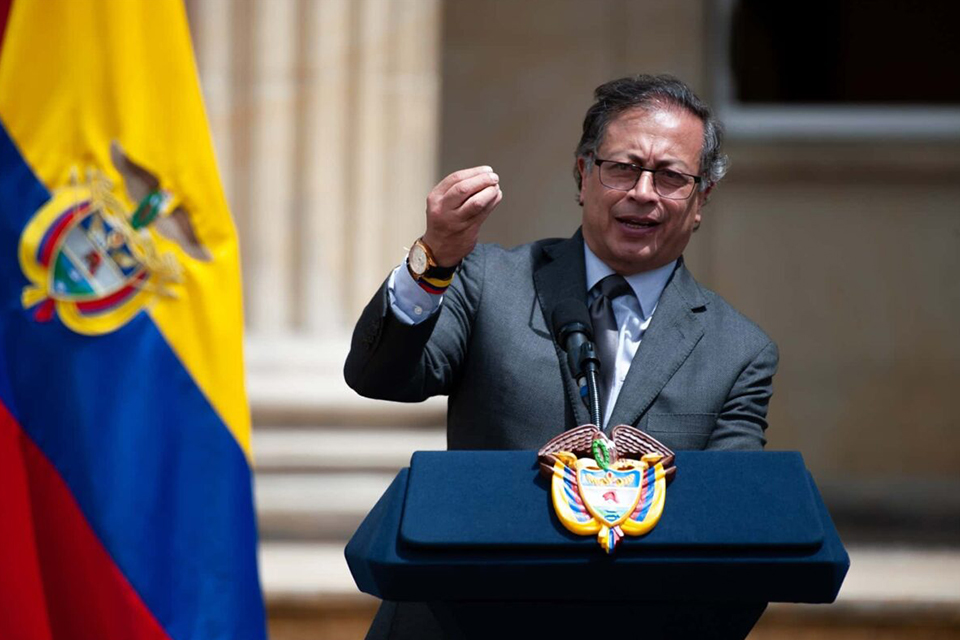
The Colombian president, Gustavo Petro, proposed this November 21 “a shared transitional government” in Venezuela to solve the crisis in that country and avoid foreign intervention that ends in an outbreak of violence.
In a long writing posted on your X account Regarding possible solutions for Venezuela, Petro expressed his opposition “to solutions that are not negotiated and that attempt the triumph of one sector over the extermination of the other.”
“A shared transitional government to convene a broad popular will that decides on agreements and can open paths to democracy, without undue pressure,” said the Colombian president, who has a good relationship with Nicolás Maduro, without giving details of his proposal.
In his publication, Petro recounted the initiatives in which, he said, he participated “seeking a national dialogue in Venezuela,” and added that, before the presidential elections in July 2024, “something mediated between the Maduro government and that of (then US President Joe) Biden.”
“The idea was to achieve a dismantling of sanctions against Venezuela and Maduro, open a climate of de-escalation of the political conflict quickly and achieve free elections as soon as possible,” he said.
However, “the unlocking of Venezuela was not presented, nor did they let Corina participate,” he said of the opposition leader María Corina Machado, this year’s winner of the Nobel Peace Prize.
The president added that “they did not take the price off Maduro’s head and the elections were not free. I said publicly: elections are not free under a blocked country.
“The disagreement, the clouded elections, the deepened blockade and now the foreign armed threat, ruin a political solution that must come from the Venezuelan people,” Petro explained.
President Petro’s message comes after the controversy that arose from the statements given by the chancellor, Rosa Villavicencio, to the media Bloomberg in which she spoke about the possibility of Nicolás Maduro losing power if he avoids going to jail.
In the information, released last Wednesday, November 19, it was stated that Colombia would support a transition plan in Venezuela that contemplates the departure of Nicolás Maduro and the installation of an interim government in charge of calling new elections. “I think Maduro would accept that approach,” Villavicencio said.
However, this Thursday the 20th, the Colombian Ministry of Foreign Affairs issued a statement to clarify that the statements of Foreign Minister Rosa Villavicencio during a conversation with Bloomberg in Spain were taken out of context and that “they do not correspond to what was expressed by Villavicencio Mapy in the interview.”
In the midst of the controversy, Bloomberg published the audios of the interview with Foreign Minister Rosa Villavicencio and the journalist Daniel Basteiro, who conducted the interview, assured that “the words are clear” and that the Colombian official “said them with complete calm and voluntarily.”
With information from the EFE agency
*Journalism in Venezuela is carried out in a hostile environment for the press with dozens of legal instruments in place to punish the word, especially the laws “against hate”, “against fascism” and “against the blockade.” This content was written taking into consideration the threats and limits that, consequently, have been imposed on the dissemination of information from within the country.
Post Views: 5