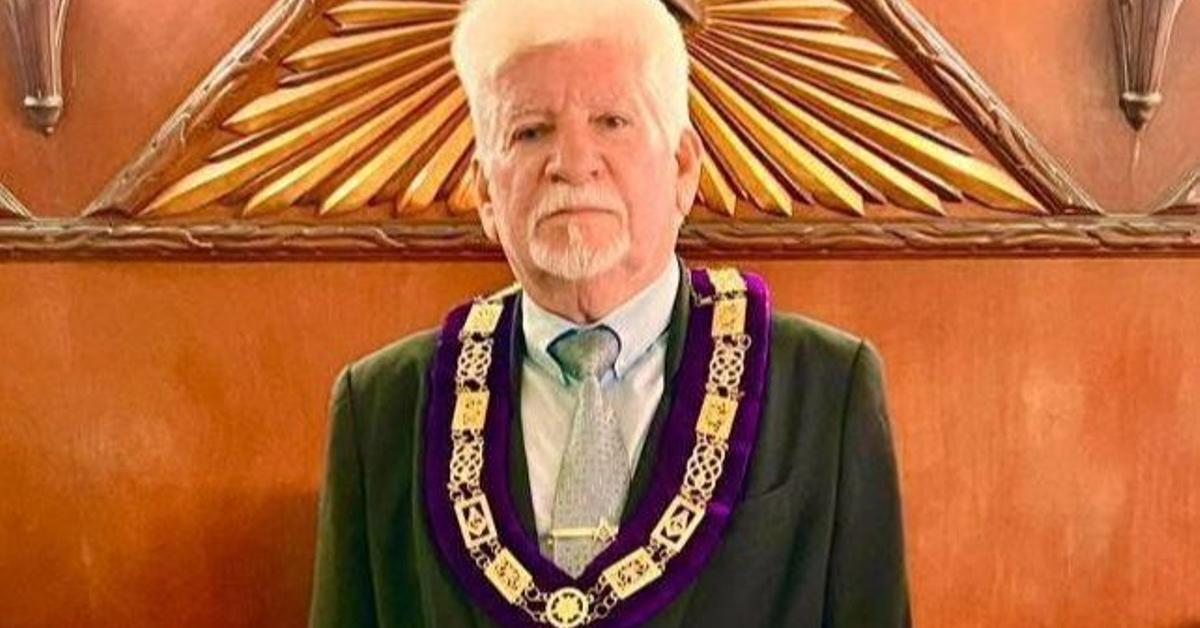
Havana/After almost two years of open crisis in the Grand Lodge of Cuba, the regime has decided to try to put out the fire. The Ministry of Justice declared “appropriate” the general elections of October 25, in which the Havana Freemason José Manuel Valdés Menéndez-Cuesta was elected as the new Grand Master. With this decision, the country’s authorities officially withdraw their support for Mayker Filema Duartewho clung to office against the will of the majority.
The decision comes through Resolution 7, signed by the Director of Associations of the Ministry of Justice, Miriam García Mariño, and represents a sharp turn with respect to the line maintained by the Government since May, when the Masonic Upper House dismissed Filema and, however, the ministry refused to recognize the change. Now, without the state umbrella, Filema is definitively out of the game, after months presenting himself as a legitimate Grand Master thanks solely to the endorsement of government authorities.
In July, the head of Justice, Óscar Manuel Silvera, assured on national television that the Masonic crisis was an “internal issue” and described the accusations of state interference as “false” and “malicious.” However, Law 54 of Associations itself grants that Ministry a “governing” role over the internal life of organizations such as the Grand Lodge of Cuba (GLC) and grants it the power to approve or not the agreements of its Upper Chamber. In practice, no Masonic election is valid until Justice endorses it. That key to “legality” has been used by the regime to support unpopular great teachers and, now, to try to put out the fire that it itself helped fuel.
For months, Filema refused to call elections, suspended decisive sessions and tried to extend his mandate beyond what was established. On July 6, around 200 Freemasons they were planted at the GLC headquarters to prevent him from remaining in office, in one of the most unusual displays of civil defiance that Havana has seen in recent years.
The Ministry of Justice admits that Filema’s attitude “disregarded the will of the majority” and sought to delay “irresponsibly and indefinitely” the institutional functioning of the Grand Lodge.
The security apparatus responded with summonses, threats and surveillance. Several leaders of the revolt were interrogated and some, such as the replacement Grand Master Juan Alberto Kessel Linares and the Sovereign Grand Commander José Ramón Viñas Alonso, were terminated under criminal charges for alleged “currency trafficking,” measures that the members themselves interpreted as punishment for not being “submissive.”
In the resolution that now recognizes the new leadership, the Ministry admits that Filema’s attitude “disregarded the will of the majority” and sought to delay “irresponsibly and indefinitely” the institutional functioning of the Grand Lodge.
Some Masons consulted under anonymity by the independent media Cubanet They went even further and described the Filema period as an authentic “dictatorship”, only possible with the support of the State. “We lived in a dictatorship, that of Filema,” one of them summarized. Another of those consulted considered that the regime’s interference “will continue”, but “not in such a blatant manner”, and warned that these almost two years of struggle with power “removed the foundations of the Order” and forced the Government to “put out the fire” in the face of the strength shown by the membership.
In this context, José Manuel Valdés Menéndez-Cuesta, a member of the Federico Valdés lodge, in the Havana municipality of Cotorro, came to Masonic power. With more than 25 years of experience within Cuban Freemasonry, Valdés was elected on October 25 at the National Masonic Building, after elections in which the Upper House managed to overcome Filema’s dilatory maneuvers.
With Resolution 7, the Government tries to close the most scandalous chapter of its fight with Freemasonry
The dimension of the embezzlement that Valdés inherits goes far beyond the $19,000 of the Llansó National Masonic Asylum, whose theft triggered the current crisis. According to internal documents cited by the Grand Lodge itself, the then Grand Master Mario Urquía Carreño and his treasurer Airam Cervera not only had that cash under their responsibility, but they would have manipulated account statements and falsified invoices to appropriate another 2.1 million Cuban pesos, in addition to recording 2,700 dollars as “losses.”
The supposed “restitution” of the money has not restored confidence either. At the end of August, Urquía and Cervera sent one million pesos as the first payment. Weeks later it was announced a second deposit of four million pesos, also in the name of Cervera, until completing five million deposited in the account of the Grand Lodge, while the whereabouts of the Asylum dollars remains unclear and the board itself admits that the returns cover only part of the gap created in Masonic finances.
Valdés’ candidacy was presented under the motto “United we are stronger”, a slogan that summarizes the aspiration to close ranks after the internal fracture. Some members of the Fraternity describe him as an “honest” and “decent” man, capable – at least in theory – of rebuilding internal legality, recovering the independence of the institution and “getting rid of the traitors and infiltrators” that the crisis left exposed.
With Resolution 7, the Government tries to close the most scandalous chapter of its fight with Freemasonry. But the gesture does not erase either the previous interventionism or the legal architecture that makes it possible. The ministry urges Valdés and his team to “achieve unity, institutionality and a correct development of the transition process” in accordance with Masonic legislation, while reserving the last word on any relevant decision.